
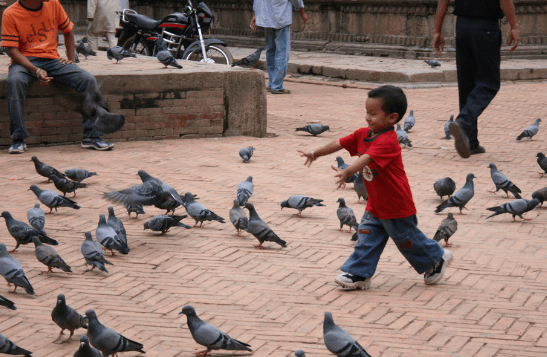
I’ve written elsewhere about how even as a child I’d see something happen and wonder whether I was seeing the beginning, the middle or the end of a story. I’d see two people arguing, or someone crying on the bus; or I’d see a toddler rapturously chase pigeons across the pavement, and I’d wonder what happened before, what would happen next. And I’d wonder what the story was. Who are the people involved? Somewhere around the age of 10 or 11 I was shocked to find out that not everyone does this.
I want to know these things because my brain is wired that way, and because I’m nosy (I admit that freely); and irrespective of where in the story we are, I want to pay attention, to make use of real details in my writing because those moments, what the people do and say, the emotion, the real quirks, verbal ticks or turns of phrase can show so much more than simple telling or hit-you-over-the-head backstory. It makes for a more satisfying story, certainly.
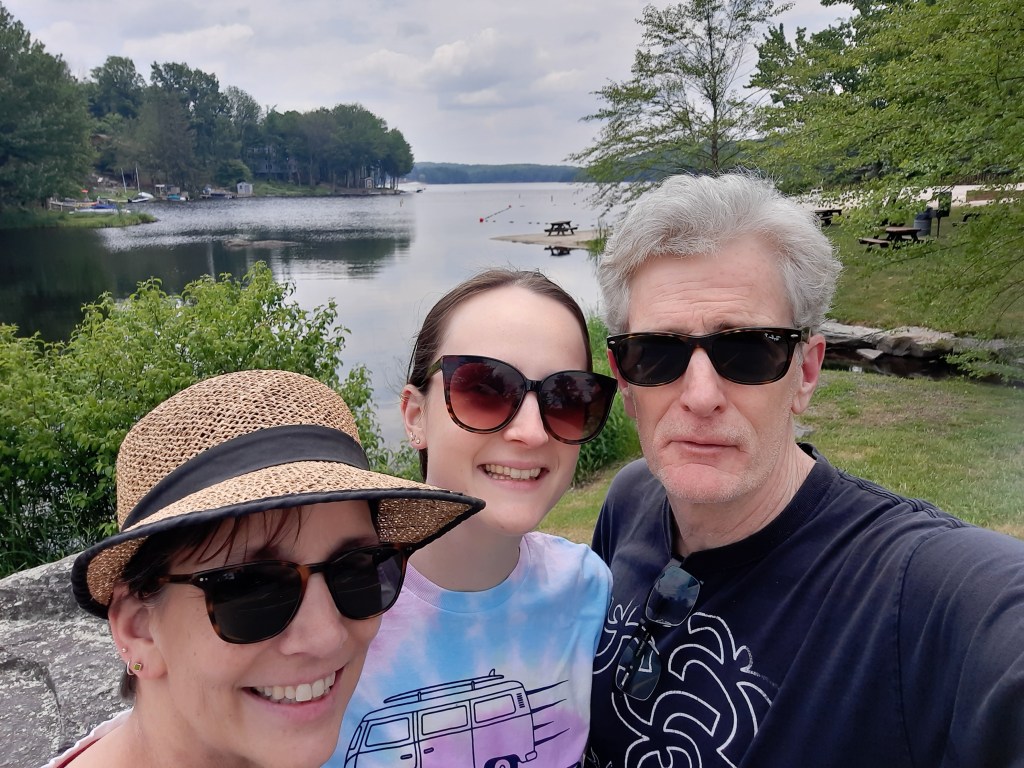
This past weekend we spent a lovely time by Lake Ariel, in the Poconos. On Saturday morning I took a walk around the lake with my wife and one of our daughters. It was a lovely morning as we walked in and out of dappled shade. The people we encountered seemed cheerful and friendly. As we passed one house, a man asked us if we were interested in wildlife and whether we’d like to see his pond. We said, yes.
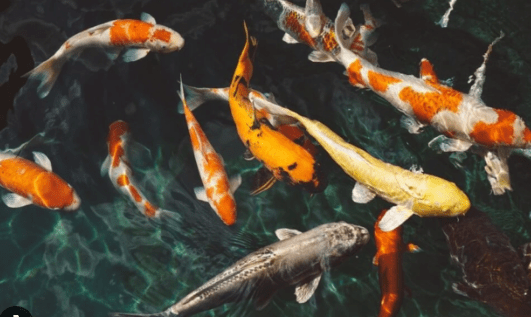
He was retirement aged, and he lounged sideways at the rocky edge of a shallow, 10 foot by 12 foot oval-ish body of water, gazing into the water, like paintings of Narcissus. He pointed out the carp (they were mottled and colorful, like small Koi fish) and then directed our attention to the side of the pond where a good-sized frog perched. Its body was about the size of my hand, but it took a few moments of staring where the man pointed for me to see the frog because it was so still and well camouflaged.
From him, I learned about the trials and tribulations of recreating a pond that had been previously destroyed; the difficulty of moving rocks into place, in keeping frogs once they fledged, or whatever it is they do when they’re not tadpoles anymore; that the fish in his pond were carp rather than true koi because a single koi could cost as much as $65 (he had eight or ten of them). All of which was interesting and diverting, and it felt like precisely the kind of thing we ought to be doing on a lovely day in the countryside.
Then he said: “Now, the question you didn’t ask…”
My brain arced as I realized there was more for me to be paying attention to! I hadn’t asked him a single question other than “how are you this morning?” nor had my wife or our daughter. He’d supplied the whole narrative unbidden. There were a hundred questions I hadn’t asked because as diverting as his monologue had been, after about ten minutes I wasn’t sure how much longer I wanted to stand there. Which question could he mean?
“You’ll want to know how I keep the carp over the winter,” he said.
Did I?
Stupidly, I hadn’t carried my notebook with me. I hadn’t thought I might stumble upon gold. I hope I’m not seeming to disparage this man. He seemed decent and thoughtful, and I’m pleased to have met him. But the words “Now the question you haven’t asked…” utterly exploded in my writer’s head.
Will I use it in a future story or novel? I have no idea. But as a verbal tick to reveal character it seems wonderful. Or, more likely, it could do double duty and also serve as a larger motif. Indeed, it kind of encapsulates the act of writing. Probably no one who has read this far conceived of the question I was answering, and certainly no one who has read my novels told me to write them. The books hang out on the shelf, beckoning for attention, answering a question you may never have asked.
# # #

James McCrone is the author of the Imogen Trager political suspense-thrillers Faithless Elector, Dark Network , and Emergency Powers–noir tales about a stolen presidency, a conspiracy, and a nation on edge. All books are available on BookShop.org, IndyBound.org, Barnes & Noble, your local bookshop, and Amazon. eBooks are available in multiple formats including Apple, Kobo, Nook and Kindle.
His current book, Bastard Verdict, debuted on May 18th, a noir political thriller set in Scotland. It’s available through the link above, or wherever you buy your books. His current, work-in-progress is a mystery-thriller set in Oregon’s wine country…A (pinot) Noir, called Witness Tree.
A Seattle native (mostly), James now lives in South Philadelphia with his wife and three children. He’s a member of the The Mystery Writers of America, Int’l Assoc. of Crime Writers, Int’l Thriller Writers, Philadelphia Dramatists Center and is the vice-president of the Delaware Valley chapter of the Sisters in Crime network. James has an MFA from the University of Washington in Seattle.
For a full list of appearances and readings, make sure to check out his Events/About page. And follow this blog!
His most recent short fiction is below. The first is available for online reading.
“Eight O’Clock Sharp” in Retreats from Oblivion: the Journal of NoirCon. (free online)
Set in Philadelphia’s 9th Street Market, Thomas is a man outside of time, forgotten, but trying to do the right thing while contending with avaricious forces.

“Ultimatum Games” in Rock and Hard Place magazine issue #7
A rare book heist, bad decisions. The narrator and his partner-in-crime clash over evolving bourgeois norms.

“Nostalgia” in Low Down Dirty Vote, vol. 3
An armed group tries to resurrect a past that never was as they struggle with change.
 Chosen Words - James McCrone
Pingback: Secondary characters | Chosen Words - James McCrone