We’ve been here before

For a while in the early part of this century, the hype was everywhere. A new world!

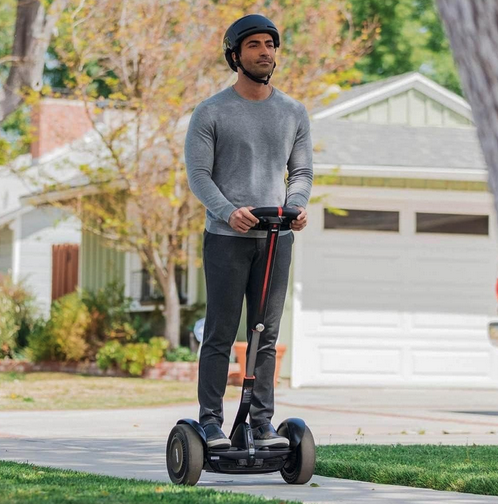
The American investor and venture capitalist, John Doerr speculated that it would be more important than the Internet. Steve Jobs was quoted as saying that it was “as big a deal as the PC.” It would revolutionize the Post Office, law enforcement, urban travel and transportation. In the end, only 140,000 units were sold during the lifetime of the product, 2002 to 2020.

Steve Jobs later said it “sucked,” and South Park devoted an episode to making fun of the hype around the product when it was released. What was it?

The Segway.
I was about to write that we can “only imagine” what the hype would have been like if investors had spent $1.6 trillion dollars (so far) on R & D for the Segway and needed to recoup their losses. But we don’t need to imagine, we know. We’re living through it. Or at least enduring it. For now.

With AI, the venture capital class is so desperate to recoup losses on their $1.6 trillion dollar bad bet, on something that might have a few practical brute force applications, that they’re willing to move fast and break everything, including valuation metrics and gainful employment, while they drown us in AI “slop” that sluices bad faith and misinformation like manure into a hog pen lagoon.

Photo: Carrie Carlson, FEECO Int’l

Meanwhile, as they race to make it the next big thing, they foul the air, destroy the landscape and suck up all the water.

The data centers they’re trying to build and the hording of DRAM and NAND memory chips have caused a stratospheric spike in prices.

Spot prices for DRAM chips, according to Bloomberg, have jumped 700% recently. And, speaking of data, the high cost and scarcity of chips is beginning to have an impact on laboratories. All this for something that “hallucinates” and outright lies.

The profligate waste reminds me of Orwell’s “floating fortresses” in 1984, which are scrapped as obsolete even before they become operational, or Milo Mindbinder in Joseph Heller’s Catch-22 cornering the market on Egyptian cotton just as the bottom fell out. To recoup his costs, Milo went so far as to serve chocolate covered cotton in the mess halls, and he was insulted that the men wouldn’t eat it.

“They’ve got to eat it!” Milo says.

“It’ll make them sick,” Yossarian replies, “why don’t you eat it?”

“I did,” says Milo, “and it made me sick.”

In both of the above (albeit fictional) cases, to cry foul or point out that the emperor has no clothes (or, say, that cotton is indigestible) would be unpatriotic.

In the early part of his century, Segway Personal Transport only made up 1.5% of total company profit. The Segway’s learning curve and need to balance led to notable accidents involving Usain Bolt, George W. Bush, Ellen DeGeneres, Ian Healy, and Segway Inc. previous owner Jimi Heselden [links from Wikipedia]. While the Segway has remained popular for security and tourism, its electric scooters have been more popular for personal mobility.

Maybe Segway lacked boldness, and they should have skipped the pesky, fickle human user altogether, a lesson that AI investors may have taken too much to heart.

A $1.6 trillion dollar AI bet feels like another memory from earlier in this century: banks and investment firms in 2007 and 08 that were deemed “too big to fail.” Will we spend the remainder of the 2020’s paying off the AI bailout?

Will there be anyone able to do that work?


James McCrone’s stories pose questions about the nature of power, the choices we make and the lessons we don’t learn.

He’s the author of the Imogen Trager political suspense-thrillers Faithless Elector, Dark Network and Emergency Powers–noir tales about a stolen presidency, a conspiracy, and a nation on edge. Bastard Verdict, his fourth novel, is about a conspiracy surrounding a second Scottish Independence referendum. His current novel, Witness Tree, is out on submission.

All books are available on BookShop.org, IndyBound.org, Barnes & Noble, your local bookshop, and Amazon.

eBooks are available in multiple formats including Apple, Kobo, Nook and Kindle.

James is a member of Mystery Writers of America, Int’l Assoc. of Crime Writers, and he’s the current president of the Delaware Valley chapter of Sisters in Crime. He has an MFA from the University of Washington in Seattle, and he now lives and writes in Philadelphia, PA.

For a full list of appearances and readings, make sure to check out his Events/About page. And you can also follow me on Substack!

Some of his short stories are available FREE online. Links are HERE toward the bottom of the page.

Coffin Corner and Taking Inspiration

In a small corner of Philadelphia, a funeral director steals a man’s car as payment on a debt.

My latest short story, “Coffin Corner” [story link] came out on Tough/Redneck Press last week. I’ve already had some feedback from readers–for which I am grateful, and even an exchange regarding where the story had come from. Check out the story (link above), and make sure to look at the other great things Redneck Press is putting out.

One reader wrote to me:

“Very enjoyable & a nice twist at the end. They say you should write what you know. Which makes me wonder what kind of world you live in – wise guys, seedy funeral homes etc.”

My “world” probably isn’t so different from anyone else’s. Imagination, openness and curiosity are the main ingredients to my writer’s life. I write stories about dirty politics, and desperate people making bad decisions; and I’m fascinated by the pettiness of the petty crime that results.

Years ago, I worked for a guy who had been a mortician. We were walking past a house, and he pointed it out, saying that the person who lived there was someone who had once “stiffed” him on funeral arrangements .

He said, “I thought about taking his car as collateral until he paid up, but what’re ya gonna do?” (He really did use the term stiffed)

A story was born in my mind.

Later, I thought to myself, “what if he’d been really hard up, and what if desperation had made him take the man’s car? And, what if seizing the car opened up a whole new can of worms?” When I finally sat down to work on it, the story came quickly. Obviously, the story has nothing to do with real people, the situation is what lodged in my mind and finally came out as “Coffin Corner.”

I made the main character old enough to remember the precarity of the mob days here in Philadelphia, and how difficult they were. I’m fascinated by the difference of opinion about what the old, mob days were like, and what they meant. Some seem willing to remember those past days as good somehow, ordered and orderly, whereas others remember only violence and the way honest people were preyed upon.

I’ve written about it before, as in my story contribution to Low Down Dirty Vote, vol. 3, “Nostalgia,” in which a young, career criminal finds himself–dismayingly–in amongst a gang playing at being mobsters. As the narrator notes: “People in the neighborhood treated Mr. Johnny like a big shot—but only because it flattered their vanity, like they were all living together in some movie where the world still made sense.”

And working in the 9th Street Market helped too. My story “Eight O’Clock Sharp,” also available for free online, is published by Retreats from Oblivion (the journal of NoirCon), and it is about a new/old predator. As I wrote about the villain that story, I found myself singing lines from “Teenage Wildlife,” by David Bowie: “Same old thing, in brand new drag, comes sweeping into view…”

I don’t consciously use short stories as a means of working out ideas or themes I explore in my longer work, but it does seem to happen. “Nostalgia” put together drug-running and corrupt politics, allowing me to examine it and return to it in my novel-in-progress, Witness Tree, about a secret power play for a white supremacist organization that erupts into the open. “Coffin Corner” allowed me to think about what the mob meant, and what it might have been like to live with the threat of Wise Guys everywhere.

A similar corrupt, thuggish coercion seems to have taken hold of the country, too. Maybe that’s my world. The source is different, but the stinking fear it creates is the same. And it’s worth exploring and writing about.

# # #

James McCrone is the author of the Imogen Trager political suspense-thrillers Faithless ElectorDark Network and Emergency Powers–noir tales about a stolen presidency, a conspiracy, and a nation on edge. Bastard Verdict, his fourth novel, is about a conspiracy surrounding a second Scottish Independence referendum. His novel-in-progress is called Witness Tree, a (pinot) noir tale of murder and corruption set in Oregon’s wine country. Coming soon!

All books are available on BookShop.org, IndyBound.org, Barnes & Noble, your local bookshop, and Amazon.

eBooks are available in multiple formats including Apple, Kobo, Nook and Kindle.

James is a member of Mystery Writers of America, Int’l Assoc. of Crime Writers, and he’s the current president of the Delaware Valley chapter of Sisters in Crime. He lives in Philadelphia. James has an MFA from the University of Washington in Seattle.

For a full list of appearances and readings, make sure to check out his Events/About page. And follow this blog!

You can also keep up with James and his work on social media:
Bluesky: @jmccrone.bsky.social
Facebook: James McCrone author (@FaithlessElector)
and Instagram/Threads “@james.mccrone”

The Autofac

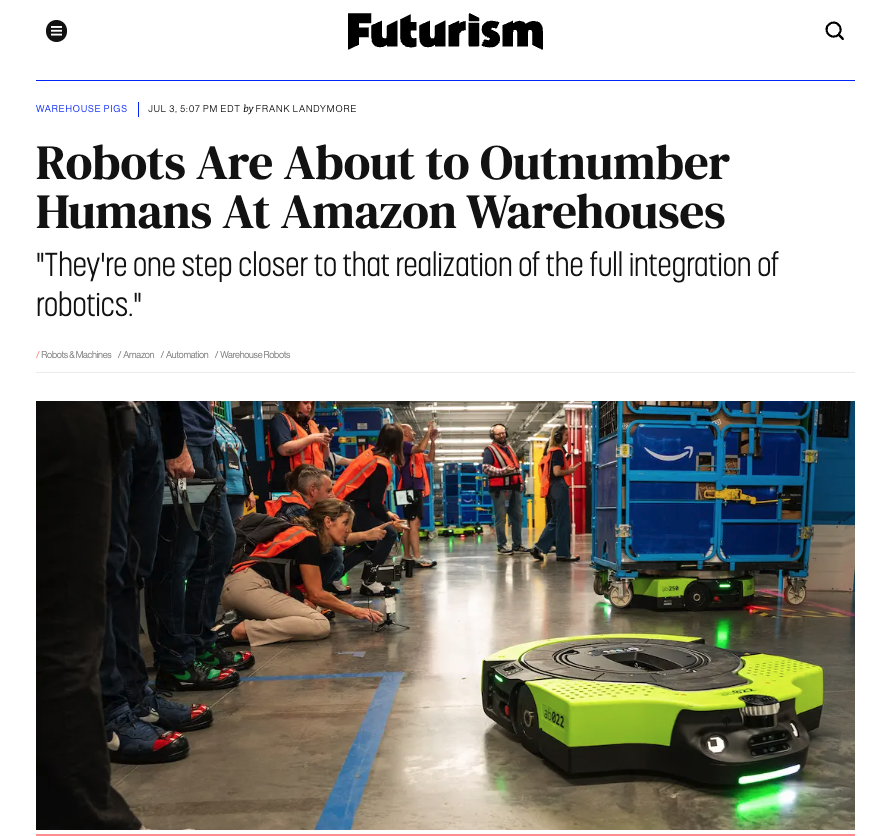
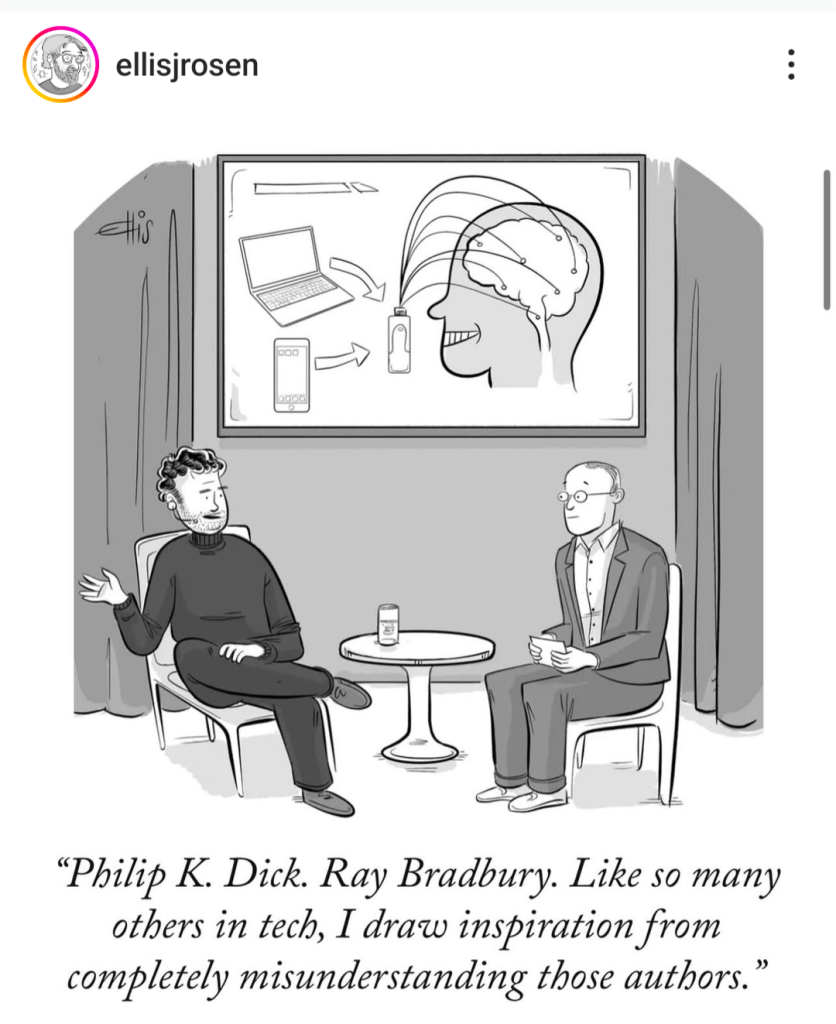
Robots Are About to Outnumber Humans At Amazon Warehouses: “They’re one step closer to that realization of the full integration of robotics,” Futurism reports, perhaps bringing us one step closer to the Autofac of Philip K. Dick’s fevered nightmares. In which “nuclear war survivors in a small community struggle to make contact with an automated factory that has consumed most of their natural resources.”

I first encountered the story in the limited series Philip K. Dick’s Electric Dreams. The bots, like AI, are not conscious, yet they have a purpose. In the story, the Autofac is so automated that it’s (re)producing the robots who work there.

The bots only want what’s best for humanity, and their only mission is to sell and deliver… everything. Even though there’s almost no one left to buy.

Originally published in 1955, the tale is sad and unnerving. In the television program, the survivors gain access to the Autofac in the only way accessible to them–by faking a complaint form.

Spoiler: it doesn’t work.

# # #

James McCrone is the author of the Imogen Trager political suspense-thrillers Faithless ElectorDark Network and Emergency Powers–noir tales about a stolen presidency, a conspiracy, and a nation on edge. Bastard Verdict, his fourth novel, is about a conspiracy surrounding a second Scottish Independence referendum. His novel-in-progress is called Witness Tree, a (pinot) noir tale of murder and corruption set in Oregon’s wine country.

All books are available on BookShop.org, IndyBound.org, Barnes & Noble, your local bookshop, and Amazon.

eBooks are available in multiple formats including Apple, Kobo, Nook and Kindle.

James is a member of Mystery Writers of America, Int’l Assoc. of Crime Writers, and he’s the current president of the Delaware Valley chapter of Sisters in Crime. He lives in Philadelphia. James has an MFA from the University of Washington in Seattle.

For a full list of appearances and readings, make sure to check out his Events/About page. And follow this blog!

You can also keep up with James and his work on social media:
Bluesky: @jmccrone.bsky.social
Facebook: James McCrone author (@FaithlessElector)
and Instagram/Threads “@james.mccrone”

Et In Arcadia Ego

(“Even in Arcadia, there am I”)

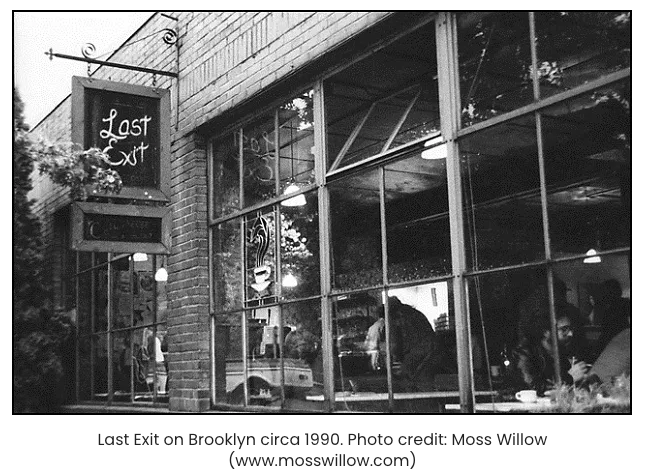
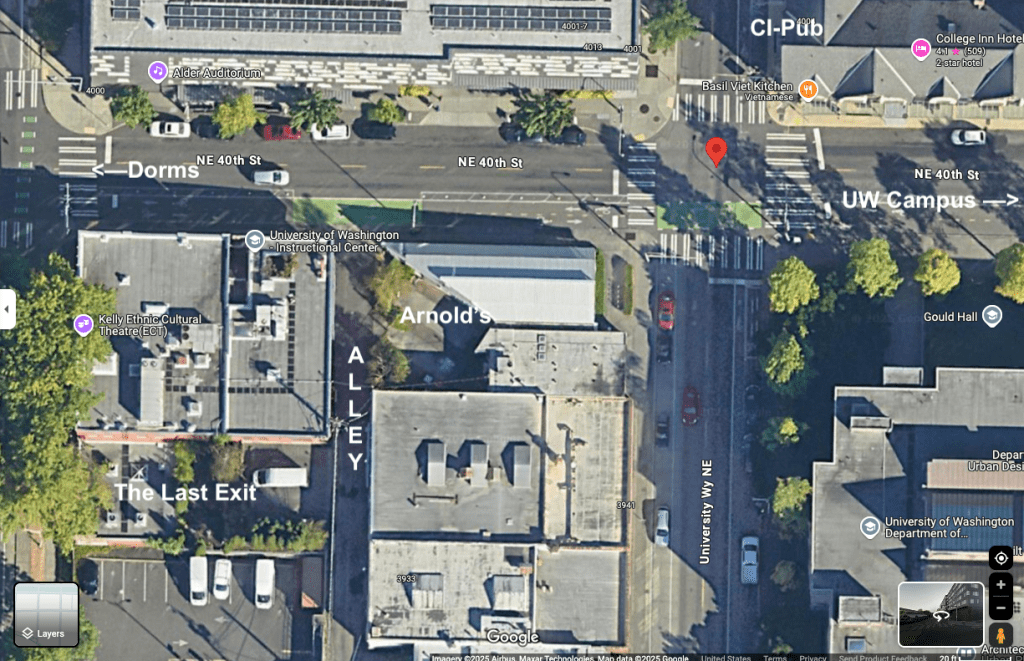
There was a place, at NE 40th Street and University Way in Seattle’s University District, where even recently, some 40 years on, I could locate and remember a former, younger self, one now slowly fading. That intersection was quite literally a crossroad for me–between the Last Exit on Brooklyn, the College Inn Pub and Arnold’s. And the University of Washington.

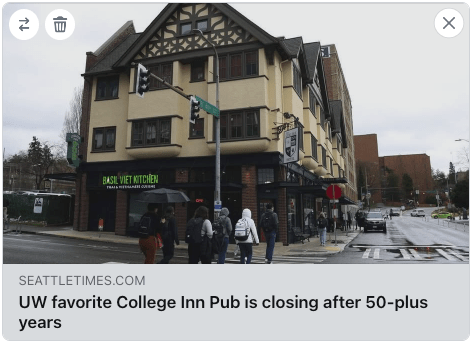
The news that The College Inn Pub will close after 50 years has hit me hard. I have read that you die by degrees; that is, you’re not really gone until the last person who remembers your face dies. But I think parts of us disappear even while we’re living.

The “I” in the translation above is meant to be death itself, present everywhere, even in the happiest places. Which that corner certainly was. It also leapt out at me because Arnold’s Video Arcade, scene and locus of much misspent youth, was diagonally across the street.

This post isn’t meant to be a cranky whinge about how great things used to be and how soulless and rotten they are now. Change is a constant, you can’t put lightning in a bottle, and lots of other cliches that for all their threadbare, hackneyed-ness nevertheless articulate a truth. It’s that when things that are (or were) a part of you disappear, it feels like losing yourself, or like reaching out in the dark to touch a wall you know should be there. But it’s not. People, places and things locate you, give you context, guidance, maybe even comfort.

The Pub anchored the northeast corner of NE 40th Street and University Way in Seattle’s University District, an area just west of the University of Washington campus that was a focal point for the lives of me and my friends from 1979 until about 1994, by which time I had moved to another part of the city, first Belltown, then Beacon Hill and then the Rainier Valley.

Diagonally across the intersection from the Pub stood Arnold’s, a video arcade. Just around the corner, on Brooklyn Ave., was The Last Exit on Brooklyn, Seattle’s second oldest coffee house, and one of the oldest in the country. It stood right next door to the Ethnic Cultural Theatre. Arnold’s is long gone, The Exit moved to a new a location and then closed 20+ years ago, and now the College Inn Pub is up for sale and will probably be closed.

I started working at The Exit as a dishwasher when I was 15 years old in 1979. Later, when my high-school friends and I would stop in at Arnold’s to play Asteroids, or Defender or Ms. Pac-Man, we’d often steal through the alley into the back of The Exit, where we would hang out. And if it was a weekend night, we’d look for someone to buy us beer. I would also take dates there. Not only was it an interesting, funky place, but it was cheap, and I was known.

I think I was the youngest employee Irv Ciskey, the owner, had ever hired. I had gone to his other restaurant, Lake Union Pizza, to apply for a job when we moved to Seattle, and he had sent me to The Exit. Unbeknownst to me at the time, Irv had called the manager there and told him to hire me. It did seem like an easy interview even at the time.

Even before I was old enough to go inside, the College Inn Pub loomed large in my thoughts. My freshman year at the University, I was in the Terry-Lander dormitory, and even though it was generally simpler to take the Campus Parkway exit from the building to get to my classes, I would often leave via the back exit, and NE 40th–terra firma. I’d head to The Exit for a quick espresso, then mount the stairs to leave via the back way out, into the alley that also ran behind Arnold’s and onto the street.

Later, I would work at the Pub as a “beertender”–my work life as a grad student split between it and the University Bar & Grill about six blocks up the street.

Even after we had moved east, returning on visits to that corner, I could see myself there. It was unique in that it represented not just a snapshot of my life, but a series of lives–adolescence, undergraduate, graduate, young father–were enacted there. Not like flipping through an album of static pictures or one brief moment, but like viewing a film covering the ages of 15 to 36, how I changed (if, indeed, I’ve every really grown up!), how my friends grew, how the city changed, even as the corner remained largely unchanged whenever I returned. Fortunately, I’m still close with those friends, even if we don’t see one another regularly.

I lived in the midwest (Wisconsin and Iowa) for about 12 years, in Seattle for 21; and I have now lived away from Seattle for longer than I was there (25 years). My wife says I’m a midwesterner at heart, but a good deal of my life and heart is at 40th and University.

I’m not sure when I’ll be back in Seattle next, though I hope it will be soon. If you see some sad and bitter old man standing in the intersection staring disconsolately, or pointing out what used to be, he’s not lamenting a Seattle that is no more, but mourning the loss of a bit of the sense of himself.

Maybe I should be grateful that I have such a place–a “better to have loved and lost…” kind of thing. Maybe I will be grateful one day.

# # #

James McCrone is the author of the Imogen Trager political suspense-thrillers Faithless ElectorDark Network and Emergency Powers–noir tales about a stolen presidency, a conspiracy, and a nation on edge. Bastard Verdict, his fourth novel, is about a conspiracy surrounding a second Scottish Independence referendum. His novel-in-progress is called Witness Tree, a (pinot) noir tale of murder and corruption set in Oregon’s wine country.

All books are available on BookShop.org, IndyBound.org, Barnes & Noble, your local bookshop, and Amazon. eBooks are available in multiple formats including Apple, Kobo, Nook and Kindle.

James is a member of Mystery Writers of America, Int’l Assoc. of Crime Writers, and he’s the current president of the Delaware Valley chapter of Sisters in Crime. He lives in Philadelphia. James has an MFA from the University of Washington in Seattle.

For a full list of appearances and readings, make sure to check out his Events/About page. And follow this blog!

You can also keep up with James and his work on social media:

Mastodon: @JMcCrone
Bluesky: @jmccrone.bsky.social
Facebook: James McCrone author (@FaithlessElector)
and Instagram/Threads “@james.mccrone”