
The convictions and confessions of an ever-shrinking circle of advisors and fixers around Donald Trump has led many people to look at the legitimacy of this presidency again, with some holding out dismal hope for a do-over or to remove him from office.
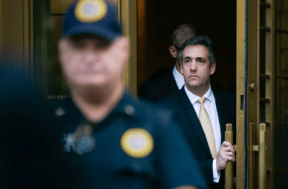
Att’y Michael Cohen (NYTimes)
The Constitution provides for some guidelines, but once the Electoral College has had its say, the matter is largely over. It has always been the case that the president is cloaked in power and immunity, his only check being a watchful, attentive Congress. If they choose to be neither there is a little that can be done.
It’s no exaggeration to say the Framers didn’t contemplate party loyalty and partisanship as obstacles to good governance. Indeed, it took only one contested election (1800) to force the 12th Amendment in response to changing conditions and to clean up the errors. It is the only such amendment to address the presidency directly. In a non-partisan, non-party dominated milieu it made sense (as it  was originally construed in the Constitution) that the candidate with the majority of Electoral College votes should be president and the candidate with the second best showing be vice-president. But, as the nation realized in the 1800 election, that meant that president and vice-president were from different parties.
We find ourselves now in a situation that Five Thirty-Eight describes as radically different from that which the Framers knew:
“The structures established by the Constitution assumed a world in which the presidency and the Electoral College were not fully absorbed into a contentious national party system. That vision has long since been replaced by one in which presidential elections are national contests over policy agendas and ideas.”
And a president with a majority in both houses might be altogether immune from scrutiny or constraint.
The first Imogen Trager novel, Faithless Elector was published in the Spring of 2016, before Donald Trump was even his party’s nominee. The story was conceived after the debacle of the 2000 Bush-Gore election, but it imagined just this world. It’s a taut thriller about people in way over their heads trying to stop the theft of the presidency. Its setting—clear to anyone who cared to look as far back as the 2000 election—is hyper-partisanship and the weaknesses of our rules governing the highest office….weaknesses, it should be noted, that remain latent and could still be exploited…if they haven’t been already.
James McCrone is the author of the Imogen Trager political suspense-thriller series Faithless Elector and Dark Network. The third and final book in the series, working title Who Governs, will be out next year.
Find them through Indybound.org. They are also available at Amazon, Barnes & Noble, and Powell’s Books.
Link to REVIEWS
For a full list of appearances and links to reviews, check out:
JamesMcCrone.com
 On his blog,
  Campbell goes on to note in detail that Scottish Conservative party and anti-Scottish Independence news organizations seem not to have run afoul of the BBC’s gatekeepers.
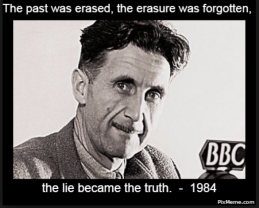 While this is particularly disturbing for pro-Independence voices, it also points up a larger contemporary epistemological problem: how do we know what we know, if the evidence and facts that underpin our opinions and action are so easily disappeared? How do we hold officials and others accountable when the record of their very words is so slippery?
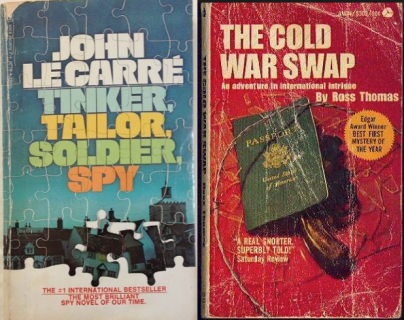 Manchette cites many of my favorites, like John Le Carre and Ross Thomas as having been very influential in his embrace of a new aesthetic. As Ethan Anderson put it in his ‘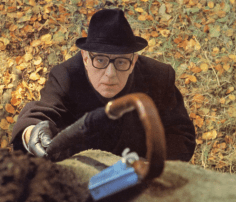
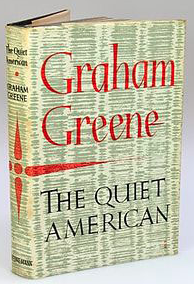 To Manchette’s list of influential writers in this hybrid genre, I would add Graham Greene. His “entertainments,” like The Quiet American, The Third Man, Our Man in Havana and The Honorary Consul are extraordinary. Political events are not just backdrops for Greene’s and the others’ stories, they are integral, giving deeper meaning to the characters’ struggles and to the stakes if they fail. They inform the stories and give them an edge, whether it be Viet Nam as the Americans replace the French (Quiet American), or the gullible Agency in Our Man in Havana. As I struggle to write engaging thrillers, I keep these and other works in my mind, not to copy, but as strong examples of all that’s possible.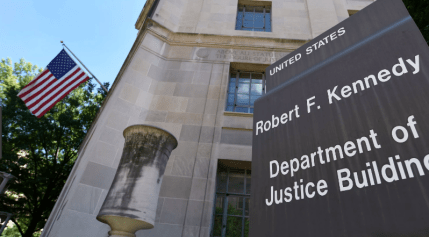
 In the real world, we’re shocked to be now confronted with authoritarian propaganda at the highest levels, dismayed by craven apologia for that propaganda; by an increasingly irrelevant, neutered main stream media, and an administration that has its hands on all the levers of power. But this state of affairs has been apparent to anyone with imagination. It’s disturbing just how much these first two Imogen Trager novels get right regarding the context and background in which the conspirators operate—a pliant media, cowed by power, machinations at the highest levels of the Justice Department; fake news, false claims of voter fraud, collusion and corruption.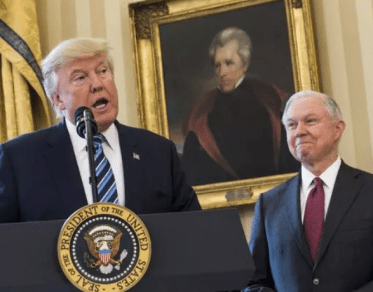
 James McCrone is the author of the Imogen Trager political suspense-thriller series
  Chosen Words - James McCrone