Power of the small states in the *Electoral College

Power of the Small States in the Electoral College

[previously posted on a former blog, now defunct – April, 2016]

The Electoral College process favors people living in small states. We all know that each state has the same number of electoral votes as it does members of Congress. Since congressional apportionment in the Senate favors the small states, the electoral college therefore favors small states, first by giving them the malapportioned Senate votes, and second by amplifying the voting power of those votes.
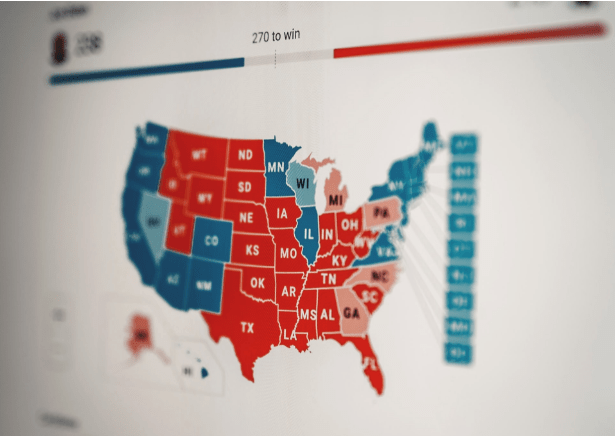
For instance, California has 38,800,000 residents, and it has 55 electoral votes, or about 705,000 people per elector; and Wyoming, with 550,000 people, has three electoral votes, or about 183,000 people per elector. Which means that a Wyoming resident has 3.8 times the voting power of a California resident. Sixty-five Wyomings could fit in California, meaning that if California were scaled in such a way it would contribute 195 votes to the electoral college.

The winner-take-all (except ME and NE) further amplifies this scenario. (For further reading, you can check out papers from Columbia Univ. and MIT.)

Many respond that ours is a Constitutional Republic, that the Electoral College and the Senate protect us from “tyranny of the majority” and/or “mobocracy.” This misses a key point:

Where and when are we prepared to say that the loser gets to win, to dictate policy? Under what circumstances?

And whereas California has 38,800,000 residents, and it has 55 electoral votes, or about 705,000 people per elector; and Wyoming, with 550,000 people, has three electoral votes, or about 183,000 people per elector. This discrepancy means that a Wyoming resident has 3.8 times the voting power of a California resident.
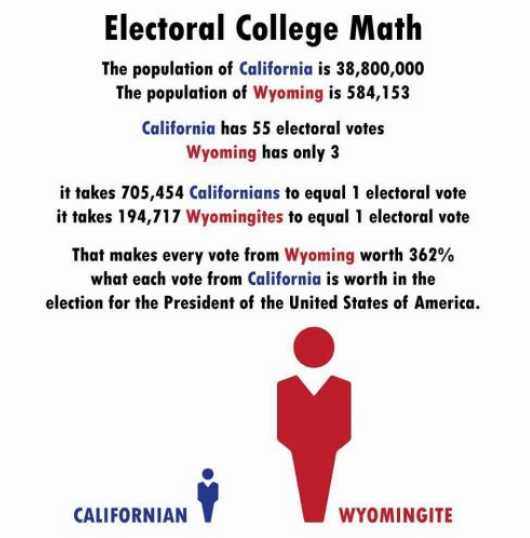
Sixty-five Wyomings could fit in California, meaning that if California were scaled in the same way, California would contribute 195 votes to the electoral college. The winner-take-all nature of the contest (except ME and NE) further amplifies this unbalanced scenario.

One further latent anti-democratic issue in the Electoral College is the prospect of a three-way race where no one wins a clear majority (270).

When no candidate wins 270 electoral votes, the Constitution provides that the House of Representatives elects the president in such a case. If it were the full House voting, and since, ideally, the House’s membership reflects the nation’s population, this election would be relatively fair. However, this process provides that each state receives only one vote, further diluting and diminishing the power of large states, and utterly disenfranchising the people of the United States.

Given the undemocratic nature of the EC, if an elector switched his or her vote so that the EC vote matched the popular vote, would this be a good thing?

#   #   #
James McCrone

James McCrone is the author of the Imogen Trager political suspense-thrillers Faithless Elector , Dark Network and Emergency Powers–noir tales about a stolen presidency, a conspiracy, and a nation on edge. All books are available on BookShop.org, IndyBound.org, Barnes & Noble, and Amazon. eBooks are available in multiple formats including Apple, Kobo, Nook and Kindle.

His work, “Numbers Don’t Lie” also recently appeared in the 2020 short-story anthology Low Down Dirty Vote, vol. 2, and his short story “Ultimatum Games” will appear in Rock and a Hard Place this fall. His next book, w/t Bastard Verdict, is a noir political thriller set in Scotland.


A Seattle native (mostly), James now lives in South Philadelphia with his wife and three children. He’s a member of the The Mystery Writers of America, Int’l Assoc. of Crime Writers, Int’l Thriller Writers, Philadelphia Dramatists Center and is the newly elected vice-president of the Delaware Valley chapter of the Sisters in Crime network. James has an MFA from the University of Washington in Seattle.

This blogpost was previously posted on a former blog, now defunct – April, 2016
Alexander Hamilton and the first contested election

[previously posted on a now defunct blog – 30 August, 2016]

The compromise rules governing the Electoral College could not even stand up to the first contested election in 1800. The original writing had the candidate with the most Electoral College ballots becoming president; the second place candidate would be vice-president. Those at the Philadelphia Constitutional Convention had not even conceived of there being political parties.

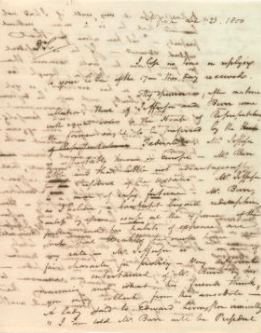
Hamilton Letter

In 1800, there was a tie between Jefferson and Burr; and even had there not been, two candidates from different parties would have been president and vice-president. The deadlock in the House in 1800 was broken on the 36th ballot (!), but only after Federalist Party leader Alexander Hamilton made known his preference for Jefferson, in words that ring eerily salient today: “In a choice of Evils let them take the least – Jefferson is in every view less dangerous than Burr.”

EXCERPT of the letter:
“Mr. Jefferson, though too revolutionary in his notions, is yet a lover of liberty and will be desirous of something like orderly Government – Mr. Burr loves nothing but himself – thinks of nothing but his own aggrandizement – and will be content with nothing short of permanent power in his own hands – No compact, that he should make with any other passion in his own breast except his Ambition, could be relied upon by himself – How then should we be able to rely upon any agreement with him? Mr. Jefferson, I suspect will not dare much; Mr. Burr will dare every thing in the sanguine hope of effecting every thing.”
[Letter to Harrison Gray Otis, a Massachusetts Congressman, from Alexander Hamilton]

Responding to the problems from those first elections, the Congress proposed the Twelfth Amendment in 1803—prescribing that electors cast separate ballots for president and vice president, and replacing the system outlined in Article II, Section 1, Clause 3. By June 1804, the states had ratified the amendment in time for the 1804 election. However, should there ever be a tie, or if no candidate receives the requisite majority of Electoral Votes, the vote for president will go to the House and Senate, who will vote separately on president and vice-president.

Initially, the Electoral College provisions conceived a set of knowledgeable persons, gentlemanly statesman of the political class who would put nation above self-interest. We have only to look at the 1800 election, where it is clear those involved were motivated more by what would be better for their state and their party than with the concerns of the nation to see how hollow that conception was.

I’m not casting aspersions on those Representatives. The 1800 election was a political struggle, with the clamor and rancor we would recognize today between contending visions of what is best for the nation. But it was hardly statesman-like.

When people defend the Electoral College as a way of putting country over the self-interest of the popular will, they are hearkening to a pre-political time that never existed, or more cynically, they are defending and advocating the ability of a small group to impose their self-interest on the majority. For all the criticism political parties routinely get, they are the only way non-political people (the majority) can have influence. The enduring recession has exposed how easily moneyed interests can manipulate rules at the heart of the Constitution itself.

The novel, Faithless Elector, shines light on the weakness of the system as well as the opportunity for narrow, special interests to exploit that weakness and thwart the will of the majority.

#   #   #

James McCrone

James McCrone is the author of the Imogen Trager political suspense-thrillers Faithless Elector , Dark Network and Emergency Powers–noir tales about a stolen presidency, a conspiracy, and a nation on edge. All books are available on BookShop.org, IndyBound.org, Barnes & Noble, and Amazon. eBooks are available in multiple formats including Apple, Kobo, Nook and Kindle.

His work, “Numbers Don’t Lie” also recently appeared in the 2020 short-story anthology Low Down Dirty Vote, vol. 2, and his short story “Ultimatum Games” will appear in Rock and a Hard Place this fall. His next book, w/t Bastard Verdict, is a noir political thriller set in Scotland.


A Seattle native (mostly), James now lives in South Philadelphia with his wife and three children. He’s a member of the The Mystery Writers of America, Int’l Assoc. of Crime Writers, Int’l Thriller Writers, Philadelphia Dramatists Center and is the newly elected vice-president of the Delaware Valley chapter of the Sisters in Crime network. James has an MFA from the University of Washington in Seattle.

This post is from a previous (now defunct) blog, originally published 30 August, 2016

Antagonizing

What we get wrong in political thrillers is the same thing we get wrong in real life —

We tend to oversimplify antagonists.

For the protagonist, every writer asks, who is she? what does she want, and why can’t she get it? Part of the writer’s craft is to artfully reveal details that make the main character(s) feel rounded.

But what does the antagonist want–and why?

My recent thriller, Emergency Powers, takes seriously those questions, delves into who the bad guys are–so much so that one reader said he almost began rooting for one of them.

He didn’t think that was a bad thing, and neither do I. You don’t have to agree with- or root for them. But reader and writer should at least understand who the bad guys are and why they’re doing what they’re doing.

My thrillers – Faithless Elector, Dark Network and the new Emergency Powers – have been called prescient, seemingly ripped-from-the-headlines (or, rather, anticipating them). One of the reasons is that I looked not only at the driven, conflicted protagonist, FBI Agent Imogen Trager, but at what the bad guys wanted; how they might get it—and what it would take to stop them. If possible.

That impulse forced me to think like them, to consider how they might go about staging a coup. I had to consider which tools were at hand, which key institutions and offices could be undermined, corrupted or hollowed out. And as I worked on the second draft, I stumbled onto things I had written that were really happening. (I should say that I never saw the Jan. 6 capitol riot coming; and even if I had my editor would have axed it as too far-fetched.)

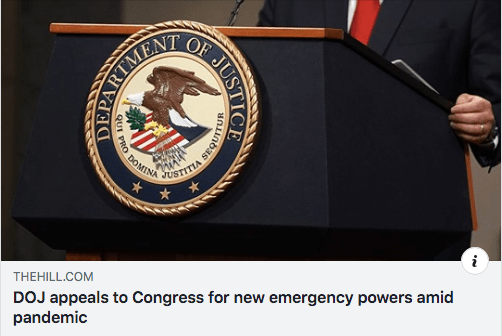
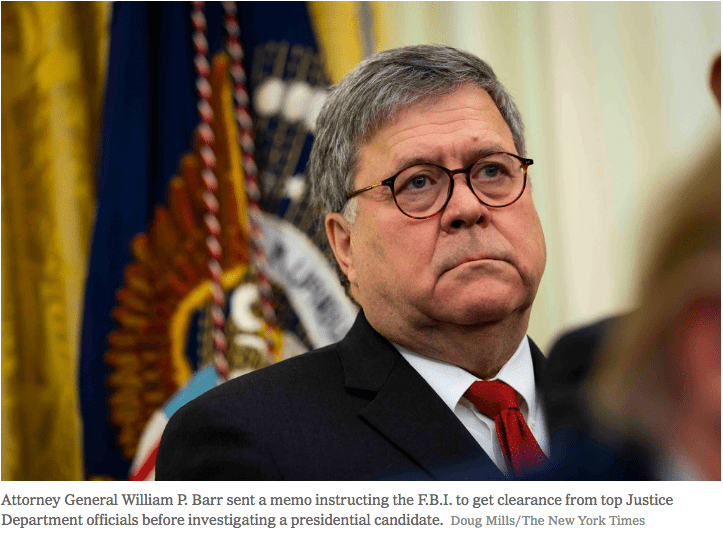
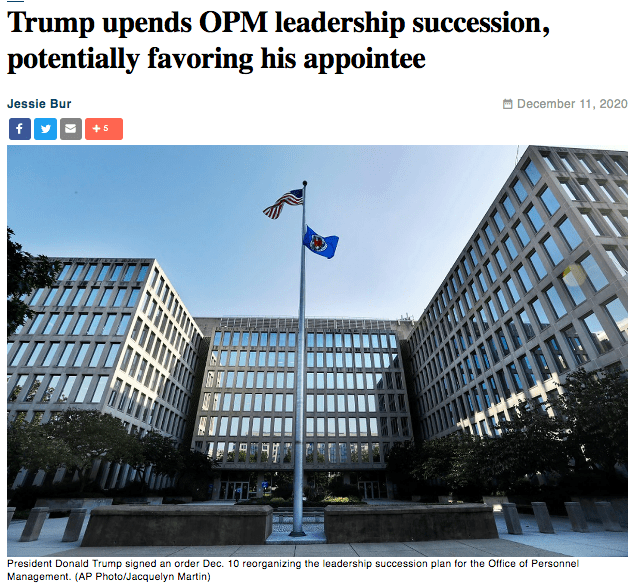
But I did see that a pliant, corrupt Attorney General would be the key to covering up and legitimating a coup; that cabinet positions–even whole departments–could be captured or rendered ineffective through second-in-commands and “acting” heads; that hollowing out the civil service by putting the OPM (Office of Personnel Mgmt) under the ambit of the White House and returning it to a “spoils” system would make a cover-up more complete. And I saw that this state of affairs–a true conspiracy with many moving, coordinated parts–would be hard to stand against, much less defeat. But if anyone could, Imogen would be the one to do it.

Thrillers are meant to be an escape, but not an escape from sense. The gray eminence presiding over the coup (“The Postman”) is concerned with private power, exercised through public means. In the past, he tried to get himself elected, and tried to buy politicians, but his ideas are unpopular and can’t win in the public sphere. Like a lot of frustrated suitors, he thinks it’s because the game is rigged. Well, two can play at that game…

His henchmen are not James Bond automatons, but have real (if misguided) reasons for signing on with the Postman. A great many of us bemoan the level of discourse on social media, but confronting (and considering) some of the ideological rantings there has given me insight into what ideas they hold and what they might be capable of doing.

It makes for a thrilling story–all the more so because much of it could really happen.

#   #   #

James McCrone

James McCrone is the author of the Imogen Trager political suspense-thrillers Faithless Elector , Dark Network and Emergency Powers–noir tales about a stolen presidency, a conspiracy, and a nation on edge. All books are available on BookShop.org, IndyBound.org, Barnes & Noble, and Amazon. eBooks are available in multiple formats including Apple, Kobo, Nook and Kindle.

His work, “Numbers Don’t Lie” also recently appeared in the 2020 short-story anthology Low Down Dirty Vote, vol. 2, and his short story “Ultimatum Games” will appear in Rock and a Hard Place this fall. His next book, w/t Bastard Verdict, is a noir political thriller set in Scotland.


A Seattle native (mostly), James now lives in South Philadelphia with his wife and three children. He’s a member of the The Mystery Writers of America, Int’l Assoc. of Crime Writers, Int’l Thriller Writers, Philadelphia Dramatists Center and is the newly elected vice-president of the Delaware Valley chapter of the Sisters in Crime network. James has an MFA from the University of Washington in Seattle.

Faith among the Faithless

I suppose this is sort of Christmas-y: In my most recent post, “Blunt Tools,” about the obstacles in the way to legitimating a presidential election—Electoral College vote, Congressional certification, potential contingency vote—I found that the word “faith” cropped up again and again: faith in the rule of law, faith in the system(s), faith in our officials, in our democracy. Faith and hope.

Besides being a messy work-in-progress, democracy feels like a spiritual undertaking. Like prayers, where God sometimes answers, No, election outcomes are seldom all that you could have hoped. It’s not the hope that’s spiritual, however. It’s faith in the process, that the result was arrived at fairly; that voting is the best way to achieve our ends, to hold officials accountable.

But it isn’t mere faith that gets us across the ever-moving line. There must be trust in the systems, in people and institutions. Transparency. Faith surmises that tangible evidence doesn’t exist; whereas trust is based largely on evidence that is real according to the senses and to human reason. It’s the institutions, the procedures, and the repetition of sound outcomes (fairly arrived at) that bolsters faith and inculcates trust.

Consider banking, a messy, craven business, ripe for (and often rife with) corruption and collusion. But the teller doesn’t pocket your paycheck, the bank doesn’t steal it. Indeed, banks take steps to ensure that there’s a trail of evidence should something go awry. And they make sure that no one else steals it. (They may snatch at part of it through fees, etc., but that’s a separate discussion.) Your savings are secure, as are your investments, if you’re fortunate enough to have any. I don’t mean to suggest that some mere squishy feeling can bring about the change we want to see all by itself, but without it, we’re lost.

It is trust—repeated, faithful (that word again) repetition of processes and procedures combined with legitimate outcomes. Say what you will about the Electoral College (and I’ve said and written plenty); say what you will about the conduct and byzantine rules within banks (see my example above), but at their most basic, they are open, verifiable activities.

Given the multiple lawsuits and demonstrations—distinct from required/permitted challenges and recounts—I can only surmise that Trump and his enablers have a different aim: to erode trust by striking at our faith in democracy, by tarring institutions and officials with their own foul brush. They certainly have no love for democracy, which at its core is an act of faith that self-governance is the optimal system. The Big Lie works, breeds doubt, will give people pause. The Big Lie in this case is that the vote was stolen. And that lie lingers, festers, strikes at faith.

A recent WA Post editorial points out that, for weeks, Republicans and “Donald Trump [have] told the public that the presidential election was riddled with fraud. And now, in an immaculate act of self-confirmation, Republicans are pointing to the public’s doubts about the election as evidence that something fraudulent must have taken place…” The accusations have been rebuked at every point, by sound, faithful reporting (and recording) of sound certification practices and procedures.

The Big Lie—and it feels like the past four years have been nothing but lies—reminds me of a pool shark, who not only makes the shot, but “leaves” the cueball either in a good place to make his next shot, or in such a way as to thwart his opponent, and leave him behind the eight-ball.

Ours is a postlapsarian world, to be sure. It has been for quite some time. What came before it was hardly perfect, and certainly it wasn’t paradise. But it was (and is) verifiable. Something we can have faith in.

Perhaps a worldly and political update of 1 Corinthians 13:13 is in order: “And now abideth faith, trust, certify, these three; but the greatest of these is certify.”

#   #   #

James McCrone

James McCrone is the author of the Imogen Trager political suspense-thrillers Faithless Elector and Dark Network about a stolen presidency, a conspiracy, and a nation on edge.
The third book, Emergency Powers, is available NOW!
All books are available on BookShop.org, IndyBound.org, Barnes & Noble, and Amazon. eBooks are available in multiple formats including Apple, Kobo, Nook and Kindle.

He’s at work on a fourth thriller, set in Scotland.
A Seattle native (mostly), he now lives in South Philadelphia with his wife and three children.
James is a member of the The Mystery Writers of America, Int’l Assoc. of Crime Writers, Int’l Thriller Writers, Philadelphia Dramatists Center and the Sisters in Crime network. James has an MFA from the University of Washington in Seattle.