
Since my earliest writing days, I’ve found it helpful to write the obituaries of my characters to get them fixed in my head—even when I wasn’t necessarily going to kill them off.
She still surprises me! Early on, it was clear she was the star of the series.
 Imogen Trager is the committed heroine of the political thrillers, Faithless Elector, Dark Network and the forthcoming finale (as-yet-untitled). She began her fictional life as a supporting character, but as I wrote, I quickly found she was stealing scenes, growing, and I adapted the novels.
It’s important to have an outline for a novel, but it’s equally important to foster the judgment to follow the most interesting aspects of a story—even when it means abandoning or rewriting key aspects. If the story is developing in new and surprising ways for the writer, it’s more likely a reader will find those twists surprising, intriguing.
Late in 2015, around the time it became clear to me that my outline was woefully inadequate, that the book would become books, it also became clear that these thrillers were her story—The Imogen Trager series.
Since my earliest writing days, I’ve found it helpful to write the obituaries of my characters to get them fixed in my head—even when I wasn’t necessarily going to kill them off. The summary-style of the obit is helpful in establishing who the character is, and it allows him or her to come into sharper focus. Interestingly, often none of the “obit” makes it into the final draft, but the exercise itself is valuable because it informs and directs the story.
For the protagonist(s), who will have to carry the story, I’ve found biography is the best, and I write it from cradle to just before the moment when the character arrives “on stage” in the book(s). As with the obits, often none of the biography makes it onto the page, but knowing who your character is, where she comes from, informs what you do put on the page, and it informs the judgment necessary to follow what might at first blush seem to be tangents.
Imogen Trager needed a backstory, a history. The wonderful thing is, she still surprises me as I write the final instalment in this series!
Biography of Imogen Trager. The name “Imogen” came to her via her mother’s favorite aunt, who also had striking red hair. She was born in 1981, in Ripley, Ohio, a small town of 1,700 people, located on the Ohio River, just across from Kentucky.
The town was a center for the tobacco trade and had once had been an important stop on the Underground Railroad. Like a great many rural towns in the ‘eighties and ‘nineties, Ripley battled with decay. It didn’t help that the town was almost five miles from the nearest bridge, stranding the town on its side of the Ohio. The businesses that stuck it out were a few tidy, venerable family-owned businesses and a smattering of chaotic idiosyncratic jumbles selling harnesses, antiques, rototillers, chewing gum, soda pop and furniture standing amidst boarded up and for-rent storefronts.
Imogen’s birth was a blessing, and a bit of a surprise to Dean and Agnes [Law] Trager, who had her in their early 40’s. She was their joy and they adored on her. She was bright, inquisitive and independent. She also had a stubborn, rebellious streak, and would have contested bitterly with her parents if it had ever occurred to them to proscribe her behavior, activities or ambition. As it was, her liberty allowed her to cultivate a strong sense of herself.
She was not a loner; nor was she gregariously popular. She preferred the company of one close friend, Marvine Ritner, a easygoing dark-haired girl who lived on the next block. The two were inseparable, and would be so throughout their schooling until Imogen moved away for university. Marvine loved spending time at Imogen’s, a white Colonial with a green roof. It was quiet there, orderly and the parents doted on them. Imogen loved spending time with Marvine’s family, whose parents coped with their large chaotic family by practicing a kind of benign neglect. With Marvine’s younger siblings locked out of the bedroom, she could lose herself with her friend. They could talk and dream and threaten the younger siblings with unspecified consequences for disturbing them.
Imogen excelled in her studies, and it was to her parents’ tidy house to which both girls returned in order to do their homework, and where Agnes kept the girls well supplied with snacks. Marvine, for all her diligent work and good study habits, did not shine academically, though Imogen did. The teachers liked Imogen, and the town librarian adored her.
Beginning in middle school she was called a “bookworm,” though she was hardly a shut-in. There was a remoteness about her, like that of someone who had found herself in their midst by accident. Boys who were interested in her—and there were many—ran up against the same amiable aloofness her FBI colleagues would find much later. She was not superior, nor cruel, just blithely choosy, and the young men she met –even those she dated—were friendship relationships. They never went for long, or very far. She talked through her misgivings and amorous frustrations with Marvine, who had had the same boyfriend, Darren, since freshman year. Darren and Marvine married a year after high school.
As one of the taller girls she played center for the Ripley High School Blue Jays girls basketball team. Marvine joined, too. Her tenacity on the court, together with a low center of gravity could be counted on for a timely screen or judicious foul . Imogen was noticed everywhere she went, with her deep red hair and confident, rangy stride. The attention fed her sense of herself.
Imogen’s father Dean was “in tobacco” in various capacities throughout his life. It was the lifeblood of the area. Her parents were proscribed by their circumstances and their lack of formal education; by forces that kept them striving but never quite excelling. Recognizing and admiring her intelligence, they could proudly see her as a teacher there one day. But that was as far as they could see.
Going away to university, and Ohio State in Columbus, had been a revelation for Imogen. At university she was challenged more rigorously than she’d ever been in high school. Her mind quickened, her tongue sharpened and her ambition grew. She was keen for the wider world, and her attachment to Ripley grew more tenuous. Its clean sidewalks, well kept lawns and prim, sleepy downtown came to seem quaint to her. Back in town during school breaks, her sophomoric dismissal of it all, or even the idea of coming back and settling down, baffled and hurt her parents, who worried she might be getting too big for her britches. Her friendship with Marvine frayed.
She seemed to grow brighter, and her parents dimmer as the years apart ground on. They consigned her work and who she was becoming to that growing part of their lives they no longer understood. Their experience of her success at university, and later during graduate school, was something like that of immigrant parents who wanted everything for their children, only to find they had set their children on a path they couldn’t follow.
Graduate school beckoned in 2003, and she chose the University of Washington, in Seattle, a move that took her even farther from Ripley, Ohio. While she worked toward her Ph.D., she grew impatient with the idea of becoming an academic, of teaching. In her mind, it represented a capitulation to the minor ambition her parents had sought for her. “So, a teacher?” her mother would exclaim rapturously, her hands clasped tightly together, her eyes seeming to understand.
Imogen despaired of reminding them she was in grad school to be a professor…which was, yes, a teacher, but her talk of research agendas, demographic studies and “service” seemed to get lost in translation.
But first she had to get the degree, and she foundered that first year, encountering her first setback. Initially humbled by the intellectual caliber of her peers in the early days of grad school, she had begun to rally, her status within her cohort rising when her father died suddenly, near the end of her first term. Her world and sense of herself shattered. She felt rootless, pointless, and even considered quitting altogether.
Her mother Agnes forbade it, counseling her that if she honored his memory, the worst thing she could do was quit. It didn’t matter that she and her father didn’t fully ‘get’ what she wanted to do, her mother had said after the funeral. They were proud of her and her achievements; and she needed to be getting on with that. “You can feel whatever you want to feel about things that happen in your life,” Agnes said. “The thing that matters is what you do.”
She passed a dismal second year, unable to translate her mother’s forceful words into meaningful action or progress. She failed to connect with faculty, and she felt the initial surge of ambition—both by her and on her behalf—eroding. During the difficult months and weeks that followed, she understood that while she hadn’t seemed to value her father and had discounted his proscribed worldview and ambition, knowing his support was there had helped propel her upward. With him gone, she felt like someone standing on a ladder that had lost one of its rungs.
Then, early in her second year, she connected with Professor Duncan Calder, whose renown as a scholar bolstered her own reputation; and she came to be regarded as one of the department “hot shots.” She was drawn to the puzzles he contemplated, about voting trends and power, extracted from large data sets. The work was intricate, engaging and fascinating, quietly exhilarating. She had never been much of a math nerd until she started applying formulae and code to the problems Calder posed and examined. But she was hooked. Seeing her name as a contributor on that first article had thrilled her.
She and Calder grew closer, but it was all business. She had liked his no-nonsense support, issuing as it did from a belief in her abilities and future. He could be friendly and nurturing, certainly, but there was a professional distance. He was quick to point out when her work didn’t measure up. It was not until she was defending her dissertation, when Calder’s marriage was falling apart, that she found she had feelings for him that were other than collegial.
Watching him silently fall apart broke her heart, and she finally had to admit to herself that more than the desire to comfort a friend and colleague, she felt desire. It wasn’t until five years later, when the Faithless Elector plot brought them together again that either would admit their feelings to the other or act on them.
As she prepared to defend her dissertation, Imogen had been contemplating and worrying about what an academic career would mean when the Justice Department and FBI offered her a job. Her misgivings about her future in academia were carried away. She surged on a wave of excitement that carried her toward the real world problems of the FBI’s Department for Voting Integrity.
 For the second time in a short space of time, Calder was devastated. That she would choose the Justice Department over academia was almost impossible to comprehend; but she seemed happy with her choice, and perhaps she would make a contribution. He had no way of knowing how big a contribution she would make.
Her mother also worried about her joining the FBI; that the work might be dangerous. If she’d only known….
James McCrone is the author of the Imogen Trager political suspense-thriller series Faithless Elector and Dark Network.

Find them through Indybound.org. They are also available at Amazon, Barnes & Noble, and Powell’s Books. Link to REVIEWS
The final book in the series is due out at the end of this year.
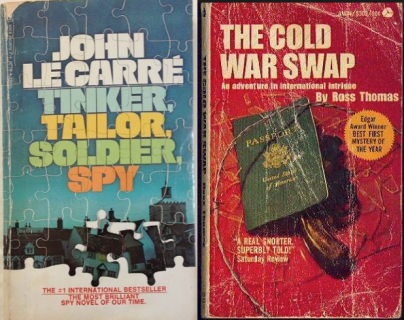 Manchette cites many of my favorites, like John Le Carre and Ross Thomas as having been very influential in his embrace of a new aesthetic. As Ethan Anderson put it in his ‘
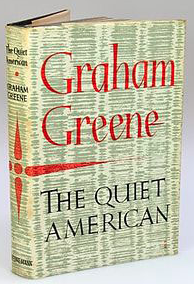 To Manchette’s list of influential writers in this hybrid genre, I would add Graham Greene. His “entertainments,” like The Quiet American, The Third Man, Our Man in Havana and The Honorary Consul are extraordinary. Political events are not just backdrops for Greene’s and the others’ stories, they are integral, giving deeper meaning to the characters’ struggles and to the stakes if they fail. They inform the stories and give them an edge, whether it be Viet Nam as the Americans replace the French (Quiet American), or the gullible Agency in Our Man in Havana. As I struggle to write engaging thrillers, I keep these and other works in my mind, not to copy, but as strong examples of all that’s possible.
 In the real world, we’re shocked to be now confronted with authoritarian propaganda at the highest levels, dismayed by craven apologia for that propaganda; by an increasingly irrelevant, neutered main stream media, and an administration that has its hands on all the levers of power. But this state of affairs has been apparent to anyone with imagination. It’s disturbing just how much these first two Imogen Trager novels get right regarding the context and background in which the conspirators operate—a pliant media, cowed by power, machinations at the highest levels of the Justice Department; fake news, false claims of voter fraud, collusion and corruption.
 James McCrone is the author of the Imogen Trager political suspense-thriller series
  In the name of verisimilitude (and telling a good story), I’ve been struggling to get right the atmospherics of our time; to isolate and describe the tactics and threat posed by reactionaries. I wonder at how close I seem to be coming. In that same post, I noted the novels are “about Power,” and that where there is no law, there’s only power.
 James McCrone is the author of the Imogen Trager political suspense-thriller series
  Chosen Words - James McCrone