I had a fabulous Twitter note from a reader last night, and it made my week. While it’s easy to feel that social media is the answer to getting out in front of readers, I’m finding 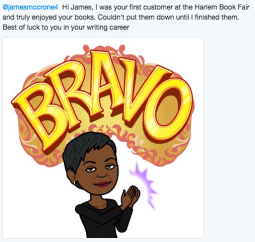 that it’s more useful as a means of connecting (or reconnecting) with readers after the fact than getting them in the first place.
The writing world is certainly more digitized, decentralized, atomized; and that has created numerous openings and opportunities…and also headaches. You can drive yourself crazy chasing “likes” and retweets, but will the number of followers actually translate into anything?
 Because for writers, it’s all still decidedly analog. Whether a reader buys a physical book or an eReader isn’t the point: how s/he hears about it and makes a decision about reading it is. The personal appearance at a reading, a conference or at a book fair remains the crucial component for connection because those are the moments when the conversation is most focused on the work. Readers have insightful, sometimes difficult, questions. It’s harrowing, and incredibly rewarding.
I’ve had a busy July—and it continues through August and September!—first with a reading from Dark Network at Shade Bar in New York City (7/15) for their Noir at the Bar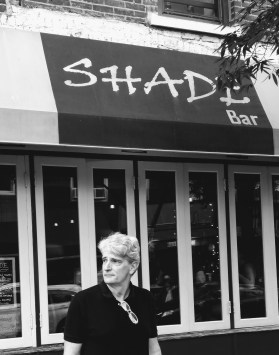 series, followed by an appearance at the Mystery Writers of America booth at the Harlem Book Fair (7/21) and then another reading as part of MWA Crime Fiction Reading Series at KGB Bar (8/2). At each of them I had at least two or three great conversations, and I’ve seen posts about the books.
I’ve been available to follow-up with each of them online when they reached out.
Stories are written to be read, and there’s no substitute for standing up and representing your work in front of people, talking about it and hearing back from readers. I have a social media presence on Facebook, Twitter, Instagram, and I interact with readers on Goodreads but their value as “advertising” is suspect, expensive and generally disappointing. It’s as a means of communication and follow-up connection with people I’ve met or interacted with face-to-face, or who have read my books that’s the most gratifying use.
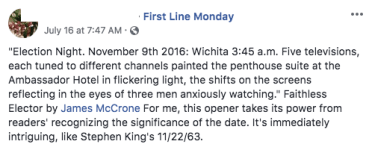
I even got a “First Line Monday” post from someone who’d been at Shade the previous night!
I suppose I wish it were as simple as finding some metric of followers:sales. That would make things easier, but it would remove the real interaction and the serendipity from the equation. I’ll continue to put reach out this month, and into the fall.
You can catch up with me at:
August 11 – Deadly Ink (Woodbridge, NJ) Panelist
September 6 through 9 – Boucheron, St. Petersburg
September 16 – Brooklyn Book Festival
September 29 & 30 – Baltimore Book Festival
October 6 – Collingswood Book Festival (suburban Philadelphia)
October 14 – Bucks County BookFest (Doylestown)
James McCrone is the author of the Imogen Trager political suspense-thriller series Faithless Elector and Dark Network. The third and final book in the series, working title Who Governs, will be out next year.
For a full list of appearances and links to reviews, check out:
JamesMcCrone.com
There are also a couple of Youtube clips of readings on the about author page.

 B. K. Stevens began the blog in 2015, and Taylor has taken it over. It’s great reading for anyone interested in writing craft.
 was originally construed in the Constitution) that the candidate with the majority of Electoral College votes should be president and the candidate with the second best showing be vice-president. But, as the nation realized in the 1800 election, that meant that president and vice-president were from different parties.
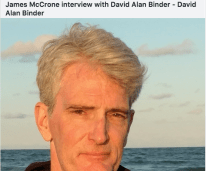 Interviews are a great way to get to know the person behind the stories, and maybe even learn a bit about how characters were created.
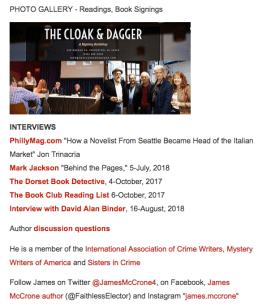 I love readings and book fairs for their chance to connect one-on-one with readers (and potential readers!); and interviews, like those on my
