Monstrous Imagination

Wm McIlvanneyWilliam McIlvanney (Laidlaw, The Papers of Tony Vetch, Docherty) still schools me. In a recent blog post I wrote about needing a new kind of imagination to write a genuinely remorseless villain. I think I was wrong. McIlvanney’s character, Jack Laidlaw, has persuaded me that I was shirking a writer’s job.

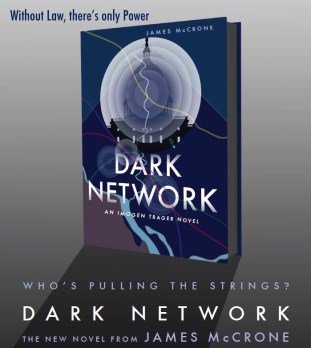
In the wake of real scandals and malfeasance the first two books in the trilogy, Faithless Elector and Dark Network, now seem prophetic. In Faithless Elector, the task of writing was straightforward: I saw the weaknesses of a system, saw how dark forces could exploit them and then put myself in the place of a group of conspirators to think about what I would do if I were them. The real difficulty was in figuring out what to do to thwart them.

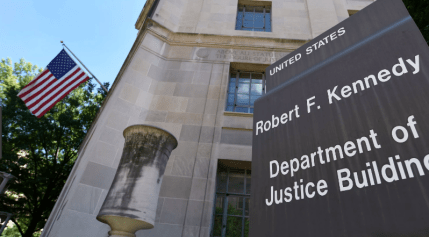
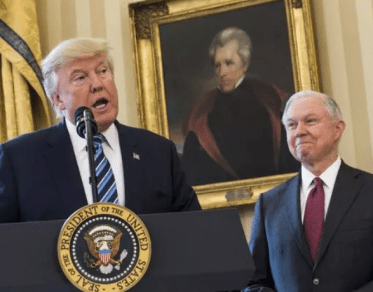
For Dark Network, were I a conspirator hoping to solidify my hard-won position, I figured I’d rail about voter fraud, daze and confuse the media, and I’d install a pliant Attorney General to quash investigations—or better, allow those investigations to atrophy. Indeed, some of the tension in the story comes from the heroine’s need to get the information out before a new, pliant AG can be sworn in. She knows, as we all know now, that with a majority in Congress, there would be no check—fictionally, or otherwise. Once again, we’re seeing in real time what a power grab would look like, how it could be (is being) effected, and how little can be done to stop it.  But I kept my villain(s) largely in shadow.

My books have identified a toxic strain of contemporary cynicism, but as I come to write the final book and delve into who the perpetrators are, I find that my early drafts don’t need a new perspective, but a deeper one. Cynical, pantomime villains aren’t satisfying characters, and Imogen and Duncan need a worthy opponent. Ruthless as they are, the conspirators believe what they’re doing is right, and that the country needs it. For me, this is the most chilling aspect of all, and I should have listened more closely to my instincts.  Fortunately, there was Jack.

In Laidlaw, one of McIlvanney’s finest novels, Jack Laidlaw chides a new partner when he Laidlaw_coverdespairs of catching the “monster” who has committed a horrific crime with, “Look, other people can afford to write ‘monster’ across this and consign it to limbo…We can’t afford to do that.” In the scene he’s talking about detectives, but he could just as easily be hectoring writers (like me) looking for shortcuts.

I have to put myself back in their place to imagine what it is they want, and why they’re willing to risk so much to get it. In Faithless Elector and Dark Network I deliberately kept the conspirators in the shadows. I felt—and readers seem to agree—that fighting an unnamable post-modern menace “fit” with the times and made for a compelling story. Not knowing whom you’re fighting or what ultimately they want also makes for brooding, dark atmospherics.

But I find there’s a limit. As I tear up dismayingly large chunks of the final book draft for this series, it will be to reveal the conspirators as all-too human.

 JMc-author2.2017James McCrone is the author of the Imogen Trager political suspense-thriller series Faithless Elector and Dark Network.  Find them through Indybound.org.  

They are also available at Amazon, Barnes & Noble, and Powell’s Books.  Link to REVIEWS
If you live in Philadelphia, pick up a copy at Head House Books -or- Penn Book Center 

Shakespearian Guilt

Reality threatens to outpace imagination, and I worry that justice and guilt are becoming quaint notions

Michael Smerconish writes today in the Philadelphia Inquirer about the silence (and poor sales) that come from writing ahead of the curve of opinion and understanding.  (I feel your pain, Michael!)Smerconish

His novel, TALK is about the rise of a right-wing radio host who has qualms about how he makes a living and what his actions are doing to the body politic.  When Smerconish published the book in 2014, he says, it was called “far-fetched,” “unrealistic” and “could never happen in America.”  Those who rejected my first book Faithless Elector during my wilderness years said pretty much the same things, adding: “no one knows or cares about the Electoral College.”  I think they do now.

What strikes me as I read about TALK and think about my own works, Faithless Elector and Dark Network, is that the outlines for our current situation have been in place for a long time.  It took only an effort of imagination to see where things were going and how it might turn out.  I continue to work on the final book in the trilogy and delve into who the conspirators really are and what they want.  But as I strive to understand them and write them, I find I have to abandon the current, anguished state of politics as (un)usual once again–this time in favor of a stark, vindictive reality.

This time, reality threatens to outpace imagination.  As I challenge and query the plot points and action in the current draft, as I fret over motivations, I worry that my own imagination may not have stretched far enough.  Maybe it requires a new perspective.

In TALK, it seems the protagonist Stan Powers is troubled with guilt.  In my books the protagonists are propelled by a sense of justice for its own sake, and–in the case of Duncan Calder–as retributive.  I worry that such notions may be quickly becoming quaint.

I titled this blog piece “Shakespearian Guilt” because whether we’re familiar with Shakespeare’s villains, we understand the feelings of guilt that accompany heinous acts.  Richard III is visited by ghosts of those he murdered, and they curse him:  “think on me, despair, and die,” they say.  Macbeth is accused by ghosts, Henry IV feels the need to atone for usurping Richard II’s throne.  We understand it, and we feel better that these characters are miserable, despite their high status.  But what happens when they’re not troubled, when they have no qualms?  The epigram for Dark Network hinted at it:  “Virtue is more to be feared than vice, because its excesses are not subject to the regulation of conscience” (Adam Smith).

For those who’ve read the books, I see the dark network conspirators as baffled that events have come to this bloody head (a few well placed bribes should have taken care of it); they’re appalled by the body count that’s piling up across the books, but not because there’s blood on their hands, but because it’s untidy, public.  Feeling mortified that it has come to this, doesn’t mean they can’t sleep at night, or that quiet moments are troubled with doubt.  Far from it. They’re doing the right and virtuous thing; and such men never question themselves or their motives.  If they win, it’s because the angels were on their side.  If they lose, the forces of darkness have won…but only for now.

 JMc-author2.2017James McCrone is the author of the Imogen Trager political suspense-thriller series Faithless Elector and Dark Network. Find them through Indybound.org.  
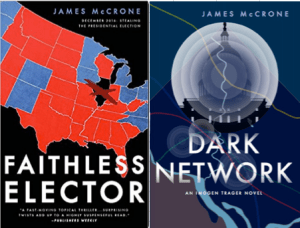
They are also available at Amazon, Barnes & Noble, and Powell’s Books.  Link to REVIEWS

If you live in Philadelphia, pick up a copy at Head House Books -or- Penn Book Center 

Downtown revitalization management is perfect training for writing thrillers

In the past, I’ve joked that there’s a well-worn path between downtown revitalization non-profits and writing thrillers…because let’s face it, there isn’t. Lately, as I think about it, I’m not so sure it’s a joke.

My former jobs were perfect training for writing thrillers.

MysteriousAffair.panel

A Mysterious Affair in Princeton

Recently, I was a late addition to a panel at “A Mysterious Affair in Princeton” put on by the Cloak & Dagger bookstore, which was a fantastic “affair,” with great speakers and a very nice turnout of mystery-thriller readers who had insightful questions.

The day’s final speaker was SJ Rozan, best known for the Lydia Chin/Bill Smith series and other mysteries. Her talk revolved around why people are drawn to mysteries and thrillers.

Screen Shot 2017-11-17 at 12.18.50 PM

SJ Rozan

She began by discussing “ur” stories, or essential narratives, that we tell ourselves over and again. The job of mysteries, she said, going back to their essence as “ur” stories, “is to provide an explanation” for what happened in an otherwise arbitrary, indifferent world.

The essence of a thriller, she noted, my ears pricking up farther, is simply: “is there enough time?” Can the hero(es) stop the ticking bomb or thwart the bad guys? What will it take to stop it?

As good as her talk was, I’m afraid I started thinking a lot about thrillers and stopped listening. My thrillers are indeed predicated on timing. In Faithless Elector, the tension concerns whether the heroine and hero can get the information out in time to stop the conspiracy, and in Dark Network, they’re confronted with a plot no one initially believes exists. In both cases, if the presidency is stolen—as we’re seeing now in the real world—it’s next to impossible to effect meaningful change after the fact.

This past week, I applied for a part-time job with a commercial district management organization. As I worked on my cover letter, wondering how much (or even if!) I should discuss writing novels as the reason for my hiatus from the world of non-profits, I found myself thinking about what leadership of a non-profit entailed.

downtown.revitalzIt turns out, managing a commercial district is perfect training for thrillers. Not that death and mayhem are ever part of the work, thankfully, but the planning and execution is eerily similar to plotting a thriller.

First, (Act One, let’s call it) there is a cast of characters in any district. In order to be effective, the district manager must know who the main players are, who the ancillary players are, how they interact and what it is they want. Scene setting, exposition. Often what they want is at odds with what others want, and they will coalesce into mini interest groups—Conflict!

And then something happens to disrupt the equilibrium (such as it is). Information that wasn’t meant to come to light is revealed, or someone is murdered…or there is a block grant available. Which takes us to Act Two.

Act Two, then, is where the main character encounters obstacle after obstacle toward achieving his/her goal of exposing the conspiracy or beginning a façade improvement program. Anyone who has worked in non-profit/local government will recognize this trope, and any such person might be forgiven for having daydreamed a timely murder or two.

Act Two sees the “first culmination” wherein it looks like the hero(ine)/district manager will achieve their goal. Inevitably, everything falls apart, leading to the “midpoint,” where it seems all hope is lost.

This leads naturally to Act Three, and the “climax” –the point of maximum tension where the opposing forces confront one another (Board meeting, anyone?). Act Three, then, shows how the world/commercial district returns to equilibrium having successfully navigated the obstacles—or failed miserably.

It’s the ending, however, where the non-profit and the fictional worlds diverge.  The thriller writer Tom Clancy once famously said:  “The difference between reality and fiction is that fiction has to make sense.”  He might just as easily have been talking about the difference between non-profit district management and thrillers.


JMc-author2.2017

 James McCrone is the author of the Imogen Trager political suspense-thriller series Faithless Elector and Dark Network.
Find them through Indybound.org.
They are also available at Amazon, Barnes & Noble, and Powell’s Books.  Link to REVIEWS

 If you live in Philadelphia, pick up a copy at Head House Books -or- Penn Book Center

Independent Bookstores

Reports on the death of Indy Bookstores have been greatly exaggerated.

I’ve been out and about in New Jersey and Pennsylvania over the past weeks doing what I call my “traveling salesman” bit, introducing independent bookstores to Faithless Elector and Dark Network. I plan to widen the scope to include South Jersey, Maryland and Virginia in the coming weeks.

I show up with copies of the books, title fact sheets, review quotes and sample promotional materials. Everyone I’ve met has been gracious and interested, and so far (touch wood!) every store has said they’ll order a few copies. Based on Ingram’s sales reports, it appears they’re following through.

This was not what I expected at all. Recently, I read a piece on Facebook, shared in one of the writers groups I’ve joined. It was written by an independent bookstore owner in Britain, addressed to the self-published author. While there was some good information in the piece, frankly it was so snarky, condescending and negative, it read like a cry for help. Nevertheless, after reading it, I worried that the writer’s anger-depression mode might be some industry standard, and I would be spending my traveling salesman days being ground down by dolorous, mean-spirited anecdotes about how no one understands how hard things are these days.

Far from it!

Barkham.Indy bookstores

from Shelf Awareness

Independent bookstores are thriving, and they’re excellently placed to take a chance on independent authors. They have defied all predictions about going the way of ditto sheets and blotting paper to remain an integral part of the lives of towns and cities. As the author Patrick Barkham puts it, in The Guardian, “no conventional economist could grasp how 900 indies are still in business. They are, because so much bookselling is done out of love. That’s wonderful, but the rest of us must love them back.”

And that’s the key:  love them back!  Stop in.  Ask a question.  Buy a book.


Bookstore owners and staff are far better than any algorithm at suggesting new books, and the serendipity of finding something unexpected–but perfect!–in among shelves you weren’t intending to look through is a huge part of the appeal.  Thank goodness these stores are agreeing to stock my book or I’d be spending too much money in many of them to even out the balance.

factsheet-screenshot

Having a title fact sheet that contains your ISBN, distributor, BISAC subject code(s) goes a long way toward breaking the ice.  I have no idea if the example on the right follows any standard format/template that real book reps use.  So far, however, it’s not hindering me. Knowing a little bit about the bookstore–whether they have a niche your book might serve, for example–is also important.

Here’s a map of bookstores stocking my books as of today.

bookstores2017.1102

Perhaps there’s one near you!

 JMc-author2.2017James McCrone is the author of the political suspense-thriller series Faithless Elector and Dark Network….featuring Imogen Trager.

Find them through Indybound.org.  

They are also available at Amazon, Barnes & Noble, and Powell’s Books.  Link to REVIEWS

If you live in Philadelphia, pick up a copy at Head House Books -or- Penn Book Center