The timing of reviews and limits of print-on-demand
In many ways becoming a published author has been better than I imagined. I’ve loved meeting and interacting with readers, connecting with other writers, and (most of the time) I love what I’m doing. Frankly, even on bad days, I marvel that the problems I’m experiencing are a product of finally being exactly where I’ve wanted to be for more than thirty years. That said, there are some things I’ve learned, and things I will do differently in future. 
Oscar Wilde famously said, “Experience is simply the name we give to our mistakes.”
The number and magnitude of mistakes I made with my first book lead me to believe that I’m a very experienced self-published author, and I offer the following dearly bought insights that I hope may help others avoid costly, time-consuming mistakes:
I did what I thought was ample due-diligence regarding marketing support and distribution for the book, and yet there was a great deal I didn’t understand.
The biggest marketing mistakes for any book concern:
• Timing
• Reviews
• Distribution
• Control
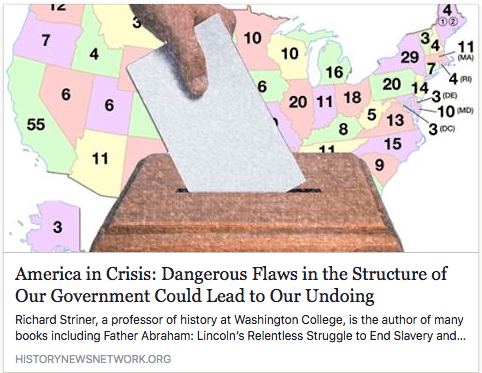
I published my first novel, the political thriller Faithless Elector, at the end of March, 2016. It concerns a conspiracy to steal the presidency by manipulating the Electoral College (full details here).
My thinking at the time was to “get it out there” early in the year and then do what I could to capitalize on the corresponding interest regarding the upcoming presidential election. Despite my best efforts to shoot myself in the foot (see below), the strategy actually worked pretty well. There was a groundswell of interest, and sales were encouraging. I began sending the book out to reviewers in April.
Which was my first mistake, timing: the major book reviewers (Publishers Weekly, Kirkus Review, Midwest Book Review, Library Journal, Booklist, etc.) all want books before they’re released for sale. This also turned out to be true for newspapers and magazines (I’m speaking of those that will even read/review self-published authors). For my efforts, I got nothing but radio silence. By shear good luck, I had sent the book out a little before its on-sale date, and I did get a positive review from Publishers Weekly—too late for it to go on the jacket cover, unfortunately.
Undaunted, I put it in all of my promotional materials. The miserable truth about one good review from a reviewer everyone’s heard of, however, is that touting that one good review makes it seem like maybe it was the only good one you received.
The realization of my next mistake came on me like a slow-motion car wreck: distribution. To produce the book, I looked at the different self-publishing services, and I decided on CreateSpace. CreateSpace has a wonderfully user-friendly interface, responsive, helpful customer service and the physical books they produce are of good quality. The online reviews of their service were positive. Moreover, they are tied in with Amazon, which felt like a smart marketing choice.
Best of all, they have a feature called “expanded distribution,” which allows the book to be picked up by libraries and bookstores, and that expanded distribution includes listing with both Ingram, and Baker & Taylor. I had done research about book distribution, and I’d learned that two main book distributors, Baker & Taylor, and Ingram, were the principal suppliers to bookstores. I chose CreateSpace, and everything seemed to go fine.
But as I started taking the book around to bookstores–armed with my one good review and 4.7 stars on Amazon–it became clear that while it was true that the book was listed with Baker & Taylor and Ingram, the “standard discount and return” that bookstores look for—and require—from these two distributors was not available for a print-on-demand title, like mine. So, the listing was useless. (I don’t want to imply that I’m maligning CreateSpace: the point here is to educate about the limitations of POD.)
As a consequence, I was only able to sell by consignment at local bookstores, who by the way, can be wonderful to local authors. What it meant in practice, though, was that I would order the books through CreateSpace at my cost and then take them to the independent bookstores who had agreed to sell it. This was only really an option for local bookstores, because I needed to be able to promise that I would quickly take back any unsold books—or happily resupply them! The consignment strategy, however, would not work for Barnes & Noble or independent bookstores far away from me. It became clear that control of my book, which had been one of the attractive parts about self-publishing, was an illusion.
This illusion of control was fully shattered when I found out that Ingram had a newish service for self-published authors called IngramSpark, one that did offer the standard discount and return, along with sales to Amazon, libraries, etc., and I decided to make a change. Unfortunately, when I set up the title with CreateSpace, I had elected to buy the ISBN identifier through them; and it was not transferable. I’d taken their offer to buy through them because it was cheaper.
This begat an odyssey of anxiety on my part. In order to move the title, I would have to buy a new ISBN for the new Spark platform as though it were a new edition, risking losing the link to Amazon reader reviews, and there would be down-time during which the title would not be available. Fortunately, a) sales were so poor at the time that being “down” for a few days was not an issue; and b) the Amazon page still lists both books, and the reviews are linked with both.
So what will I do differently?
Timing is the key.
• Buy my own ISBN now. Bowker is the clearing house for ISBN identifiers. They sell ten at a time. I’ll be writing other books, and ten ISBN’s is really only five books, when you consider the print and eBook versions both require a unique one.
• Create a cover for the book. I used a designer, and I’ve been very pleased with the results.
• Upload the book, and proof it one last time. Make sure the cover design includes temporary text “Advanced Review Copy – Not for Sale” on the cover.
• When the book is ready, make a detailed schedule. Some of the reviews from the more prestigious houses (Pub. Weekly, Library Journal, etc.) can take 3-4 months, so plan to release the book for sale 16 weeks later.
• Order & Make Advanced Review Copies (ARC’s) available to reviewers. Some of these charge reading fees, some don’t.
• Apply for a Library of Congress number. They will not issue them to print-on-demand titles, so if you’re using a POD platform, you can skip this.
• Plan a book launch party, either at a friend’s house—not yours—or a local independent bookstore
• Don’t give ARC copies to friends and family for reviews. At least not yet. I’ve read that Amazon is cracking down on paid and friend-family reviews.
• Start making a list of newspaper and magazine reviewers. At about 10 weeks from the on-sale date, start sending ARC’s.
• Start making a list of book-bloggers you want to review (maybe even a “blog tour”); start sending to them 6-8 weeks ahead of the on-sale date.
• As reviews start coming back (assuming they’re positive), add choice quotes to marketing materials.
• Consider doing a Goodreads giveaway or something else that might grab attention to coincide with your on-sale date.
• Update the cover to include the best quotes
• Make the title available for pre-sale
• Tweet, post, blog til your fingers turn blue
The second Imogen Trager novel, Dark Network, which follows up on the events of Faithless Elector, will be available for sale on October 20. I’ll update this post with any new “experience” I gain.
 James McCrone is the author of Faithless Elector, a suspense-thriller. Publishers Weekly calls it a “fast-moving topical thriller.” Its “surprising twists add up to a highly suspenseful read.” The sequel, Dark Network, is coming in October, 2017.
Faithless Elector, by James McCrone is available NOW through Amazon.
If you live in Philadelphia, pick up a copy at Head House Books -or- Penn Book Center