Verisimilitude – Getting ahead of behind-the-headlines

Was I a little ahead of the curve again, but this time with my short stories? Guns, cocaine, fentanyl—but no coffee—in Cumberland Coffee & Snacks in North Philadelphia…The police arrested a drug ring fronted by a coffee shop.
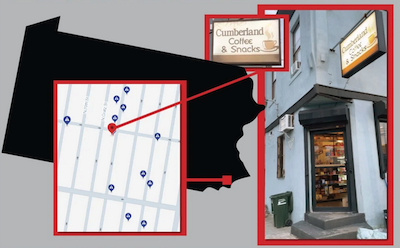
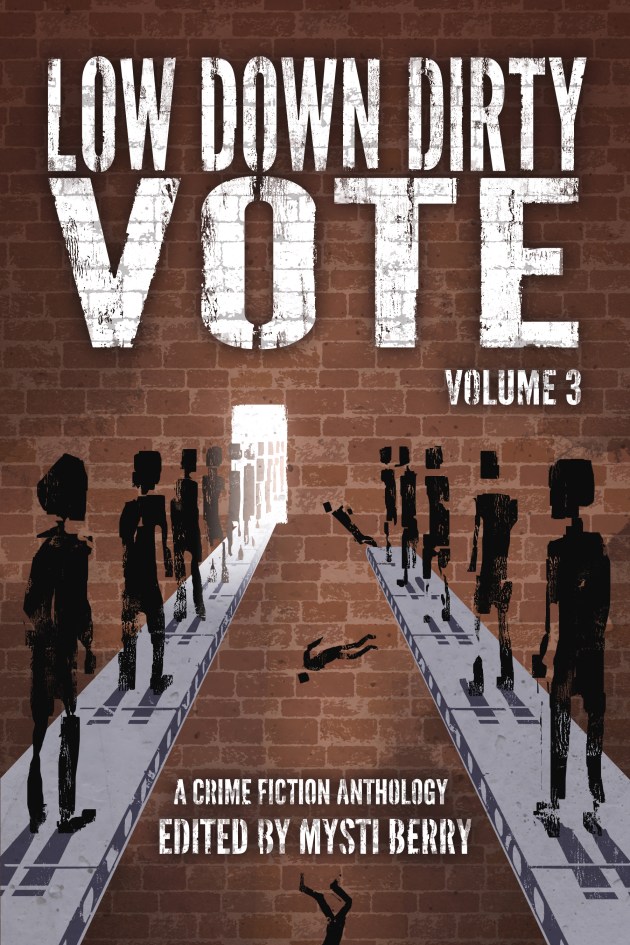
My short stories have focused on Philadelphia and crime—on desperate people making bad choices. In “Nostalgia,” a young man does stress tests on the facades of businesses used as fronts for illegal activities to make sure they seem legitimate. He knows he’s working for bad people, but he didn’t realize just how bad, until…. (collected in Low Down Dirty Vote, vol. 3).

The folks at Cumberland Coffee could have used my unnamed, nostalgic narrator as a “consultant.”

And in “Raccoon Summer,” (still, alas, homeless) a delivery driver and a corner store owner who has been strong-armed into being a front see a way out. But they’ll have to hold their nerve.

For stories to ring true, to have verisimilitude, the writer has to work out just how something might work in the real world if s/he has any hope of it working on the page. My first reader, and harshest critic (my wife), is excellent at poking holes in scenarios that I think are bullet proof, often sending me back to the drawing board.

This attention to detail extends to the “bad guys” themselves. The characters may know that what they do is wrong, but they feel justified in doing what they do. Only Iago and Richard III know that they’re evil, and they revel in it.

But to have verisimilitude—and tension—they both protagonist and antagonist must believe they’re in the right. And for a story to maintain tension, the reader has to believe that what’s happening on the page could happen in real life.

And sometimes, it sort of does.

The two short stories I mention above are not available online, but the list below gives links to titles you can find online, and buy links to those in anthologies or physical books.

FREE ONLINE
“Coffin Corner,” in Tough/Redneck Press July, 2025
In a small corner of Philadelphia, a funeral director steals a man’s car as payment on a debt…

“What’s Hidden,” in Killer Nashville Literary Magazine, Feb. 2024 issue
An old map reveals a crime and offers some redemption

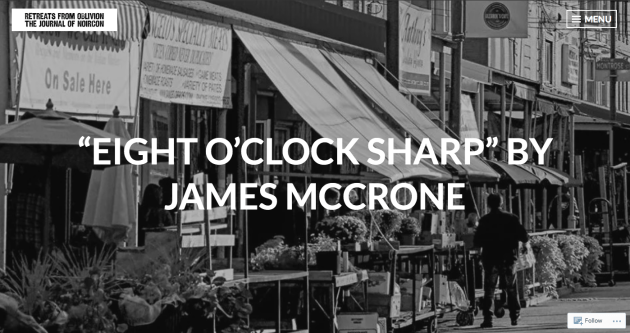
“Eight O’clock Sharp,” in Retreats from Oblivion: The Journal of NoirCon Jan./2022
There’s freedom when the past forgets you. Set in Philadelphia’s 9th Street Market
ANTHOLOGIES (available for purchase):


“Ultimatum Games,” in Rock and a Hard Place magazine – Winter/Issue #7 – Jan./2022.
“Nostalgia,” in in Low Down Dirty Vote, vol. 3, May 15, 2022.
“Numbers Don’t Lie,” a short story LOW DOWN DIRTY VOTE, Vol. 2 – July, 2020


James McCrone’s stories raise questions about the nature of power, the choices we make and the lessons we don’t learn.

He’s the author of the Imogen Trager political suspense-thrillers Faithless Elector, Dark Network and Emergency Powers–noir tales about a stolen presidency, a conspiracy, and a nation on edge. Bastard Verdict, his fourth novel, is about a conspiracy surrounding a second Scottish Independence referendum. His current novel, Witness Tree, is out on submission.

All books are available on BookShop.org, IndyBound.org, Barnes & Noble, your local bookshop, and Amazon. eBooks are available in multiple formats including Apple, Kobo, Nook and Kindle.

James is a member of Mystery Writers of America, Int’l Assoc. of Crime Writers, and he’s the current president of the Delaware Valley chapter of Sisters in Crime. He has an MFA from the University of Washington in Seattle, and he now lives and writes in Philadelphia, PA.

For a full list of appearances and readings, make sure to check out his Events/About page. Follow this blog, or follow him on Substack!

Some of his short stories are available FREE online. Links are HERE toward the bottom of the page.
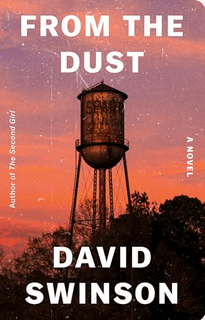
From the Dust is a compelling, insightful whodunnit

I was fortunate enough to read an early copy of David Swinson’s From the Dust on NetGalley. Here’s my review.

Retired DC homicide detective, Graham Sanderson has returned to his father’s home in Upstate New York. “It was my father’s death that brought me here, but my brother’s condition and need for company that made me stay,” he says. Death used to be Graham’s business, but he’s happy to be retired. Or so he says.

But something isn’t right. The small, rural town where he finds himself had only two murders in the past three years, and they were crimes of passion easily solved. Now, a body is found near the canal, probably killed elsewhere and brought to the site so that it would be found.

The local sheriff, himself a retired big city detective, worries that his new detective may not be up to the challenge. When a second murder occurs, with all the hallmarks of the first, he enlists Sanderson to help the rookie.

Swinson has crafted an intriguing and compelling whodunnit that is insightful and poignant. The weight of the past drags at Sanderson, and indeed on many of the characters here. Sanderson’s investigation will take him into places, and pit him against forces he never dealt with in DC.

And it will force him to confront not only his preconceptions about the investigation, but what lies behind them. The story moves along well. The pacing is good as suspects are introduced and the motive behind the crime comes into focus.

There is a noble doggedness about Sanderson’s approach, exhausting the leads, that reminded me of Georges Simenon’s Maigret.

I enjoyed this story, and I particularly liked that it didn’t fall into the trap of portraying rural citizens as quaint or cute, but as fully realized characters, each contributing something to the story.

Highly recommended.

From the Dust, by David Swinson ISBN: 978-0-316-52865-8


James McCrone’s stories raise questions about the nature of power, the choices we make and the lessons we don’t learn.

He’s the author of the Imogen Trager political suspense-thrillers Faithless Elector, Dark Network and Emergency Powers–noir tales about a stolen presidency, a conspiracy, and a nation on edge. Bastard Verdict, his fourth novel, is about a conspiracy surrounding a second Scottish Independence referendum. His current novel, Witness Tree, is out on submission.

All books are available on BookShop.org, IndyBound.org, Barnes & Noble, your local bookshop, and Amazon.

eBooks are available in multiple formats including Apple, Kobo, Nook and Kindle.

James is a member of Mystery Writers of America, Int’l Assoc. of Crime Writers, and he’s the current president of the Delaware Valley chapter of Sisters in Crime. He has an MFA from the University of Washington in Seattle, and he now lives and writes in Philadelphia, PA.

For a full list of appearances and readings, make sure to check out his Events/About page. And you can also follow him onSubstack!

Some of his short stories are available FREE online. Links are HEREtoward the bottom of the page.

Alyth and Hiding in Plain Sight

I’ve had a lot of fun revisiting the places where I set scenes in Bastard Verdict, examining the ways in which setting drives narrative; and I have blogged about them here: U of GlasgowKelvingrove Park (Glasgow) – Glasgow and spare groundDundee . I wrote about a lovely (if wet) day and a half I passed in Alyth in Blairgowrie during my most recent trip to Scotland, and I was invited to contribute to the The Alyth Voice. So today, I’ll let the Alyth Voice do the talking!

The NOT spectral clock of Alyth!

<<I set a portion of my new thriller, Bastard Verdict, in Alyth, along David Street. While I’m not keen to admit it, I had not visited Alyth before that wet Sunday afternoon in mid-September. Writing the novel during Covid, I had been forced to rely on Google Streetview for some of my insights. But I had come back to Scotland for the Bloody Scotland crime writers’ conference in Stirling, my third such visit, resolved to see Alyth with my own eyes…>> Link to further reading on the Alyth Voice (p.21).

The best part of the trip there was running into the volunteers at the Alyth Family History Project, and particularly Irene Robertson, who has continued her correspondence with me and been an extravagant, valuable source of information.

One of the occasions for my visit was to look for, or at least references to, the poet James Young Geddes (“lover and lasher of Dundee”), and his poem “The Spectre Clock of Alyth.” It was because I wandered up to the church featured in the poem, that I happily ran into the Family History Project.

The poem is reprinted here, below, in its entirety, though not in the Voice piece. Apparently, starlings nested within its workings and fouled (fowled?) the mechanism…

THE SPECTRE CLOCK OF ALYTH
by James Young Geddes, 1885

Surveying fair and fertile lands,
‘Neath the shadowing hills the Old Church stands –
Calmly, holily, looking down
On the quiet streets of the country town –
With a far away look which seems to say,
“I belong to the things of yesterday.”

Founded and built on a broader base
Than the structures of our degenerate days,
It hath with its walls of old red stone,
And its tower, with the steeple raised thereon
Far into the blue of the bending sky,
A quaint sacerdotal dignity.

And the legend runs (whether false or true
I cannot vouch) that they once could view,
Just where the tower and steeple meet,
A clock, with dials and hands complete,
Which its pious builders with kindly thought
Into the edifice interwrought.

But the unregarding fowls of air
Came in their legions and roosted there;
The rains of heaven upon it beat,
It was cracked by frost and scorched by heat,
And time itself at its doom connived,
Though for time alone it worked and lived.

Till in the conflict bleached and worn,
Aged, bird-defiled, and tempest-worn,
With drooping hands and fading powers,
And the memory only of golden hours –
The clock, reduced to such a pass,
Became but the ghost of what it was.

But they say at times you may still descry,
Should you upward turn an inquiring eye,
On the tower and steeple obelisk,
Presenting four-square a gilded disk –
A spectre clock in spectral ways
Fulfilling the functions of former days;

When the vanished hours come trooping back
And station themselves by the beaten track,
Where the labourers twain unequally yoked,
From the mists of the shadowy past revoked,
Re-plod their path o’er the phantom face,
And strive in a “hare and tortoise” race;

When a subtle influence sets astir
The rust-worn wheels with a ghostly whir,
And a sound is heard which attracts, repels,
Like the tremulous tinkling of fairy bells,
Echoed back from the hollows of the hills
In faint and far mysterious trills;

And the lowly dwellers on the ground
Listen in awe to the gruesome sound,
For they feel in a measure that adverse fate,
By means and methods intricate,
Hath placed them beneath the influence
Of the symbols and shades of the things of sense.

For the power which retribution brings
To wait in the wake of neglected things,
And of murderous deeds, hath it ordered so
That it casts a blight on all below;
And they who listen this changeling’s chimes
Are for ever and aye behind the times.

Their eyes are dulled, their ears are clogged,
They know not they how time hath jogged,
And though in them there may seem to be
The symptoms and signs of vitality,
‘Tis but a delusion and a snare –
They, too, belong to the things that were.

For the power that the phantom hath is this –
To benumb with the clock paralysis;
And the minds which its spell hath barred complete
Are a-simmer with ideas obsolete;
They move in a phantasmagoric way
The gibbering ghosts of yesterday.

And the curse shall be lifted? Only when
There shall rise from among the sons of men –
He, the gifted One, who shall fully know
The cause of the blight on the folks below,
Who shall read the riddle and then unlock
The secret and strength of the spectre clock;

Who shall sweep and scatter the dirt and dust,
And rid the wheels of their blood-red rust;
Who shall smooth the wrinkles from Time’s old face,
And his withered hands in strength replace,
To set them agog with motion brisk
Anew on each renovated disk.

Then only then shall the stagnant blood
Pulsate and flow in a fuller flood
Through flaccid veins; and men shall wake,
Yawn, start, and off their stupor shake,
To look around and astonished cry –
“’Tis the end of the nineteenth century.”

Ah me! But the wheels have never whirred,
And the life in the village lies yet unstirred.
Alas and alack! He cometh not –
The Conqueror we long have sought;
The magic spell is yet unbroken;
It reigns supreme – the Spectre Clock.

# # #

James McCrone is the author of the Imogen Trager political suspense-thrillers Faithless ElectorDark Network and Emergency Powers–noir tales about a stolen presidency, a conspiracy, and a nation on edge. Bastard Verdict, his fourth novel, is about a conspiracy surrounding a second Scottish Independence referendum. To get the details right for the new thriller, he drew on his boyhood in Scotland and scouted locations for scenes in the book while attending the Bloody Scotland crime writers conference in Stirling.

All books are available on BookShop.org, IndyBound.org, Barnes & Noble, your local bookshop, and Amazon. eBooks are available in multiple formats including Apple, Kobo, Nook and Kindle.

He’s a member of Mystery Writers of America, Int’l Assoc. of Crime Writers, and he’s the new president of the Delaware Valley chapter of Sisters in Crime. He lives in Philadelphia. James has an MFA from the University of Washington in Seattle. His current, work-in-progress is a mystery-thriller set in Oregon’s wine country…A (pinot) Noir, called Witness Tree.

For a full list of appearances and readings, make sure to check out his Events/About page. And follow this blog!

You can also keep up with James and his work on social media:
Mastodon: @JMcCrone
Bluesky: @jmccrone.bsky.social
Facebook: James McCrone author (@FaithlessElector)
and Instagram/Threads “@james.mccrone”