Democracy on Trial – 2024 Election edition

Making sure–NOW–that you’re registered to vote, and voting in November has never been more crucial. Donald Trump has even gone so far as to claim that we “won’t have to vote anymore…” if he’s put into power.

So, it’s not hyperbole to say that democracy is under threat. There are 84 days left until November 5th, 2024.

It’s important to remember that if voting didn’t matter, Trump’s party wouldn’t be working so hard to make sure you can’t. The litigious radical right means to gerrymander, purge/disenfranchise and litigate itself into power. They have been at it for years.
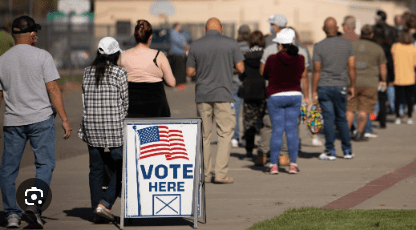
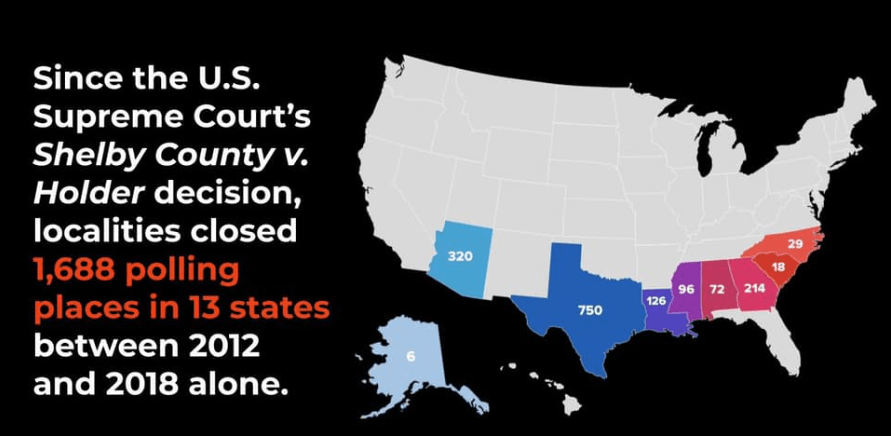
The Shelby County v. Holder decision saw the Supreme Court erode years of settled Voting Rights Act’s settled law. The overturning of key Voting Rights Act areas like Section 5 resulted in quick, anti-democratic laws. Within 24 hours of the ruling, Texas announced that it would implement a strict voter-ID law. Georgia and other states began closing polling places, resulting in . The list goes on. And on.
Democracy Docket does a nice job of keeping track of this misfeasance. The foes of democracy have deep pockets, (some) pliant judges, and a blistering sense of grievance and entitlement. They are laying the foundation–now–to overturn the upcoming election if it doesn’t go their way. Democracy Docket keeps a running scorecard of the lawsuits, judgements and official actions related to voting across the U.S.:
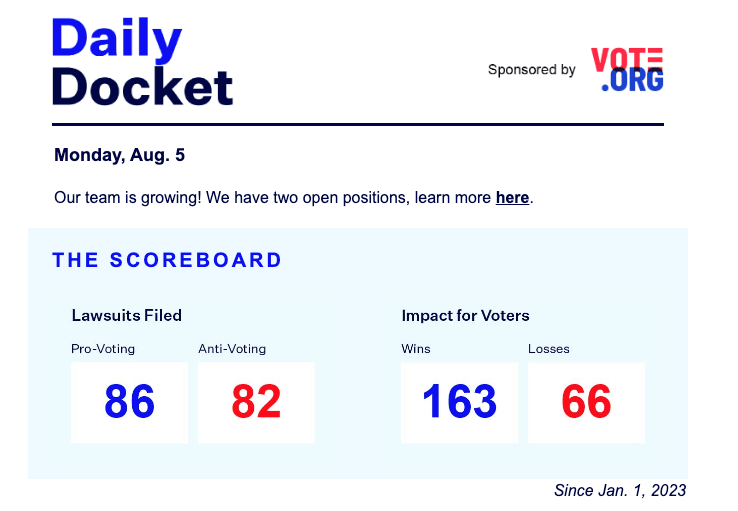
The “scorecard” from the most recent newsletter

Below, is a sample. The states of Georgia and Mississippi remain embattled, but the forces of disenfranchisement are at work in every state. The bullet point topics listed below, copied from the DemDocket newsletter, are the most recent developments.

Deep dive into threats to democracy in Georgia

  • Since 2020, we’ve seen an uptick in election denialism. And at a Georgia rally last Saturday, Trump and his allies started their plan to subvert the 2024 election by targeting the people responsible for overseeing election rules, Marc wrote in a new piece.
  • The state of Georgia has created a new online portal that makes it easier to cancel people’s voter registrations. In a new YouTube video, Marc shares his concerns about how the website will likely fuel election vigilantism in the state.
  • Struggles for voting rights continue in Mississippi
  • The RNC appealed the dismissal of its lawsuit seeking to reject mail-in ballots in Mississippi that are cast by Election Day and received shortly after. The case is now before the 5th Circuit — the most conservative federal appeals court.
  • Recently, the 5th U.S. Circuit Court of Appeals ruled that the Mississippi Constitution’s felony disenfranchisement provision will remain in effect, reversing its previous opinion from August 2023. Democracy Docket talked to individuals working to get their voting rights restored about this ruling’s impact.

Ohio removes hundreds of alleged noncitizens from voter rolls

  • Ohio Secretary of State Frank LaRose (R) announced that the state’s county boards of election are removing 499 alleged noncitizens from the state’s voter rolls after purging nearly 155,000 inactive voters last week.

I do not work for Democracy Docket, nor do I have any financial interest in it, but they do important work that shines light on the kinds of things the Party of Trump does in the dark and away from the headlines.

I would urge anyone who wants to keep abreast of what anti-democracy forces are doing across the nation to read and subscribe to Democracy Docket. For those living in Pennsylvania/Philadelphia, The Committee of Seventy is also a wonderful source. While I’m at it, Brookings has its “Issues at Stake 2024” newsletter

But above all, make sure your voter registration is current and active. And make a plan to vote on November 5th!

Anyone who reads this blog must know where my sympathies lie. But first and foremost I care about our democracy. Yes, I’m a life-long Democrat, but I welcome the national argument that is voting–the chance for a free people to decide for itself as an electorate what they want their future to look like. I deplore and will resist any action to rig the game. By any side. And right now, it’s happening all on one side.

# # #

James McCrone is the author of the Imogen Trager political suspense-thrillers Faithless ElectorDark Network and Emergency Powers–noir tales about a stolen presidency, a conspiracy, and a nation on edge. Bastard Verdict, his fourth novel, is about a conspiracy surrounding a second Scottish Independence referendum. His novel-in-progress is called Witness Tree, about a conspiracy set in Oregon’s wine coutry, a (pinot) noir tale of murder and corruption.

All books are available on BookShop.org, IndyBound.org, Barnes & Noble, your local bookshop, and Amazon. eBooks are available in multiple formats including Apple, Kobo, Nook and Kindle.

He’s a member of Mystery Writers of America, Int’l Assoc. of Crime Writers, and he’s the current president of the Delaware Valley chapter of Sisters in Crime. He lives in Philadelphia. James has an MFA from the University of Washington in Seattle.

For a full list of appearances and readings, make sure to check out his Events/About page. And follow this blog!

You can also keep up with James and his work on social media:
Mastodon: @JMcCrone
Bluesky: @jmccrone.bsky.social
Facebook: James McCrone author (@FaithlessElector)
and Instagram/Threads “@james.mccrone”
2024 Election – Faithless Elector unintended consequences edition

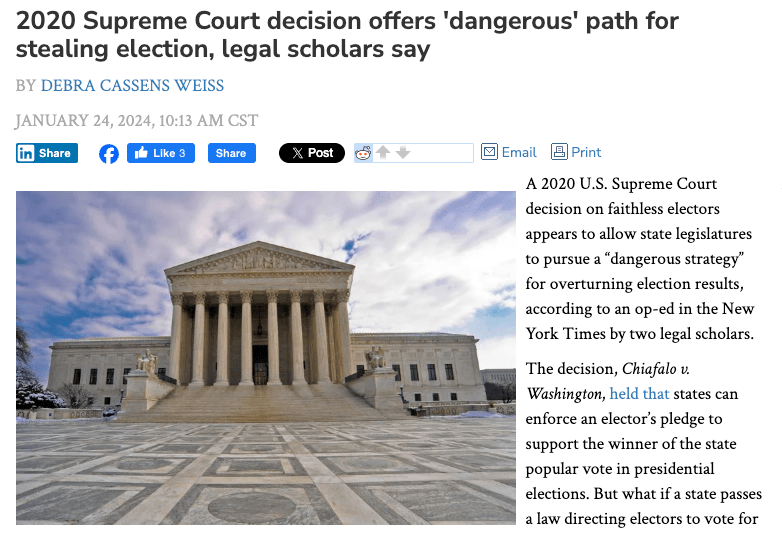
Today we need to discuss the Chiafalo v. Washington, 591 U.S. _ (2020) ruling, and its (potential) unintended consequences. The ABA Journal (link above) notes earlier this year that “A 2020 U.S. Supreme Court decision on faithless electors appears to allow state legislatures to pursue a dangerous strategy for overturning election results…”

Those who read my posts–and my thrillers–know that I have long regarded the Electoral College as an outmoded, arcane system for electing a president; and one that is ripe for mischief from bad actors that only amplifies the anti-democratic underpinnings of our system. Those who claim to defend the Electoral College often say that they are upholding the Founders’ vision, when in fact they are working to exploit its loopholes and undermine faith in its legitimacy for their own ends.

Chiafalo v Washington was a unanimous Supreme Court decision “that states have the ability to enforce an elector’s pledge in presidential elections.” It is the suit that arose from the Faithless Electors lawsuit after the 2016 presidential election. The ABA article quotes a NY Times op-ed by Lawrence Lessig, a professor at Harvard Law School, and Matthew A. Seligman, a fellow at the Constitutional Law Center at Stanford Law School.

In their op-ed, Lessig and Seligman’s describe an all-too possible scenario:
“Charges of fraud cloud a recount. Leaders in the state legislature challenge the presumptive result. In response to those challenges, the legislature votes to direct its electors to cast their ballots for the candidate who presumptively lost but whom the legislature prefers. Any elector voting contrary to the legislature’s rule would be removed and replaced with an elector who complied. This is a critical innovation in the science of stealing a presidential election.” [Emphasis mine]

Lessig and Seligman go on to say: “Congress could amend the federal law governing electoral votes by declaring that any post-election change of the results by a state legislature would not count as votes ‘regularly given,’” they wrote. “States could cement the requirement that electors are to follow the people’s will. Neither path is assured, but we are certain of this: It is a rocky road ahead.” As currently constituted, only the Senate would be likely to take this up. The House has a Trump-controlled majority.(And it is Trump-controlled. As we saw in the failure of the bipartisan Immigration Reform Bill after Trump torpedoed it. Brookings has an explainer “for the perplexed,” though in the end, it’s not hard to figure out.)

My first novel, Faithless Elector came out in early 2016 and presaged some of the insanity surrounding the election. But the third book, Emergency Powers may prove to be more on point (which does not make me feel good, somehow).

Voting is our chance to participate and to hold our elected officials to some sort of accountability. Is it perfect? Hardly, but we may get a lesson in just how bad the alternative is if we don’t vote–all of us. Because the last three years or more have seen a coordinated effort to undercut that chance to make outrvoices heard through bad faith laws, official skullduggery and lawsuits. So much so, that the GOP candidate, Donald Trump, can say, as he did on July 28 of this year, that we “won’t have to vote anymore…”

The election is roughly 3 months from now. The forces that seek to steal our votes have been busy for years. Perhaps knowing that a majority does not support their policies, the GOP has undertaken to shrink the number of eligible voters and (potentially) to usurp the role of Electors.

I’ll talk more about the lawsuits and gerrymandering that’s still going on–and the Supreme Court’s role in it–in a follow-up post.

# # #

James McCrone is the author of the Imogen Trager political suspense-thrillers Faithless ElectorDark Network and Emergency Powers–noir tales about a stolen presidency, a conspiracy, and a nation on edge. Bastard Verdict, his fourth novel, is about a conspiracy surrounding a second Scottish Independence referendum. 

All books are available on BookShop.org, IndyBound.org, Barnes & Noble, your local bookshop, and Amazon. eBooks are available in multiple formats including Apple, Kobo, Nook and Kindle.

He’s a member of Mystery Writers of America, Int’l Assoc. of Crime Writers, and he’s the current president of the Delaware Valley chapter of Sisters in Crime. He lives in Philadelphia. James has an MFA from the University of Washington in Seattle. His current, work-in-progress is a mystery-thriller set in Oregon’s wine country…A (pinot) Noir, called Witness Tree.

For a full list of appearances and readings, make sure to check out his Events/About page. And follow this blog!

You can also keep up with James and his work on social media:
Mastodon: @JMcCrone
Bluesky: @jmccrone.bsky.social
Facebook: James McCrone author (@FaithlessElector)
and Instagram/Threads “@james.mccrone”

Secondary characters

I used to daydream about writing for Law and Order back when it was still running*, not for its propulsive, plot-driven narratives, and certainly not its copaganda, but for the occasional, random, richly drawn secondary or even tertiary character(s); some random person who helps the plot along, but whom you probably won’t see again. True, there are a lot of stock interactions and tropes in Law and Order, like the one comedian John Mulaney has satirized as “guy who while being questioned by homicide detectives will not stop stocking crates…”, a kind of expository action-within-inaction reminiscent of the Sorkin walk, or any of HBO’s “sexposition” scenes.  

But occasionally, and the reason I wanted to write for Dick Wolf, the episodes will also give time to brief encounters with memorable criminals. Yes, I want to know whodunnit, but the cream in my coffee, the a la mode on my pie, are the people, the characters. I’m not talking about dramatic flashbacks, but about artful, iceberg-like, less-is-more character moments. One that sticks with me was a brief interchange between Briscoe and a heroin addict being held for questioning.

The heroin addict has been detained for hours, and he needs his fix—badly—and he’d very much like to leave, now that he’s told the police everything he knows. Briscoe makes some wisecrack about how much money the addict is spending on heroin, and the addict launches into a brief, surprisingly cogent, economic disquisition on how well heroin has held its value in the marketplace. “Pot, cocaine,” he says disdainfully, “the price per gram has doubled over the past few years, but heroin’s still right where it always was. Gram-for-gram, ounce-for-ounce, heroin’s still your best value.” Not even Briscoe had a comeback for this sage advice.

Why do I love those exchanges? Because in a world of formulaic television, strange, vivid, serendipitous encounters are the stuff of life. I’ve written elsewhere about how I try to remain alive to possibilities, and I write down moments and exchanges I’ve been party to or eavesdropped upon. I hold onto them because even though they’re real and therefore could mean anything (or nothing), they feel like more than what they are—and maybe someday I’ll have a place to use them.

I’ve been pleased, in Bastard Verdict, that the character of Alan Wilson, a young, up-and-coming, petty criminal in an organized crime gang, has caught on. I needed someone with underworld ties to make the story work, but I needed him to be more than a conduit for the plot. To put flesh on his bones (so to speak), I created a backstory for him (one I know but don’t go into great detail about), and introducing him, I ripped off an exchange from my long-past drug days, and a deal I made in a pub bathroom.

I’d gone into the bathroom to wait for my dealer. When he came in, he was aghast that I was just standing there. “At least pretend you’re taking a piss,” he said to me all those years ago.

But how and why do some secondary characters strike a chord with readers where others don’t?

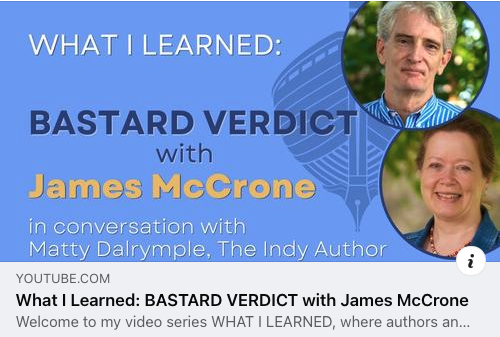
I’ve been pleased that some of my secondary characters have resonated with readers. Though I as I noted in the WHAT I LEARNED interview with the Indy Author/Matty Dalrymple, I had hoped the lawyer, Ewan Johnston would have garnered a bit more attention.

I remember an early reading of Faithless Elector in Oxford, where a young woman from the audience that day came up to me afterwards, wondering if I was going to give the cab driver more “stage time” in a future book. “I’m sure he’ll be back!” she said. I was glad the cabby had “landed” but sad that Mr. Fitzwilliam, the super in Professor Calder’s building had not. I wanted Fitzwilliam to resonate as the kind of good, everyday person whom we might all hope would (collectively) be the bulwark against the kind of conspiracy that’s unfolding. I even gave him a kind of heartwarming joke but no one mentioned him in reviews.

Special Agent in Charge Amanda Vega in Dark Network gets good reviews, but I’d also hoped that the courier, Jimmy May, would have engendered similar affection. While no one disparaged him, no one said, “will he be back?” He was, in Emergency Powers, as was Vega. In Emergency Powers, I brought back the cabby, but I had really hoped that Kirsten, the waitress at a tiny, Midwest airport would gain more traction than she did. Again, I wanted to juxtapose her ordinary, everyday-ness with the dire things going on in the conspiracy.  Strangely, the bad guy, Frank Reed, even received some plaudits. I had one reader write to me to say how odd it was to be rooting for him.

I’m not sure why some secondary characters break through and others remain in the background, I’m pleased that the young criminal Alan Wilson, who becomes a kind of moral center in Bastard Verdict, seems to have become a favorite, with two reviewers expressing the hope that he’ll be back in a further installment.

I’ll see what I can do! 🙂

*Wait, L&O is back on the air?

# # #

James McCrone is the author of the Imogen Trager political suspense-thrillers Faithless ElectorDark Network and Emergency Powers–noir tales about a stolen presidency, a conspiracy, and a nation on edge. All books are available on BookShop.org, IndyBound.org, Barnes & Noble, your local bookshop, and Amazon. eBooks are available in multiple formats including Apple, Kobo, Nook and Kindle.

His current book, Bastard Verdict, debuted on May 18th. A noir political thriller set in Scotland, it’s available through the link above, or wherever you buy your books. His current, work-in-progress is a mystery-thriller set in Oregon’s wine country…A (pinot) Noir, called Witness Tree.

A Seattle native (mostly), James now lives in South Philadelphia with his wife and three children. He’s a member of the The Mystery Writers of America, Int’l Assoc. of Crime Writers, Int’l Thriller Writers, Philadelphia Dramatists Center and is the vice-president of the Delaware Valley chapter of the Sisters in Crime network. James has an MFA from the University of Washington in Seattle.

For a full list of appearances and readings, make sure to check out his Events/About page. And follow this blog!

His most recent short fiction is below. The first is available for online reading.

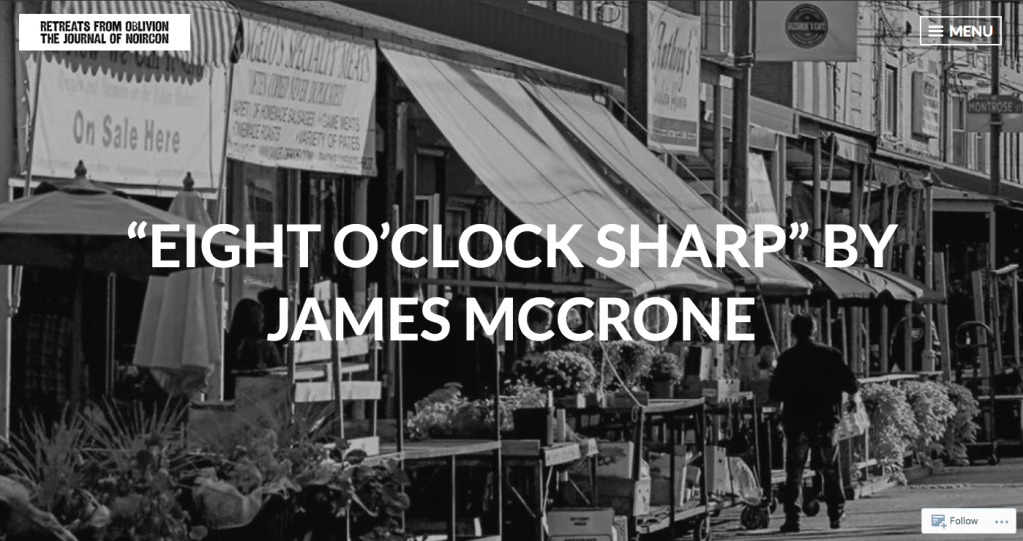
Eight O’Clock Sharp” in Retreats from Oblivion: the Journal of NoirCon. (free online)
Set in Philadelphia’s 9th Street Market, Thomas is a man outside of time, forgotten, but trying to do the right thing while contending with avaricious forces.

“Ultimatum Games” in Rock and Hard Place magazine issue #7
A rare book heist, bad decisions. The narrator and his partner-in-crime clash over evolving bourgeois norms.


“Nostalgia” in Low Down Dirty Vote, vol. 3
An armed group tries to resurrect a past that never was as they struggle with change.

Burnham and Orwell

“Make Orwell fiction again!” became something of a meme during the Trump administration years. But for my sins (and unending reading pleasure!) I continue to dive into The Orwell Reader (Harcourt Brace 1956, 1984) swimming amidst the currents of his excerpted wit, insight and contrarian cantankerousness. We still need Orwell (and writers like him), pointing out corruption, bad faith, dissembling. My books are certainly very different–no talking farm animals, no aspidastra, no collectivist state, but the main characters are driven by their reaction to anti-democratic forces that try to chip away at and siphon off power. And while the conspirators in the #FaithlessElector series aren’t jack-booted thugs (yet), they are self-dealing elites who have coopted and corrupted politicians.

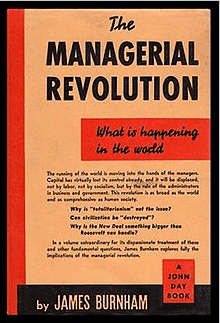
Recently in The Orwell Reader, I re-read Orwell’s cogent, withering critique of James Burnham’s work, The Managerial Revolution (1941). Orwell is dismayed that Burnham appears to want the militaristic state he describes as coming into being. Indeed, Orwell notes that, in Burnham’s 1941 edition, Burnham seems to be on the side of Nazi Germany. What struck me as I re-read Orwells’s point-by-point critique was that Burnam’s “managerialism” forms the intellectual scaffolding for the oligarchic collectivist state at the heart of 1984.

A bureaucratic collectivist state, like the one Burnham described as (hopefully?) coming into being in the 1940’s, “owns the means of production, while the surplus or profit is distributed among an elite party bureaucracy, rather than among the working class. Also, most importantly, it is the bureaucracy—not the workers, or the people in general—which controls the economy and the state. Thus, the system is not truly socialist, but it is not capitalist either.” [from Wikipedia]

In 1984, Orwell saw something in the lies, crimes and lack of accountability in Stalin’s, Hitler’s and Franco’s state capitalism—whatever they called it themselves—that looked like what Burnham described. Their regimes were about naked power, and in that pursuit they were prepared to subvert reality to their own purposes.

Many readers of the Faithless Elector series, (Faithless Elector, Dark Network and Emergency Powers) took the thrillers as a thematic repudiation of Trump. That’s true in a way, but Trump wasn’t even the Republican candidate for president when Faithless was published in March of 2016. The genesis for Faithless is far older than that. Rather, the background from which these books sprung existed long before Trump, and remains with us now.

We’re still living in the times depicted in Faithless and the other books, and we were living in it long before Trump barged onto the scene. What surprises readers of the Faithless Elector series (and this isn’t much of a spoiler) is that NEITHER of the major parties is orchestrating the plot. Rather, it is those who are parasitic on the parties that work the levers behind the scenes and buy useful idiots who believe they will reap the benefit.

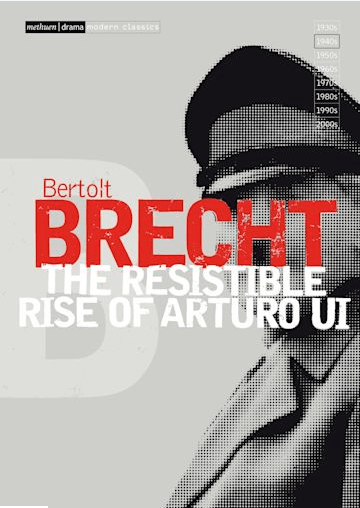
Like housework, the job of democracy is never done, either because by its nature it’s messy and chaotic, or because power-hungry forces see a chance to supplant and usurp our role to hold our leaders accountable and to determine our own futures. I think of Bertolt Brecht’s play, The Resistible Rise of Arturo Ui:
“Don’t yet rejoice in his defeat, you men! Although the world stood up and stopped the bastard, The bitch that bore him is in heat again.”

# # #

James McCrone is the author of the Imogen Trager political suspense-thrillers Faithless ElectorDark Network and Emergency Powers–noir tales about a stolen presidency, a conspiracy, and a nation on edge. All books are available on BookShop.org, IndyBound.org, Barnes & Noble, your local bookshop, and Amazon. eBooks are available in multiple formats including Apple, Kobo, Nook and Kindle.

His next book, Bastard Verdict (out 18-May-2023), is a noir political thriller set in Scotland. Bastard Verdict is available to reviewers through NetGalley

His current, work-in-progress is a mystery-thriller set in Oregon’s wine country…A (pinot) Noir, called Witness Tree.

A Seattle native (mostly), James now lives in South Philadelphia with his wife and three children. He’s a member of the The Mystery Writers of America, Int’l Assoc. of Crime Writers, Int’l Thriller Writers, Philadelphia Dramatists Center and is the vice-president of the Delaware Valley chapter of the Sisters in Crime network. James has an MFA from the University of Washington in Seattle.

For a full list of appearances and readings, make sure to check out his Events/About page. And follow this blog!

His most recent short fiction is below. The first is available for online reading.

Eight O’Clock Sharp” in Retreats from Oblivion: the Journal of NoirCon. (free online)
Set in Philadelphia’s 9th Street Market, Thomas is a man outside of time, forgotten, but trying to do the right thing while contending with avaricious forces.

“Ultimatum Games” in Rock and Hard Place magazine issue #7
A rare book heist, bad decisions. The narrator and his partner-in-crime clash over evolving bourgeois norms.


“Nostalgia” in Low Down Dirty Vote, vol. 3
An armed group tries to resurrect a past that never was as they struggle with change.