
 William McIlvanney (Laidlaw, The Papers of Tony Vetch, Docherty) still schools me. In a recent blog post I wrote about needing a new kind of imagination to write a genuinely remorseless villain. I think I was wrong. McIlvanney’s character, Jack Laidlaw, has persuaded me that I was shirking a writer’s job.
In the wake of real scandals and malfeasance the first two books in the trilogy, Faithless Elector and Dark Network, now seem prophetic. In Faithless Elector, the task of writing was straightforward: I saw the weaknesses of a system, saw how dark forces could exploit them and then put myself in the place of a group of conspirators to think about what I would do if I were them. The real difficulty was in figuring out what to do to thwart them.
For Dark Network, were I a conspirator hoping to solidify my hard-won position, I figured I’d rail about voter fraud, daze and confuse the media, and I’d install a pliant Attorney General to quash investigations—or better, allow those investigations to atrophy. Indeed, some of the tension in the story comes from the heroine’s need to get the information out before a new, pliant AG can be sworn in. She knows, as we all know now, that with a majority in Congress, there would be no check—fictionally, or otherwise. Once again, we’re seeing in real time what a power grab would look like, how it could be (is being) effected, and how little can be done to stop it. But I kept my villain(s) largely in shadow.
My books have identified a toxic strain of contemporary cynicism, but as I come to write the final book and delve into who the perpetrators are, I find that my early drafts don’t need a new perspective, but a deeper one. Cynical, pantomime villains aren’t satisfying characters, and Imogen and Duncan need a worthy opponent. Ruthless as they are, the conspirators believe what they’re doing is right, and that the country needs it. For me, this is the most chilling aspect of all, and I should have listened more closely to my instincts. Fortunately, there was Jack.
In Laidlaw, one of McIlvanney’s finest novels, Jack Laidlaw chides a new partner when he 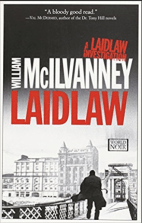 despairs of catching the “monster” who has committed a horrific crime with, “Look, other people can afford to write ‘monster’ across this and consign it to limbo…We can’t afford to do that.” In the scene he’s talking about detectives, but he could just as easily be hectoring writers (like me) looking for shortcuts.
I have to put myself back in their place to imagine what it is they want, and why they’re willing to risk so much to get it. In Faithless Elector and Dark Network I deliberately kept the conspirators in the shadows. I felt—and readers seem to agree—that fighting an unnamable post-modern menace “fit” with the times and made for a compelling story. Not knowing whom you’re fighting or what ultimately they want also makes for brooding, dark atmospherics.
But I find there’s a limit. As I tear up dismayingly large chunks of the final book draft for this series, it will be to reveal the conspirators as all-too human.
 James McCrone is the author of the Imogen Trager political suspense-thriller series Faithless Elector and Dark Network. Find them through Indybound.org.
They are also available at Amazon, Barnes & Noble, and Powell’s Books. Link to REVIEWS

 Chosen Words - James McCrone