As American as Baseball: A Modest Proposal

New plurality rules for baseball!
The extra-innings format rule in Major League Baseball has inspired me to dust off a format change I’d blogged about years ago, but which so far hasn’t garnered the changes I envisioned. Be assured, I have forwarded this “innings-ovation” proposal to Baseball Commissioner Rob Manfred. Incredibly, then-commissioner Bud Selig did not respond to my original proposal.

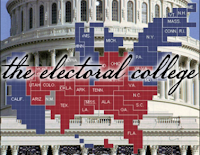
The Electoral College is as American as baseball—venerably, willfully idiosyncratic, hidebound and capricious. (Which is part of the fun, right?)!

Why does the similarity stop there?

The enduring use of the Electoral College should inspire those of us who love the game–as we love the Republic–to greater depths.  If winner-take-all is indeed our national spirit, why must “America’s game” cling to its outmoded scoring?

Total number of runs over nine innings is clearly too simple-minded a way of determining a winner. And likely to stir up passions.

Therefore, in order to address the unfair, and frankly un-American scoring discrepancy that baseball presents, I would like to modestly propose a new set of plurality rules for scoring a baseball game:

  • The team who scores the most runs in a particular inning will be awarded ALL of the runs scored in that inning by either team. 

To illustrate: let us say, in the first inning Team ‘A’ scored 3 runs and Team ‘B’ scored 2. Under electoral scoring, Team ‘A’ having received more runs that ‘B’ would receive all 5 runs scored in that inning.

Then, (to continue the scenario) if in the following second inning, ‘B’ scored 3 runs and ‘A’ none, the running score would be ‘A’-5 vs. ‘B’- 3, each having won an inning and been awarded all the points that inning carried. Then, in the 9th inning, the innings-won total would be calculated to determine the winner.

I’m sure we can all agree that this makes much more sense. And to those who say it would unfairly award wins and even the championship to a lesser team, I can only say that it wouldn’t happen any more frequently than the Electoral College winner loses the popular vote (5, but who’s counting?).

Indeed, a survey of the last two World Series contests shows that while the scoring would have been different, the result would have been the same. And more just.

But I hear you say, there could still be a tie.

Of course. In the new innings plurality rules, the teams would play a 10th inning. But, as the new player-in-scoring-position-to begin extra innings makes clear, to continue playing past that is pointless. If, at the end of the 10th inning, there is still a tie, the decision as to who has won the contest would be remanded to a responsible body, one with knowledge of the teams, players and their capabilities. 

There could be no better group than living members of the Baseball Hall of Fame to weigh, consider and decide which team should win, a College of Baseball Elders. Like the electoral college, there could be some simple safeguards in place, such as a restriction on not voting for a team on which an Elder had previously played.

What could be more American? 

Follow this blog for more insights.

# # #

For a primer of past blog posts on the issues surrounding the Electoral College, click the links below: everything from the issues surrounding popular vote winners losing in the Electoral College, to Faithless Electors, to the democratic deficit inherent in the apportioning of EC votes.
And for a thrilling read, check out the whole series, beginning with Faithless Elector.

Alexander Hamilton and the first contested election

Power of Small State Voting

Chaos Theory, Electoral College Style

Faithless Electors could have tipped 5 previous elections
Structural Flaws
James McCrone

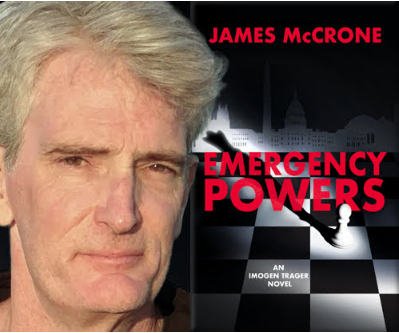
James McCrone is the author of the Imogen Trager political suspense-thrillers Faithless Elector , Dark Network and Emergency Powers–noir tales about a stolen presidency, a conspiracy, and a nation on edge. All books are available on BookShop.org, IndyBound.org, Barnes & Noble, and Amazon. eBooks are available in multiple formats including Apple, Kobo, Nook and Kindle.

His work, “Numbers Don’t Lie” also recently appeared in the 2020 short-story anthology Low Down Dirty Vote, vol. 2, and his short story “Ultimatum Games” will appear in Rock and a Hard Place this fall. His next book, w/t Bastard Verdict, is a noir political thriller set in Scotland.


A Seattle native (mostly), James now lives in South Philadelphia with his wife and three children. He’s a member of the The Mystery Writers of America, Int’l Assoc. of Crime Writers, Int’l Thriller Writers, Philadelphia Dramatists Center and is the newly elected vice-president of the Delaware Valley chapter of the Sisters in Crime network. James has an MFA from the University of Washington in Seattle.
Faith among the Faithless

I suppose this is sort of Christmas-y: In my most recent post, “Blunt Tools,” about the obstacles in the way to legitimating a presidential election—Electoral College vote, Congressional certification, potential contingency vote—I found that the word “faith” cropped up again and again: faith in the rule of law, faith in the system(s), faith in our officials, in our democracy. Faith and hope.

Besides being a messy work-in-progress, democracy feels like a spiritual undertaking. Like prayers, where God sometimes answers, No, election outcomes are seldom all that you could have hoped. It’s not the hope that’s spiritual, however. It’s faith in the process, that the result was arrived at fairly; that voting is the best way to achieve our ends, to hold officials accountable.

But it isn’t mere faith that gets us across the ever-moving line. There must be trust in the systems, in people and institutions. Transparency. Faith surmises that tangible evidence doesn’t exist; whereas trust is based largely on evidence that is real according to the senses and to human reason. It’s the institutions, the procedures, and the repetition of sound outcomes (fairly arrived at) that bolsters faith and inculcates trust.

Consider banking, a messy, craven business, ripe for (and often rife with) corruption and collusion. But the teller doesn’t pocket your paycheck, the bank doesn’t steal it. Indeed, banks take steps to ensure that there’s a trail of evidence should something go awry. And they make sure that no one else steals it. (They may snatch at part of it through fees, etc., but that’s a separate discussion.) Your savings are secure, as are your investments, if you’re fortunate enough to have any. I don’t mean to suggest that some mere squishy feeling can bring about the change we want to see all by itself, but without it, we’re lost.

It is trust—repeated, faithful (that word again) repetition of processes and procedures combined with legitimate outcomes. Say what you will about the Electoral College (and I’ve said and written plenty); say what you will about the conduct and byzantine rules within banks (see my example above), but at their most basic, they are open, verifiable activities.

Given the multiple lawsuits and demonstrations—distinct from required/permitted challenges and recounts—I can only surmise that Trump and his enablers have a different aim: to erode trust by striking at our faith in democracy, by tarring institutions and officials with their own foul brush. They certainly have no love for democracy, which at its core is an act of faith that self-governance is the optimal system. The Big Lie works, breeds doubt, will give people pause. The Big Lie in this case is that the vote was stolen. And that lie lingers, festers, strikes at faith.

A recent WA Post editorial points out that, for weeks, Republicans and “Donald Trump [have] told the public that the presidential election was riddled with fraud. And now, in an immaculate act of self-confirmation, Republicans are pointing to the public’s doubts about the election as evidence that something fraudulent must have taken place…” The accusations have been rebuked at every point, by sound, faithful reporting (and recording) of sound certification practices and procedures.

The Big Lie—and it feels like the past four years have been nothing but lies—reminds me of a pool shark, who not only makes the shot, but “leaves” the cueball either in a good place to make his next shot, or in such a way as to thwart his opponent, and leave him behind the eight-ball.

Ours is a postlapsarian world, to be sure. It has been for quite some time. What came before it was hardly perfect, and certainly it wasn’t paradise. But it was (and is) verifiable. Something we can have faith in.

Perhaps a worldly and political update of 1 Corinthians 13:13 is in order: “And now abideth faith, trust, certify, these three; but the greatest of these is certify.”

#   #   #

James McCrone

James McCrone is the author of the Imogen Trager political suspense-thrillers Faithless Elector and Dark Network about a stolen presidency, a conspiracy, and a nation on edge.
The third book, Emergency Powers, is available NOW!
All books are available on BookShop.org, IndyBound.org, Barnes & Noble, and Amazon. eBooks are available in multiple formats including Apple, Kobo, Nook and Kindle.

He’s at work on a fourth thriller, set in Scotland.
A Seattle native (mostly), he now lives in South Philadelphia with his wife and three children.
James is a member of the The Mystery Writers of America, Int’l Assoc. of Crime Writers, Int’l Thriller Writers, Philadelphia Dramatists Center and the Sisters in Crime network. James has an MFA from the University of Washington in Seattle.

Sharing Space, part 2

The response to the launch of Emergency Powers has been tremendous, and I couldn’t be happier! I’ve noted before how fortunate and honored I am that others will lend me space on their blogs to write and post about issues and ideas that matter to me. In the first month since the publication of Emergency Powers, I’ve had the opportunity to write about an array of topics here and as a guest blogger.

Earlier in the year, I’d been hosted on ‘Writers Who Kill’ blog, on Art Taylor’s ‘The First Two Pages,’ and others. Here’s a listing, with snippets and links from the more recent guest posts and interviews. You can click the blog link to read the whole post.

The Reading Cafe – Isolation and Conflict – (Oct. 1)
“I’ve been thinking about isolation recently. (Can’t imagine why.) And I was struck by a theme in my thrillers, one I hadn’t necessarily intended, but which is there nevertheless. That of isolation. In my thrillers, the asymmetry of information—and the danger of sharing what you know—is the core of the tension, and suspense…”

The Book Divas Reads – Blurred Lines: Separating Fiction from Reality (Oct.9) “Recently in an interview, I was asked: ‘How do you keep your written world from encroaching on your life?’ I have the opposite problem…”

Avonna Loves Genres – Becoming a Writer – (Oct. 15) “I’m often asked how old I was when I first realized I wanted to be a writer? It’s a difficult question for me because I honestly can’t think of a time when I wasn’t writing stories…”

Murder is Everywhere – Electoral Appliqué – (Oct. 19) [on the Electoral College]: “I’m struck by the patchwork uncertainty of it all. I can’t shake the image of 2020 America as some shambling Akakii Akakievich, from Nicolai Gogol’s fine story The Overcoat (1842), as he pleads with the tailor Petrovich to patch his winter coat…”

Quiet Fury – Your Book is a Movie – (Oct. 20) “With film studios shuttered in response to Covid-19, is it still relevant to think of who should be cast in the movie if the book makes it to the big (or small) screen? Of course it is!”

As we move into November, I’m excited about the upcoming appearances and potential for sharing further.

You can keep up with my journey on the ‘author‘ page of my website. Or keep reading along here! I’ll be at A Novel Idea on Passyunk bookstore on Thursday, November 12 at 7pm. It’s free, and you can get a signed copy of Emergency Powers…but you do need to Sign-up/RSVP.

#   #   #

James McCrone

James McCrone is the author of the Imogen Trager political suspense-thrillers Faithless Elector and Dark Network about a stolen presidency, a conspiracy, and a nation on edge.
The third book, Emergency Powers, is available NOW!
All books are available on BookShop.org, IndyBound.org, Barnes & Noble, and Amazon. eBooks are available in multiple formats including Apple, Kobo, Nook and Kindle. He’s at work on a fourth thriller, set in Scotland.
A Seattle native (mostly), he now lives in South Philadelphia with his wife and three children.
James is a member of the The Mystery Writers of America, Int’l Assoc. of Crime Writers, Int’l Thriller Writers, Philadelphia Dramatists Center and the Sisters in Crime network. James has an MFA from the University of Washington in Seattle.


Southern Gothic – Gladwell’s Grand Unified Theory

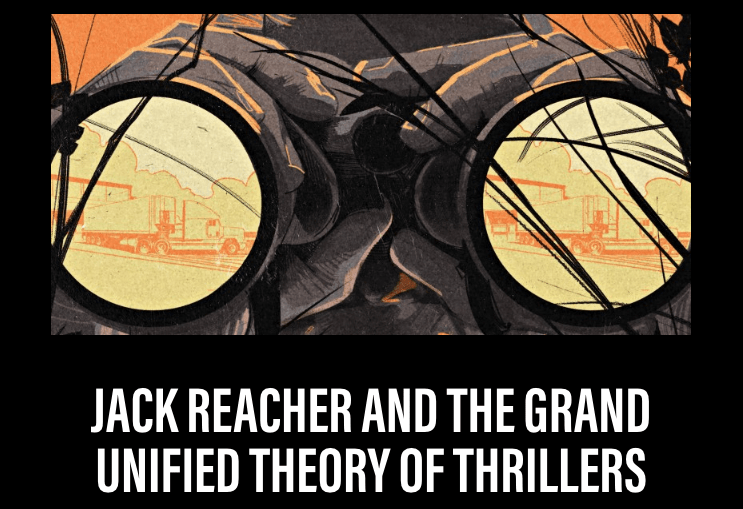
Malcolm Gladwell wrote a piece recently for Crime Reads in which he described his grand unified theory of thrillers. Briefly, he stated that “There are, structurally, four (4) essential narratives in [the thriller] genre.”

I tend to shy away from reductive theories, but they can be useful, too. And I think Gladwell is on to something. His four genres are cardinal in nature (and direction, too!):

1) In the Western, the hero comes to a world without justice or law, and establishes order.

2) In the Eastern, our hero works to improve and educate the institutions of law and order in a world where they are incompetent. (Think Sherlock Holmes and Agatha Christie’s sleuths.)

3) Third, is the Southern, where our hero, an outsider, restores order to a world that is hopelessly corrupt. “John Grisham’s novels are all Southerns,” Gladwell contends.

4) Last is the Northern, in which our hero works to perpetuate order from within a functional system. “The popular television show Law & Order is a classic Northern,” he notes, as is most Scandic-Noir.

It pains me to realize that while I’m drawn to “Western” thrillers (and Westerns), it seems (according Gladwell’s Theorem) that I’m writing Southern thrillers. Indeed, my favorite kind of Western stories are perhaps a subset of the genre, those in which not only is the world of the book or film without justice, but it’s going to take someone who’s even worse to put it right. And that person won’t be able to stay and enjoy it. They’ve made the world acceptable for decent people, which is why they must now leave.

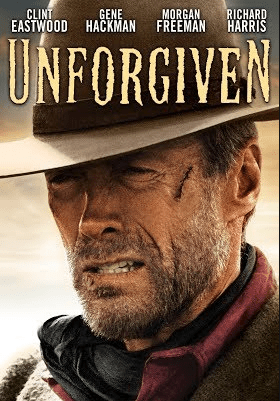
Unforgiven, Shane, True Grit and the Road Warrior movies spring to mind. But so do Hammett’s Red Harvest, and the Jack Reacher novels. They’re mythic tales—Unforgiven resonates heavily with medieval themes of good and evil, stories of knights and quests. A quest tale turned upside down, to be sure: the knight is a vile murderer, the damsel is a prostitute and the magic elixir which allows him to transform into a hero is corn whiskey.

Those are the Westerns I admire, and go back to. But what of the thrillers that bear re-reading? For the discussion, I’ll stick with well-known favorites: LeCarre’s George Smiley novels, Philip Kerr’s Bernie Gunther novels, Frederick Forsyth’s Day of the Jackal and Graham Greene’s Quiet American

Philip Kerr, to stick with Gladwell’s taxonomy, is writing Southerns. His recurring character, Bernie Gunther, is trying to inculcate something like morality or justice in the midst of Hell. Greene’s narrator, Fowler, can’t stop the war to come, any more than Gunther can stop the war he’s in, but he can do something, can strike a blow. By contrast, the wind blows Northern-ly for Smiley and Inspector Lebel, as they search and scratch and tighten the net around their quarry–Karla and the Jackal. Their dogged pursuit will prevail.

My protagonist FBI Agent Imogen Trager is a Cassandra figure, confronted with corruption no one else sees. She’s an outsider—even though as a Bureau Agent she should be the ultimate insider—made so by the very corruption and factiousness she opposes. She’s dedicated to law-and-order and accountability, because the opposite is thuggish, anarchic corruption and chaos. A Southern thriller, then, but with noir-ish elements of the Northern procedural. The conspiracy goes deep, and she knows that if you don’t get the root, it just grows back—perhaps stronger than before.

Whether the nomenclature of Gladwell’s Unified Theory is accurate (“eastern” and “northern” feel forced), it’s an interesting way to look at how thrillers operate. Fortunately, they’re not carved in stone, and there can be shared elements. His own take on Lee Child’s hero combines elements of both South and West(ern).

In each, we’re drawn to the problem, drawn in further by the situation and we want to watch our hero(ine) set it right. In the end, it’s just categories. It’s the details of why and how—and the characters—that will make it unique.

#   #   #

James McCrone

James McCrone is the author of the Imogen Trager political suspense-thrillers Faithless Elector and Dark Network about a stolen presidency, a conspiracy, and a nation on edge.The third book, Emergency Powers, is available NOW!

He’s at work on a fourth thriller, set in Scotland. A Seattle native (mostly), he now lives in South Philadelphia with his wife and three children.