Koi, Frogs and the Question Not Asked

I’ve written elsewhere about how even as a child I’d see something happen and wonder whether I was seeing the beginning, the middle or the end of a story. I’d see two people arguing, or someone crying on the bus; or I’d see a toddler rapturously chase pigeons across the pavement, and I’d wonder what happened before, what would happen next. And I’d wonder what the story was. Who are the people involved? Somewhere around the age of 10 or 11 I was shocked to find out that not everyone does this.

I want to know these things because my brain is wired that way, and because I’m nosy (I admit that freely); and irrespective of where in the story we are, I want to pay attention, to make use of real details in my writing because those moments, what the people do and say, the emotion, the real quirks, verbal ticks or turns of phrase can show so much more than simple telling or hit-you-over-the-head backstory. It makes for a more satisfying story, certainly.

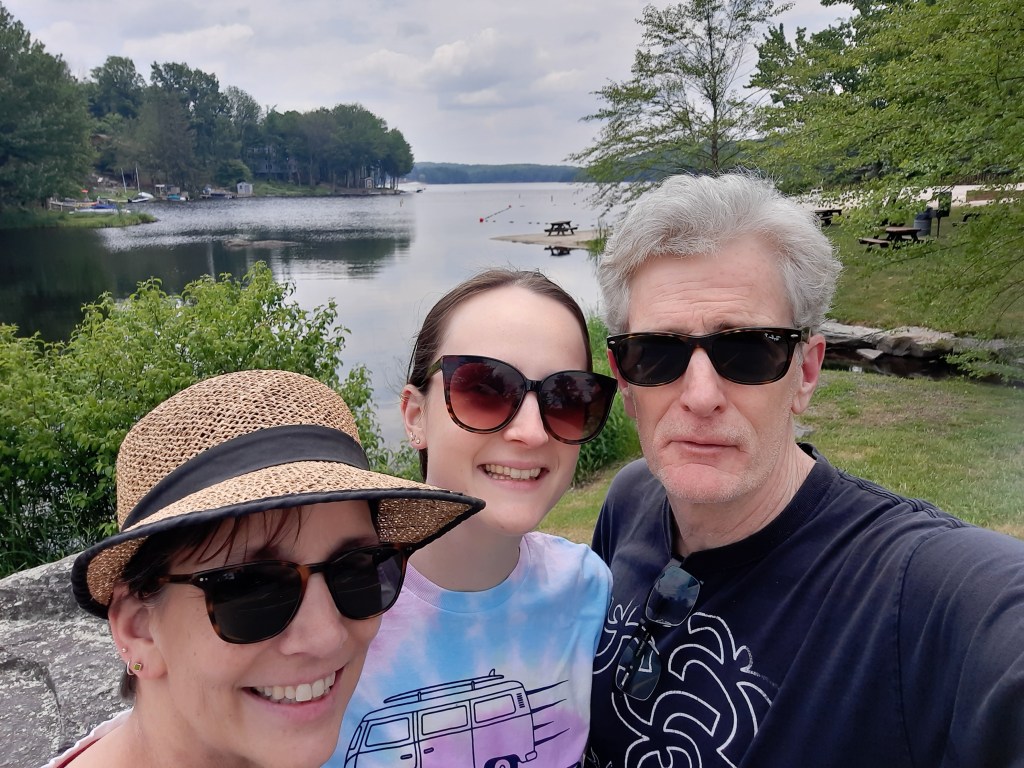
This past weekend we spent a lovely time by Lake Ariel, in the Poconos. On Saturday morning I took a walk around the lake with my wife and one of our daughters. It was a lovely morning as we walked in and out of dappled shade. The people we encountered seemed cheerful and friendly. As we passed one house, a man asked us if we were interested in wildlife and whether we’d like to see his pond. We said, yes.

He was retirement aged, and he lounged sideways at the rocky edge of a shallow, 10 foot by 12 foot oval-ish body of water, gazing into the water, like paintings of Narcissus. He pointed out the carp (they were mottled and colorful, like small Koi fish) and then directed our attention to the side of the pond where a good-sized frog perched. Its body was about the size of my hand, but it took a few moments of staring where the man pointed for me to see the frog because it was so still and well camouflaged.

From him, I learned about the trials and tribulations of recreating a pond that had been previously destroyed; the difficulty of moving rocks into place, in keeping frogs once they fledged, or whatever it is they do when they’re not tadpoles anymore; that the fish in his pond were carp rather than true koi because a single koi could cost as much as $65 (he had eight or ten of them). All of which was interesting and diverting, and it felt like precisely the kind of thing we ought to be doing on a lovely day in the countryside.

Then he said: “Now, the question you didn’t ask…”

My brain arced as I realized there was more for me to be paying attention to! I hadn’t asked him a single question other than “how are you this morning?” nor had my wife or our daughter. He’d supplied the whole narrative unbidden. There were a hundred questions I hadn’t asked because as diverting as his monologue had been, after about ten minutes I wasn’t sure how much longer I wanted to stand there. Which question could he mean?

“You’ll want to know how I keep the carp over the winter,” he said.

Did I?

Stupidly, I hadn’t carried my notebook with me. I hadn’t thought I might stumble upon gold. I hope I’m not seeming to disparage this man. He seemed decent and thoughtful, and I’m pleased to have met him. But the words “Now the question you haven’t asked…” utterly exploded in my writer’s head.

Will I use it in a future story or novel? I have no idea. But as a verbal tick to reveal character it seems wonderful. Or, more likely, it could do double duty and also serve as a larger motif. Indeed, it kind of encapsulates the act of writing. Probably no one who has read this far conceived of the question I was answering, and certainly no one who has read my novels told me to write them. The books hang out on the shelf, beckoning for attention, answering a question you may never have asked.

# # #

James McCrone is the author of the Imogen Trager political suspense-thrillers Faithless ElectorDark Network and Emergency Powers–noir tales about a stolen presidency, a conspiracy, and a nation on edge. All books are available on BookShop.org, IndyBound.org, Barnes & Noble, your local bookshop, and Amazon. eBooks are available in multiple formats including Apple, Kobo, Nook and Kindle.

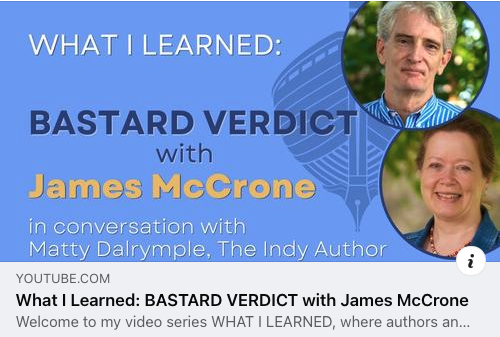
His current book, Bastard Verdict, debuted on May 18th, a noir political thriller set in Scotland. It’s available through the link above, or wherever you buy your books. His current, work-in-progress is a mystery-thriller set in Oregon’s wine country…A (pinot) Noir, called Witness Tree.

A Seattle native (mostly), James now lives in South Philadelphia with his wife and three children. He’s a member of the The Mystery Writers of America, Int’l Assoc. of Crime Writers, Int’l Thriller Writers, Philadelphia Dramatists Center and is the vice-president of the Delaware Valley chapter of the Sisters in Crime network. James has an MFA from the University of Washington in Seattle.

For a full list of appearances and readings, make sure to check out his Events/About page. And follow this blog!

His most recent short fiction is below. The first is available for online reading.
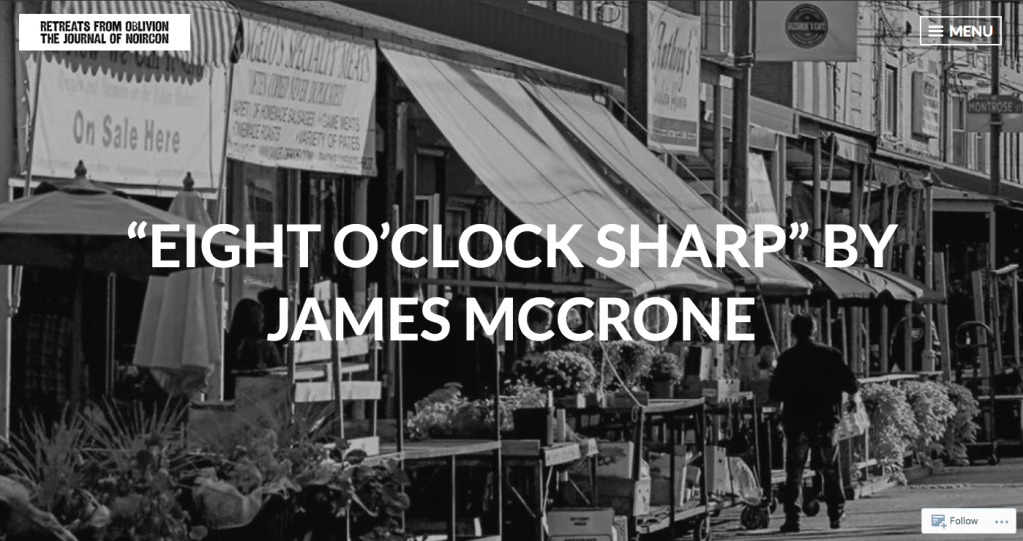
Eight O’Clock Sharp” in Retreats from Oblivion: the Journal of NoirCon. (free online)
Set in Philadelphia’s 9th Street Market, Thomas is a man outside of time, forgotten, but trying to do the right thing while contending with avaricious forces.

“Ultimatum Games” in Rock and Hard Place magazine issue #7
A rare book heist, bad decisions. The narrator and his partner-in-crime clash over evolving bourgeois norms.


“Nostalgia” in Low Down Dirty Vote, vol. 3
An armed group tries to resurrect a past that never was as they struggle with change.

Burnham and Orwell

“Make Orwell fiction again!” became something of a meme during the Trump administration years. But for my sins (and unending reading pleasure!) I continue to dive into The Orwell Reader (Harcourt Brace 1956, 1984) swimming amidst the currents of his excerpted wit, insight and contrarian cantankerousness. We still need Orwell (and writers like him), pointing out corruption, bad faith, dissembling. My books are certainly very different–no talking farm animals, no aspidastra, no collectivist state, but the main characters are driven by their reaction to anti-democratic forces that try to chip away at and siphon off power. And while the conspirators in the #FaithlessElector series aren’t jack-booted thugs (yet), they are self-dealing elites who have coopted and corrupted politicians.

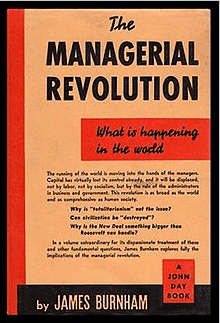
Recently in The Orwell Reader, I re-read Orwell’s cogent, withering critique of James Burnham’s work, The Managerial Revolution (1941). Orwell is dismayed that Burnham appears to want the militaristic state he describes as coming into being. Indeed, Orwell notes that, in Burnham’s 1941 edition, Burnham seems to be on the side of Nazi Germany. What struck me as I re-read Orwells’s point-by-point critique was that Burnam’s “managerialism” forms the intellectual scaffolding for the oligarchic collectivist state at the heart of 1984.

A bureaucratic collectivist state, like the one Burnham described as (hopefully?) coming into being in the 1940’s, “owns the means of production, while the surplus or profit is distributed among an elite party bureaucracy, rather than among the working class. Also, most importantly, it is the bureaucracy—not the workers, or the people in general—which controls the economy and the state. Thus, the system is not truly socialist, but it is not capitalist either.” [from Wikipedia]

In 1984, Orwell saw something in the lies, crimes and lack of accountability in Stalin’s, Hitler’s and Franco’s state capitalism—whatever they called it themselves—that looked like what Burnham described. Their regimes were about naked power, and in that pursuit they were prepared to subvert reality to their own purposes.

Many readers of the Faithless Elector series, (Faithless Elector, Dark Network and Emergency Powers) took the thrillers as a thematic repudiation of Trump. That’s true in a way, but Trump wasn’t even the Republican candidate for president when Faithless was published in March of 2016. The genesis for Faithless is far older than that. Rather, the background from which these books sprung existed long before Trump, and remains with us now.

We’re still living in the times depicted in Faithless and the other books, and we were living in it long before Trump barged onto the scene. What surprises readers of the Faithless Elector series (and this isn’t much of a spoiler) is that NEITHER of the major parties is orchestrating the plot. Rather, it is those who are parasitic on the parties that work the levers behind the scenes and buy useful idiots who believe they will reap the benefit.

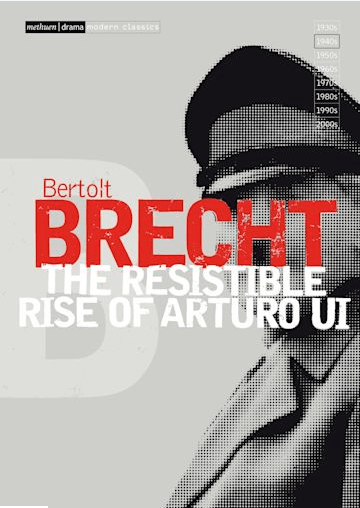
Like housework, the job of democracy is never done, either because by its nature it’s messy and chaotic, or because power-hungry forces see a chance to supplant and usurp our role to hold our leaders accountable and to determine our own futures. I think of Bertolt Brecht’s play, The Resistible Rise of Arturo Ui:
“Don’t yet rejoice in his defeat, you men! Although the world stood up and stopped the bastard, The bitch that bore him is in heat again.”

# # #

James McCrone is the author of the Imogen Trager political suspense-thrillers Faithless ElectorDark Network and Emergency Powers–noir tales about a stolen presidency, a conspiracy, and a nation on edge. All books are available on BookShop.org, IndyBound.org, Barnes & Noble, your local bookshop, and Amazon. eBooks are available in multiple formats including Apple, Kobo, Nook and Kindle.

His next book, Bastard Verdict (out 18-May-2023), is a noir political thriller set in Scotland. Bastard Verdict is available to reviewers through NetGalley

His current, work-in-progress is a mystery-thriller set in Oregon’s wine country…A (pinot) Noir, called Witness Tree.

A Seattle native (mostly), James now lives in South Philadelphia with his wife and three children. He’s a member of the The Mystery Writers of America, Int’l Assoc. of Crime Writers, Int’l Thriller Writers, Philadelphia Dramatists Center and is the vice-president of the Delaware Valley chapter of the Sisters in Crime network. James has an MFA from the University of Washington in Seattle.

For a full list of appearances and readings, make sure to check out his Events/About page. And follow this blog!

His most recent short fiction is below. The first is available for online reading.

Eight O’Clock Sharp” in Retreats from Oblivion: the Journal of NoirCon. (free online)
Set in Philadelphia’s 9th Street Market, Thomas is a man outside of time, forgotten, but trying to do the right thing while contending with avaricious forces.

“Ultimatum Games” in Rock and Hard Place magazine issue #7
A rare book heist, bad decisions. The narrator and his partner-in-crime clash over evolving bourgeois norms.


“Nostalgia” in Low Down Dirty Vote, vol. 3
An armed group tries to resurrect a past that never was as they struggle with change.

Home is where…?

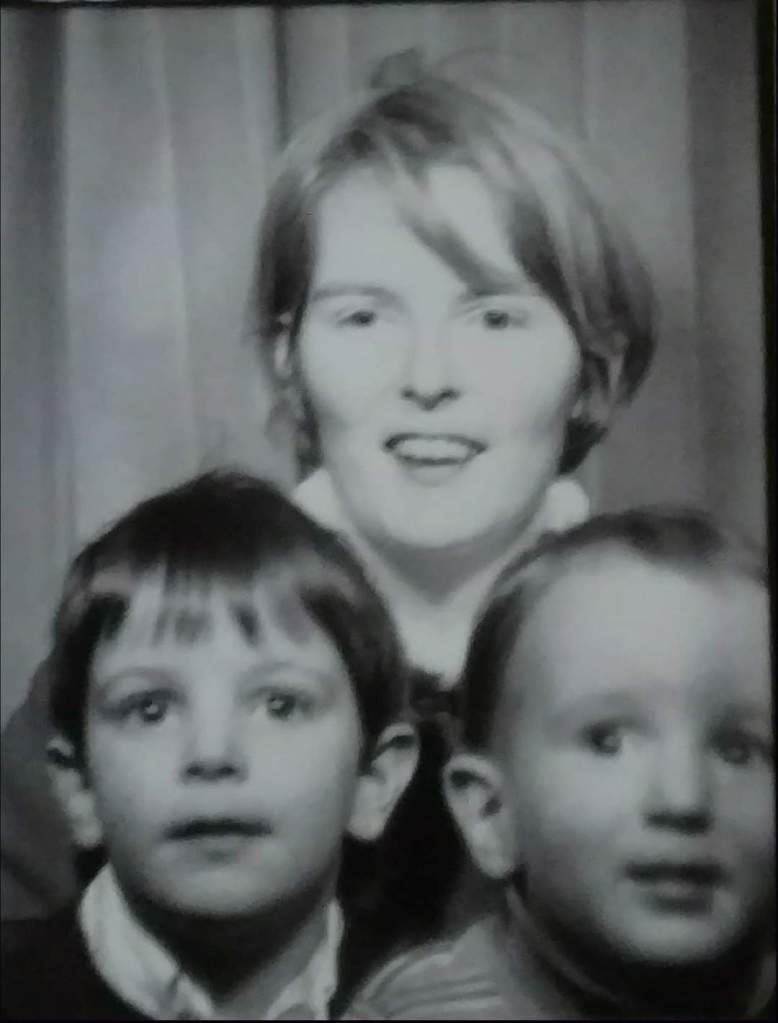
1967 Passport Photo
L to R – me, my mother, brother John

It may be that passport photos are the true record of my existence. I’ve moved around a lot in my life, and I realized recently that later this year, I will have lived away from Seattle for longer than I lived there. How can I say, as I am wont to do, that I’m “mostly from Seattle?”

I’ve been blogging about place, and setting as character recently, about how where you are or where you come from expresses itself through the individual—either broadening horizons or constricting opportunities; about how it informs and effects a person’s outlook, influences or dictates perspectives. It’s been much on my mind. My latest thriller is Bastard Verdict, set in present-day Scotland against a backdrop of a potential second referendum on independence. (It debuts on May 18, 2023.)

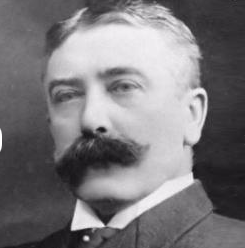
Ferdinand de Saussure

Structural linguists will say that language “writes you;” that is, it’s a pre-existing construct which influences you more than you can change it.

Is place like language, then? And where am I from? Does one spot on the map have the greater claim on forging who I am? I’ve fetched up on the banks of the Delaware, with no marked accent, an inability to spell properly (“colour” looks wrong, but then so does “color”) and a manifest infatuation with proper football.

But can I write about Scotland? In Bastard Verdict, which takes place primarily in Glasgow and Dundee, I’ve brought to the page a compelling story that weaves high stakes and low politics, and realized a vivid ensemble cast. My alter-ego and recurring protagonist, FBI Agent and elections specialist Imogen Trager, is a visiting scholar at University of Glasgow. As the story opens, she’s looking for a little peace and to do some research, while she sorts out what to do next and where she might go.

I lived in Scotland as a boy–twice. In the UK taken together, I’ve spent a little over four years, plus countless visits. I’ve lived a great many other places too. I approached the story with a little more humility than I might otherwise have done. I worked with the editor Alan McMunnigall of Thi Wurd, to help with my tortured prose as much as to make sure descriptions and characterizations rang true.

Here’s why:

I lived in Seattle for 21 years, until recently, the longest I’d ever been in one place. But I was born in Chapel Hill, NC (my parents were in graduate school at UNC). When I was two, we moved to Madison, WI, and my father’s first faculty position. He was hired “ABD” and the family moved to Montevideo, Uruguay, for six months to finish his dissertation work.

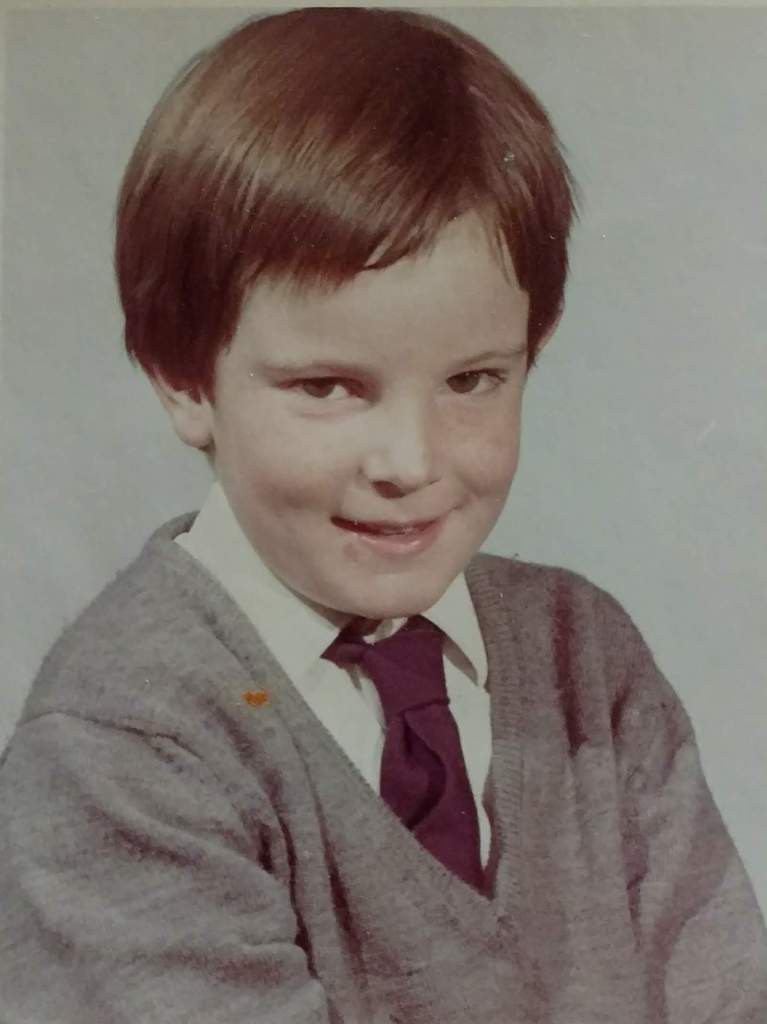
Colchester school picture, Primary 1

Three years later we decamped from Madison for Edinburgh, Scotland, and then Colchester in Essex. A year after returning to Madison, we moved to Iowa City. Four years after that I returned with my family to the UK, this time to Edinburgh (Morningside) for the full school year.

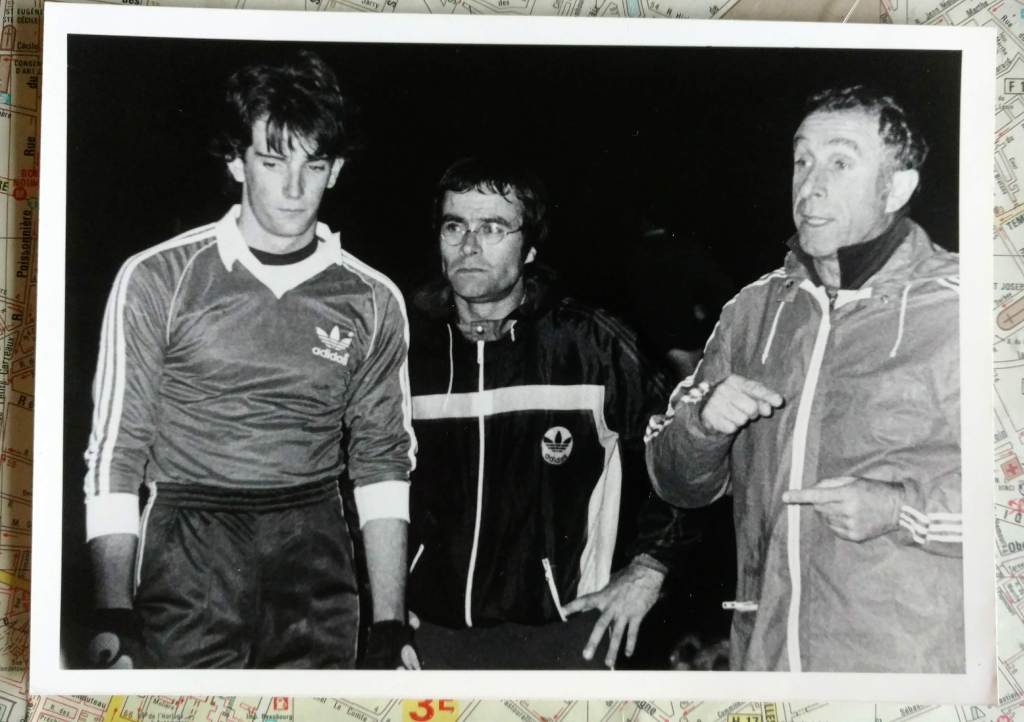
Training, Football Club Villeneuvois, 1981

We moved to Seattle when I was 15, staying there for 21 years (though I had one blissful semester abroad in the southwest of France in the small town of Villeneuve-sur-Lot the first semester of my senior year).

I graduated high school in Seattle, got my Bachelors and an MFA there. Got married—twice!—and all three children were born there. And then we moved, just 8 weeks after our son, the youngest, was born.

My wife will say that despite my time in the Pacific Northwest, I’m a Midwesterner, that it offends me to the marrow when people don’t properly shovel their sidewalks after a snowfall. But I haven’t lived there since 1979 (though through the magic of Facebook, I still keep up with friends from those days; and funnily, Alan and I bonded a bit over IC, as he had spent a semester there at the University of Iowa.).

We left Seattle in the summer of 2000, and since then we’ve lived in State College, PA; Highland Park, NJ; and now Philadelphia. In that time, we also spent two separate school years in Oxford (2011-12, and ’15-’16). My younger daughter’s high school Spanish teacher was convinced that our family was in the witness protection program.

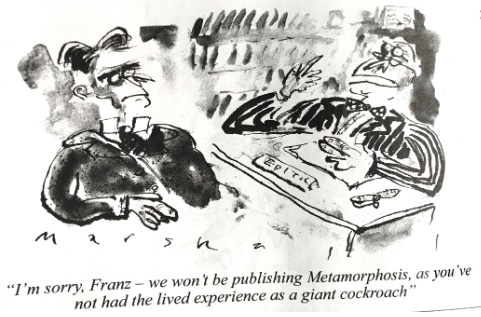
So how do I answer the question, ‘Where are you from?’ Because the question also seems to ask: what part of that place have you carried here? Our eldest child still lives in Seattle, but the other two don’t remember it all. So, saying they were born there means as little as my claim to Chapel Hill. And the subtext curl to the question reminds me of publisher’s need for “lived experience as [fill in the blank].”

One constant, I suppose, is academia, which is Imogen’s perch in the novel. My father was a political scientist, now retired, and it was for his work during the first 18 years of my life that we moved so often. I have an MFA, and I taught English at community college for three and a half years. I married an academic, also a political scientist (I’m sure Freud would have much to say about that!) But my three-year stint teaching English comp notwithstanding, I’ve always been at the periphery of university life.

In Edinburgh, we lived on Cluny Avenue, and my brother and I attended South Morningside Primary School on Comiston Road (the same school I had attended 5 years earlier). My brother and I both picked up Scottish accents, and we refer to the summer we returned to the US as “the summer of ‘what’?” No one, it seemed, could understand us. It was strange to be “back home” in Iowa, among our old friends, but still neither fish nor fowl–our Scottish friends had heard only our American accents, and our Iowa friends couldn’t penetrate our Scottish accent. But on the great plains, our cadence gradually (re)flattened and words like “skint” and phrases like “didja aye?” faded. But not my memories of how the place felt, the smells, the weather, the people.

# # #

James McCrone is the author of the Imogen Trager political suspense-thrillers Faithless ElectorDark Network and Emergency Powers–noir tales about a stolen presidency, a conspiracy, and a nation on edge. All books are available on BookShop.org, IndyBound.org, Barnes & Noble, your local bookshop, and Amazon. eBooks are available in multiple formats including Apple, Kobo, Nook and Kindle.

His next book, Bastard Verdict (out 18-May-2023), is a noir political thriller set in Scotland. His current, work-in-progress is a mystery-thriller set in Oregon’s wine country…A (pinot) Noir, called Witness Tree. Bastard Verdict is available to reviewers through NetGalley

A Seattle native (mostly), James now lives in South Philadelphia with his wife and three children. He’s a member of the The Mystery Writers of America, Int’l Assoc. of Crime Writers, Int’l Thriller Writers, Philadelphia Dramatists Center and is the vice-president of the Delaware Valley chapter of the Sisters in Crime network. James has an MFA from the University of Washington in Seattle.

For a full list of appearances and readings, make sure to check out his Events/About page. And follow this blog!

His most recent short fiction is below. The first is available for online reading.

Eight O’Clock Sharp” in Retreats from Oblivion: the Journal of NoirCon. (free online)
Set in Philadelphia’s 9th Street Market, Thomas is a man outside of time, forgotten, but trying to do the right thing while contending with avaricious forces.

“Ultimatum Games” in Rock and Hard Place magazine issue #7
A rare book heist, bad decisions. The narrator and his partner-in-crime clash over evolving bourgeois norms.


“Nostalgia” in Low Down Dirty Vote, vol. 3
An armed group tries to resurrect a past that never was as they struggle with change.

Chasing the elusive haggis (part 2)

In part one, I wrote about a dangerous, international haggis smuggling ring back in 1997. The next year, Lisa and I were traveling, and a friend in DC where we were staying found a butcher who carried haggis. But it was not a good haggis. No “lights” and too Liver-y. My only comfort came in remembering Mrs. Wilson, as I secreted the haggis into my checked luggage for the flight home…

We were becoming connoisseurs of haggis, my friends and I, and we resolved not to use the DC butcher again. Year 3 of this heroic quest, this odyssey (though no one died), we were traveling again, this time to Philly, visiting my in-laws. My father-in-law suggested I try D’Angelo’s specialty butcher in the 9th Street Italian Market (D’Angelo’s is now, sadly, defunct).

I said to my father-in-law: “Elmer, please—Italian butcher, Scottish delicacy. No.”

I called all over Philly, but with no luck. My father-in-law suggested D’Angelo’s again. Having no other recourse, and to prove to him that I was right, I called them:

“D’Angelo’s!!!” a woman shouted rather than answered.

“Yes, hello,” I began, “I was wondering if…”

“Whaddya want, hun! I got customers here.”

“Yes, well, I’m looking for haggis. I don’t expect—“

“Hang on!” She slammed the phone down on a metal table.

I could hear her stomping toward the back, heard her shouting indistinctly at people (or was that merely the way she spoke?); heard the door of a walk-in cooler open. It was blissfully silent for a moment, until she came out of the walk-in and tromped back to the phone:

“I got one left. You want it?”

“You have one?”

“Yeah. You want it or not? We’re closing in forty-five minutes.”

“Yes,” I said. “Thank you. I’ll be right there.”

La macellaia (Madame Butcher) was nicer, if no less voluble, in person. And I couldn’t help but reflect on the dulcet tones of Mrs. Wilson. It was much better than the previous year’s haggis from DC, and I carried it back to Seattle in my luggage.

Next up – haggis gourmands, and did I unwittingly assist anti-government forces?

# # #

James McCrone is the author of the Imogen Trager political suspense-thrillers Faithless ElectorDark Network and Emergency Powers–noir tales about a stolen presidency, a conspiracy, and a nation on edge. All books are available on BookShop.org, IndyBound.org, Barnes & Noble, your local bookshop, and Amazon. eBooks are available in multiple formats including Apple, Kobo, Nook and Kindle.

His next book, Bastard Verdict (out 18-May-2023), is a noir political thriller set in Scotland. His current, work-in-progress is a mystery-thriller set in Oregon’s wine country…A (pinot) Noir, called Witness Tree.

A Seattle native (mostly), James now lives in South Philadelphia with his wife and three children. He’s a member of the The Mystery Writers of America, Int’l Assoc. of Crime Writers, Int’l Thriller Writers, Philadelphia Dramatists Center and is the vice-president of the Delaware Valley chapter of the Sisters in Crime network. James has an MFA from the University of Washington in Seattle.

For a full list of appearances and readings, make sure to check out his Events/About page, sign up for the mailing list. And follow this blog!

His most recent short fiction is below. The first is available for online reading.

Eight O’Clock Sharp” in Retreats from Oblivion: the Journal of NoirCon. (free online)
Set in Philadelphia’s 9th Street Market, Thomas is a man outside of time, forgotten, but trying to do the right thing while contending with avaricious forces.

“Ultimatum Games” in Rock and Hard Place magazine issue #7
A rare book heist, bad decisions. The narrator and his partner-in-crime clash over evolving bourgeois norms.


“Nostalgia” in Low Down Dirty Vote, vol. 3
An armed group tries to resurrect a past that never was as they struggle with change.