Editing is fraught with dangerous snares. Multiple “passes” focus individually on drama, or character, or plot, or diction. I suffer through all of those because I want the work to sing for the reader.
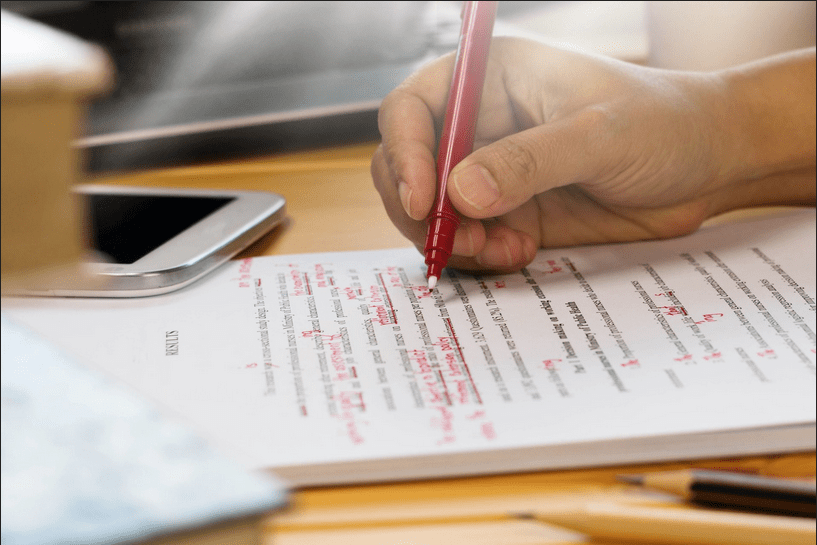
But the part over which I bleed is spelling. I confess, I am a terrible speller.
My inability to properly represent words stems not from laziness or any diagnosed affliction, but rather from two sources: Britain in the late 1960’s and mid-70’s, and junior year at university.
I spent two formative years (five years apart) in Scotland and England, first when I was 5, turning 6; and again five years later when I was 10, turning 11. British English spells things like “theatre” and “litre” or “kilometre” more like the French; they favor (or, rather favour) the “o-u-r” endings for words like labor and color. They use ‘s’ in words like analyze or synthesize, where American’s use a ‘z’ (though Americans don’t call it a ‘zed’).”Kerb” is their spelling of the American “curb.”
The list of differences is long, and that long list, first imprinted on a five year old was reversed and reprogrammed by formidable Midwestern American (Wisconsin and Iowa) grammarians, only to be re-undermined in Britain five years later. I struggled mightily with spelling.
But I had gained the upper hand in that struggle by the time I was a teenager. That is, until my junior year at university. I was an English major, and as part of my studies, I read uncorrected texts, of Shakespeare, Milton, Addison and Steele, Samuel Johnson, John Donne, Andrew Marvel, and others.
Spelling standardization didn’t really take hold until the latter part of the 17th century. There are documents in which, Shakespeare signs and spells his own name a couple different ways. Up to my junior year, my spelling, while sound, was tenuous. And then it became unmoored.
Words like “dramatick” came to seem correct. And usages like “dramatickal” seemed legitimate and sensible.
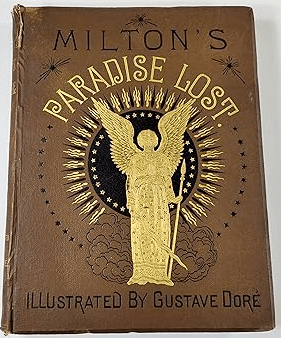
In Paradise Lost (1667), Milton often spells ‘me,’ ‘he’ or ‘she’ with with a double-‘e’. Most often (if I remember correctly), Milton used the double-e construction to denote an inversion of
the iambic pentameter rhythm, or to doubly reinforce the stress, as in:
“Hee for God only, and shee for God in him,”
x / x / x, / x / x / x
where the spelling of ‘hee’ is meant to suggest stressing the first (usually unstressed) syllable, and in the example given, deliberately slowing the rhythm by having 11 beats rather than ten. Meanwhile, I must remember, that in American usage, punctuation goes inside the quotation marks.
I have made my peace with my limitations, and I have found workarounds and aide de memoires. And proofreaders.
But today, in the New York Times, John McWhorter’s “What’s Better Left Unsaid,” shakes my already tottering confidence by throwing not only spelling but pronunciation into doubt. Should we pronounce the ‘t’ in ‘often? he asks. Or the ‘th’ in ‘clothes?’
Wait. I do pronounce them, though I don’t say “lis-ten,” which leaves me wondering what other (supposedly) superfluous letters I’m pronouncing or what dubious, inconsistent choices I’m making regarding my dialogue and prose.
While I adhere to the standards–or at least the ones I know of–I still find myself squinting at ‘roofs,’ which feels like it ought to be ‘rooves.’ As in hoof:hooves, or wolf:wolves. (The dictionary regards the spelling and pronunciation rooves as “archaic.”)
Editing at the sentence level is meant to create vivid, confident prose, but the process of getting there is full of pitfalls and wrong turnings (or is it “wrong turns?”).

James McCrone’s stories raise questions about the nature of power, the choices we make and the lessons we don’t learn.
He’s the author of the Imogen Trager political suspense-thrillers Faithless Elector, Dark Network and Emergency Powers–noir tales about a stolen presidency, a conspiracy, and a nation on edge. Bastard Verdict, his fourth novel, is about a conspiracy surrounding a second Scottish Independence referendum. His current novel, Witness Tree, is out on submission.
All books are available on BookShop.org, IndyBound.org, Barnes & Noble, your local bookshop, and Amazon. eBooks are available in multiple formats including Apple, Kobo, Nook and Kindle.
James is a member of Mystery Writers of America, Int’l Assoc. of Crime Writers, and he’s the current president of the Delaware Valley chapter of Sisters in Crime. He has an MFA from the University of Washington in Seattle, and he now lives and writes in Philadelphia, PA.
For a full list of appearances and readings, make sure to check out his Events/About page. And follow him on here, or on Substack!