Questions and guessing, when the political is not political

Fiction is not a letter to the editor, not an essay or a position paper, nor even a puff piece reifying one view over another. It’s stories–about character(s) in conflict, and a question–what will happen next? will the character succeed, fail, or live to fight another day?

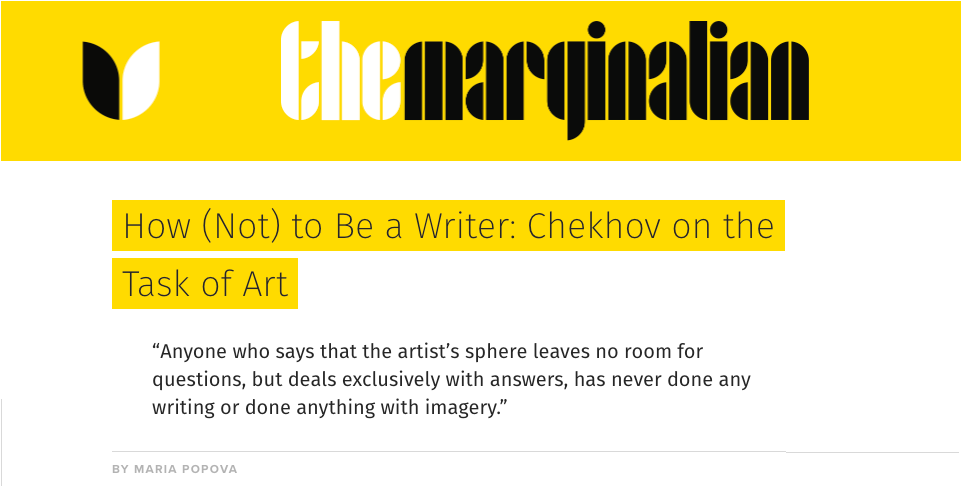
But that isn’t quite all of it. I’m indebted to Maria Popova’s newsletter The Marginalian for helping me articulate something I felt to be true but couldn’t quite make clear.

Popova’s August 2021 newsletter “How (Not) to Be a Writer” quotes Anton Chekhov: “the task of the writer is not to solve the problem, but to state the problem correctly.” James Baldwin said something similar when he noted that the writer’s task is to “drive to the heart of every answer and expose the question the answer hides.”

Chekhov goes on to say: “Anyone who says that the artist’s sphere leaves no room for questions, but deals exclusively with answers, has never done any writing or done anything with imagery. The artist observes, selects, guesses, and arranges; every one of these operations presupposes a question at its outset. If he has not asked himself a question at the start, he has nothing to guess and nothing to select.”

So, is it that “Happy families are all alike; but every unhappy family is unhappy in its own way,” as Tolstoy asserts at the beginning of Anna Karenina? We may decide for ourselves. George Eliot’s preoccupation and recurring question was, “What to do with one’s life, how to use one’s gifts for the benefit of oneself and the world?” Or, as she asks in one of my favorite novels, Middlemarch, is it true “that things are not so ill with you and me as they might have been…owing to the number who lived faithfully a hidden life, and rest in unvisited tombs”?

I have said that I write political thrillers that aren’t political. By that, I mean that the work has no axe to grind, no point to prove. Sometimes the label “political” is lobbed around by readers or critics who are uncomfortable with a book’s subject matter, or the characters involved, and those inclusions in the story are what such people label (and dismiss) as “political.” Which is decidedly not what I’m talking about. In my work, I’m drawn to what lies behind the official explanations and stories we’re told. What is the flip side of the answer the powerful would like us to accept? What (if anything) is being concealed?

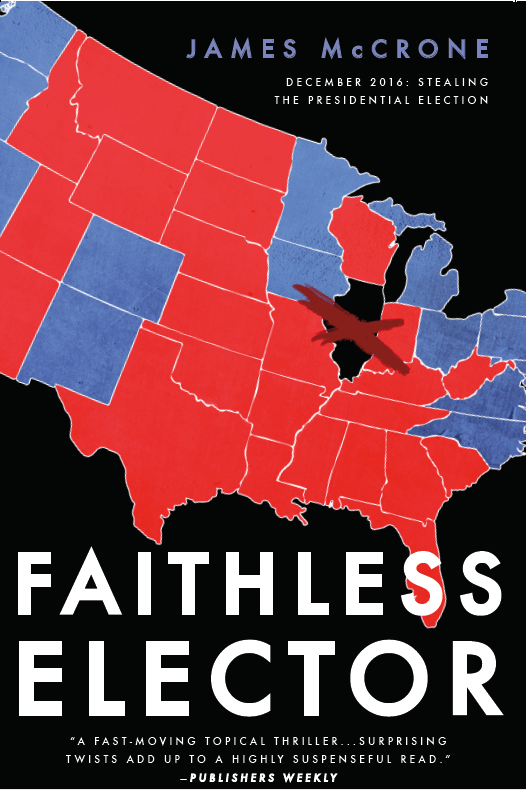
For example, a switched vote by a “faithless elector” has never altered the supposed result of a presidential election. But what if it did, what would it take? Who might orchestrate such a thing? How would they go about it? Those questions animated my first thriller, Faithless Elector, and new questions arose that drove me through the two following novels in the series, Dark Network and Emergency Powers. Early agent- and editor rejections for Faithless would praise the story, the characters (while nevertheless declining to pursue publication), but in two instances an agent wrote back, saying that “No one knows anything or cares about the Electoral College.”

I think they do now.

This isn’t too much of a spoiler, but readers are often surprised to find that neither of the parties is behind the conspiracy. Did I do it because I wanted not to offend anyone? No, when I asked the question, ‘who would do it?’ the story (and verisimilitude) dictated that it be an outside force, albeit one that is parasitic on a particular party. As a beginning, the novels I have written thus far ask, “What if?” and then go deeper:

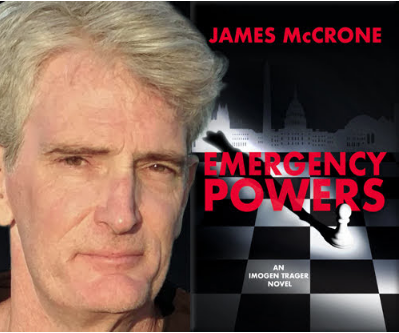
In Faithless Elector, it was, What if a group of conspirators tried to steal the presidency by manipulating the Electoral College? In Dark Network, it was, How far might such people really go, and what happens when there is no law, only power? And in Emergency Powers, the questions was, Would Imogen have the stamina to sustain the investigation when everyone else wants to move on? (And why are those others so eager to move on?)

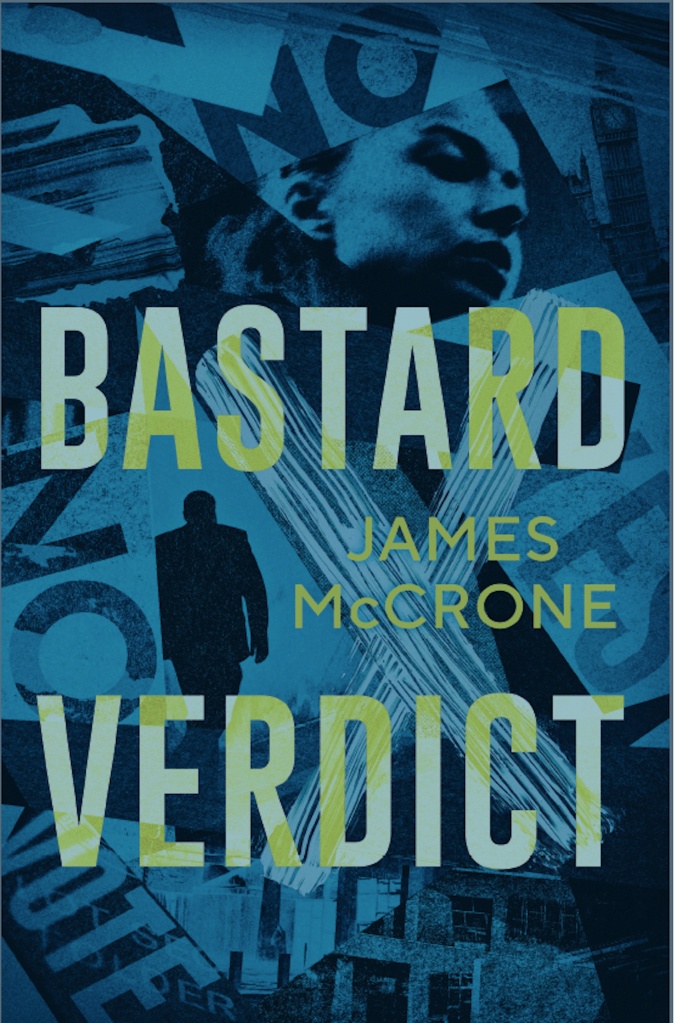
For my latest thriller, Bastard Verdict, I wondered, What if the first Referendum on Scottish Independence had been interfered with? How might it have been achieved? Would the conspirators be anxious to keep the lid on what they had done?

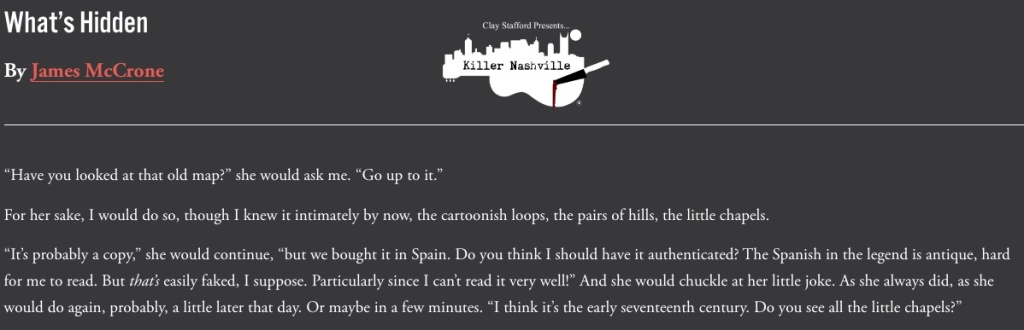
You can also read two of my recent short stories online. In “What’s Hidden,” the question is, “what do we owe to the dying and the dead?” In “Eight O’clock Sharp,” the question is, “is there freedom when the past doesn’t remember you?”

To write about one’s own time is to risk being dismissed as “political,” but to write about the here and now is always political. The beauty and substance comes from the questions we ask.

# # #

James McCrone is the author of the Imogen Trager political suspense-thrillers Faithless ElectorDark Network and Emergency Powers–noir tales about a stolen presidency, a conspiracy, and a nation on edge. All books are available on BookShop.org, IndyBound.org, Barnes & Noble, your local bookshop, and Amazon. eBooks are available in multiple formats including Apple, Kobo, Nook and Kindle.

His latest book Bastard Verdict (18-May-2023), is a noir political thriller set in Scotland. His current, work-in-progress is a mystery-thriller set in Oregon’s wine country…A (pinot) Noir, called Witness Tree.

A Seattle native (mostly), James now lives in South Philadelphia with his wife and three children. He’s a member of the The Mystery Writers of America, Int’l Assoc. of Crime Writers, Int’l Thriller Writers, Philadelphia Dramatists Center and is the current president of the Delaware Valley chapter of the Sisters in Crime network. James has an MFA from the University of Washington in Seattle.

For a full list of appearances and readings, make sure to check out his Events/About page. And follow this blog!

Better Next Time…

The Atlantic published an article this week, “The Unraveling of the Trump Era,” by Olga Khazan, who notes: “Trump’s team fell short because it often made mistakes in the nitty-gritty work of rule-making… That might come as a relief to Democrats, but it’s actually a warning: All it will take is someone with the same priorities as Trump, but better discipline, to reshape the way the government works.”

The comedian and host of Last Week Tonight, John Oliver, referred to the Trump administration’s all-thumbs approach to governing as “Stupid Watergate,” which he described as “a scandal with all the potential ramifications of Watergate, but where everyone involved is stupid and bad at everything.”

The Faithless Elector series (while not about Trump) mines and articulates the very real dangers of what could happen if a group of ruthless, disciplined and canny political operators were to try to seize control of government—and then cement their grip.

We’ve seen the lock (goose) step of the vast majority of the GOP. If such a president had majorities in both houses of Congress, he could enact what he wanted. If he had a pliant Att’y General and had successfully remade the Office of Personnel Management to be under the aegis of the White House as he tried to do (thus a return to the spoils system of patronage government), the few things such an administration enacted that were contested might easily be upheld by a craven Supreme Court, bent on returning the nation to the 19th century. And the DOJ could become solely the tool of the president.

Also from Khazan’s article: “The rule process is specific, technical, and tedious, which did not exactly fit Trump’s style. Some experts say Trump’s agencies wrote their rules carelessly…”

The genesis of Faithless Elector books and the conspiracy bent on seizing control and remaking the nation in their own bloodless image was not Trump, but the W Bush administration–and the work of Cheney, Rumsfeld and Carl Rove. Cheney and Rumsfeld cut their teeth under Nixon, and they were aggrieved by the rejection of their candidate and the repudiation of the so-called Imperial Presidency. They were savvy, cunning, and understood intimately how government works. They set about bending it to their oligarchic will. It was Rove’s job to ensure a “permanent Republican majority.”

It’s touching that fewer than 20 years ago the GOP still cared about elections.

Beginning with the first book, Faithless Elector (published in spring 2016 before Trump was even the Republican candidate), the conspirators recognize that they do not have a majority, and so they set out to manipulate the Electoral College. In Dark Network, they work on the rules and try to manipulate a Contingency Election. In the final book, Emergency Powers, the conspiracy starts working hard on eating government from the inside out.

It’s worth noting that while the Faithless Elector series was prescient in many ways, the era in which we find ourselves may not be a rebirth of freedom and democracy but–for the forces arrayed against democratic accountability and the rule of law–nothing more than an unfortunate, regrettable interlude in their dark march. And they will delay, distract and bide their time.


People like Mitch McConnell play the long game, and they’re patient. And ruthless.

# # #

James McCrone is the author of the Imogen Trager political suspense-thrillers Faithless Elector , Dark Network and Emergency Powers–noir tales about a stolen presidency, a conspiracy, and a nation on edge. All books are available on BookShop.org, IndyBound.org, Barnes & Noble, and Amazon. eBooks are available in multiple formats including Apple, Kobo, Nook and Kindle.

His work, “Numbers Don’t Lie” also recently appeared in the 2020 short-story anthology Low Down Dirty Vote, vol. 2, and his short story “Ultimatum Games” will appear in Rock and a Hard Place in issue #7 this fall. His next book, w/t Bastard Verdict, is a noir political thriller set in Scotland.


A Seattle native (mostly), James now lives in South Philadelphia with his wife and three children. He’s a member of the The Mystery Writers of America, Int’l Assoc. of Crime Writers, Int’l Thriller Writers, Philadelphia Dramatists Center and is the newly elected vice-president of the Delaware Valley chapter of the Sisters in Crime network. James has an MFA from the University of Washington in Seattle.

As American as Baseball: A Modest Proposal

New plurality rules for baseball!

The extra-innings format rule in Major League Baseball has inspired me to dust off a format change I’d blogged about years ago, but which so far hasn’t garnered the changes I envisioned. Be assured, I have forwarded this “innings-ovation” proposal to Baseball Commissioner Rob Manfred. Incredibly, then-commissioner Bud Selig did not respond to my original proposal.

The Electoral College is as American as baseball—venerably, willfully idiosyncratic, hidebound and capricious. (Which is part of the fun, right?)!

Why does the similarity stop there?

The enduring use of the Electoral College should inspire those of us who love the game–as we love the Republic–to greater depths.  If winner-take-all is indeed our national spirit, why must “America’s game” cling to its outmoded scoring?

Total number of runs over nine innings is clearly too simple-minded a way of determining a winner. And likely to stir up passions.

Therefore, in order to address the unfair, and frankly un-American scoring discrepancy that baseball presents, I would like to modestly propose a new set of plurality rules for scoring a baseball game:

  • The team who scores the most runs in a particular inning will be awarded ALL of the runs scored in that inning by either team. 

To illustrate: let us say, in the first inning Team ‘A’ scored 3 runs and Team ‘B’ scored 2. Under electoral scoring, Team ‘A’ having received more runs that ‘B’ would receive all 5 runs scored in that inning.

Then, (to continue the scenario) if in the following second inning, ‘B’ scored 3 runs and ‘A’ none, the running score would be ‘A’-5 vs. ‘B’- 3, each having won an inning and been awarded all the points that inning carried. Then, in the 9th inning, the innings-won total would be calculated to determine the winner.

I’m sure we can all agree that this makes much more sense. And to those who say it would unfairly award wins and even the championship to a lesser team, I can only say that it wouldn’t happen any more frequently than the Electoral College winner loses the popular vote (5, but who’s counting?).

Indeed, a survey of the last two World Series contests shows that while the scoring would have been different, the result would have been the same. And more just.

But I hear you say, there could still be a tie.

Of course. In the new innings plurality rules, the teams would play a 10th inning. But, as the new player-in-scoring-position-to begin extra innings makes clear, to continue playing past that is pointless. If, at the end of the 10th inning, there is still a tie, the decision as to who has won the contest would be remanded to a responsible body, one with knowledge of the teams, players and their capabilities. 

There could be no better group than living members of the Baseball Hall of Fame to weigh, consider and decide which team should win, a College of Baseball Elders. Like the electoral college, there could be some simple safeguards in place, such as a restriction on not voting for a team on which an Elder had previously played.

What could be more American? 

Follow this blog for more insights.

# # #

For a primer of past blog posts on the issues surrounding the Electoral College, click the links below: everything from the issues surrounding popular vote winners losing in the Electoral College, to Faithless Electors, to the democratic deficit inherent in the apportioning of EC votes.
And for a thrilling read, check out the whole series, beginning with Faithless Elector.

Alexander Hamilton and the first contested election

Power of Small State Voting

Chaos Theory, Electoral College Style

Faithless Electors could have tipped 5 previous elections
Structural Flaws

James McCrone

James McCrone is the author of the Imogen Trager political suspense-thrillers Faithless Elector , Dark Network and Emergency Powers–noir tales about a stolen presidency, a conspiracy, and a nation on edge. All books are available on BookShop.org, IndyBound.org, Barnes & Noble, and Amazon. eBooks are available in multiple formats including Apple, Kobo, Nook and Kindle.

His work, “Numbers Don’t Lie” also recently appeared in the 2020 short-story anthology Low Down Dirty Vote, vol. 2, and his short story “Ultimatum Games” will appear in Rock and a Hard Place this fall. His next book, w/t Bastard Verdict, is a noir political thriller set in Scotland.


A Seattle native (mostly), James now lives in South Philadelphia with his wife and three children. He’s a member of the The Mystery Writers of America, Int’l Assoc. of Crime Writers, Int’l Thriller Writers, Philadelphia Dramatists Center and is the newly elected vice-president of the Delaware Valley chapter of the Sisters in Crime network. James has an MFA from the University of Washington in Seattle.

Power of the small states in the *Electoral College

Power of the Small States in the Electoral College

[previously posted on a former blog, now defunct – April, 2016]

The Electoral College process favors people living in small states. We all know that each state has the same number of electoral votes as it does members of Congress. Since congressional apportionment in the Senate favors the small states, the electoral college therefore favors small states, first by giving them the malapportioned Senate votes, and second by amplifying the voting power of those votes.

For instance, California has 38,800,000 residents, and it has 55 electoral votes, or about 705,000 people per elector; and Wyoming, with 550,000 people, has three electoral votes, or about 183,000 people per elector. Which means that a Wyoming resident has 3.8 times the voting power of a California resident. Sixty-five Wyomings could fit in California, meaning that if California were scaled in such a way it would contribute 195 votes to the electoral college.

The winner-take-all (except ME and NE) further amplifies this scenario. (For further reading, you can check out papers from Columbia Univ. and MIT.)

Many respond that ours is a Constitutional Republic, that the Electoral College and the Senate protect us from “tyranny of the majority” and/or “mobocracy.” This misses a key point:

Where and when are we prepared to say that the loser gets to win, to dictate policy? Under what circumstances?

And whereas California has 38,800,000 residents, and it has 55 electoral votes, or about 705,000 people per elector; and Wyoming, with 550,000 people, has three electoral votes, or about 183,000 people per elector. This discrepancy means that a Wyoming resident has 3.8 times the voting power of a California resident.

Sixty-five Wyomings could fit in California, meaning that if California were scaled in the same way, California would contribute 195 votes to the electoral college. The winner-take-all nature of the contest (except ME and NE) further amplifies this unbalanced scenario.

One further latent anti-democratic issue in the Electoral College is the prospect of a three-way race where no one wins a clear majority (270).

When no candidate wins 270 electoral votes, the Constitution provides that the House of Representatives elects the president in such a case. If it were the full House voting, and since, ideally, the House’s membership reflects the nation’s population, this election would be relatively fair. However, this process provides that each state receives only one vote, further diluting and diminishing the power of large states, and utterly disenfranchising the people of the United States.

Given the undemocratic nature of the EC, if an elector switched his or her vote so that the EC vote matched the popular vote, would this be a good thing?

#   #   #

James McCrone

James McCrone is the author of the Imogen Trager political suspense-thrillers Faithless Elector , Dark Network and Emergency Powers–noir tales about a stolen presidency, a conspiracy, and a nation on edge. All books are available on BookShop.org, IndyBound.org, Barnes & Noble, and Amazon. eBooks are available in multiple formats including Apple, Kobo, Nook and Kindle.

His work, “Numbers Don’t Lie” also recently appeared in the 2020 short-story anthology Low Down Dirty Vote, vol. 2, and his short story “Ultimatum Games” will appear in Rock and a Hard Place this fall. His next book, w/t Bastard Verdict, is a noir political thriller set in Scotland.


A Seattle native (mostly), James now lives in South Philadelphia with his wife and three children. He’s a member of the The Mystery Writers of America, Int’l Assoc. of Crime Writers, Int’l Thriller Writers, Philadelphia Dramatists Center and is the newly elected vice-president of the Delaware Valley chapter of the Sisters in Crime network. James has an MFA from the University of Washington in Seattle.

This blogpost was previously posted on a former blog, now defunct – April, 2016