The Vaudeville Hook

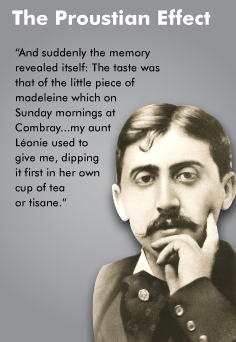
Proust has his madeleines and tea, a moment that unlocked and threw open a door of “involuntary memory.” Proletarian that I am, I have a cane. Or rather, my wife has her grandfather’s cane.

This morning in the living room, as my wife finished her morning stretch routine, she stood up and reached for her grandfather’s cane to initiate and facilitate a new stretch.

As she turned the cane sideways and gently hooked her own neck I found myself transported to Alderson, West Virginia, to my grandparents’ house in the early 1970’s.

There was a good-sized gathering of family and friends in the kitchen and in the hallway running past it. Somehow, I’d been able to stay up late to watch The Tonight Show the previous night, and I wanted to share some of Johnny Carson’s opening monologue with my grandparents, aunts, uncles, great-aunts and great-uncles. (At about eight years old I was the youngest person in that kitchen by a good four or five decades.)

I have a phonographic memory (if that’s really a thing); that is, I remember best what I hear. In the center of the kitchen I had everyone’s attention, as I recreated Johnny’s monologue, word-for-word from the previous night. I had his timing, his pauses, his cadence–and I was killing! It was a heady feeling for a child. But after four or five minutes, I realized I was about to run out of material, and I was desperate to keep it all going. So, I inserted my own material, which was an ill-advised mix of the arcane, the illogical, and scatological. The laughter faded, but I soldiered on.

Though I sensed that my grandfather was looking uncomfortable, I had no intention of relinquishing the stage when from behind me, a great aunt reached out with her cane and pulled me backward with it, an improvised Vaudeville hook.

She had suffered a stroke some years earlier, and I don’t believe I had ever heard her speak, but she liked to be in among people. She had not laughed during the earlier portion of my performance, but then, I think the stroke rendered her physically incapable of doing so. While everyone howled with laughter at her “joke,” her body shook and tears came to her eyes. My eyes must have registered hurt and confusion. Seeing my face, she dropped the cane and drew me to her in a tight hug. Her body still vibrating.

No one who was there remembers my dazzling rendering of Johnny Carson’s monologue, but everyone remembers “the hook.” And my great aunt, bless her.

I’ve been thinking a lot about the hook lately, and not only when my wife uses it for her stretches. I’m beginning the rewriting/editing of the second full draft of Witness Tree, my “pinot” noir tale set in the Willamette Valley of Oregon. Too often, as I wade through my tortured (and tortuous) first-draft prose, I find insupportable diversions, dismaying breaks with diction and tone, convoluted reasoning…and first draft cutesy-ness.

It’s slow-going, and I read each page aloud, cutting this, clarifying that, excising paragraphs wholesale and putting (*)asterisks next to words or passages that I can’t decide about, but that I think I should (re)review.

My great aunt passed away many years ago, but I could really use her right now.

# # #

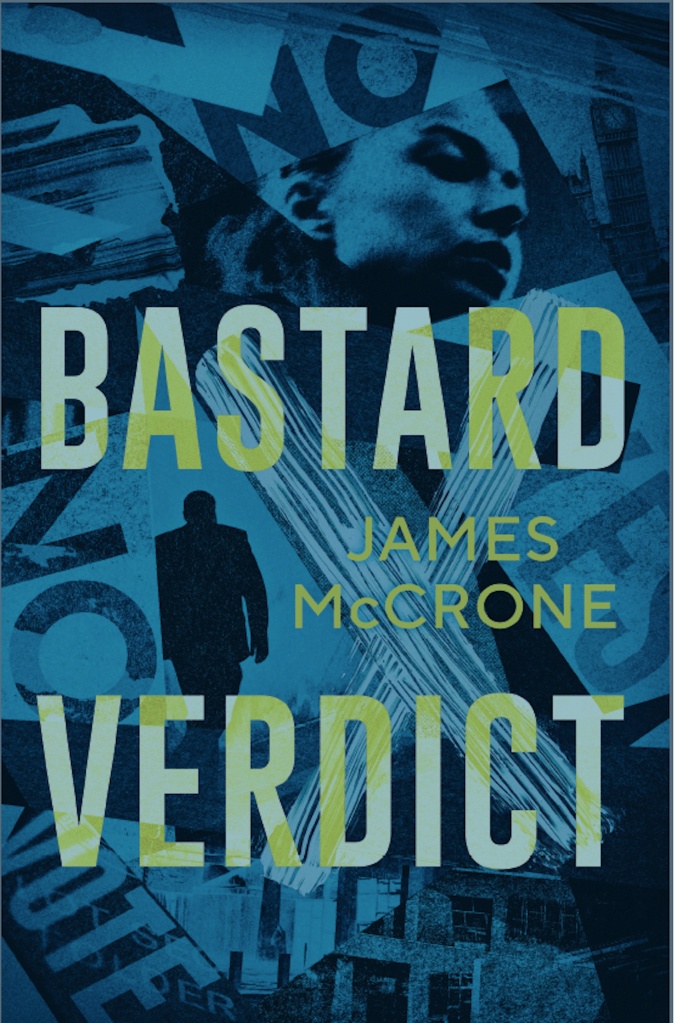
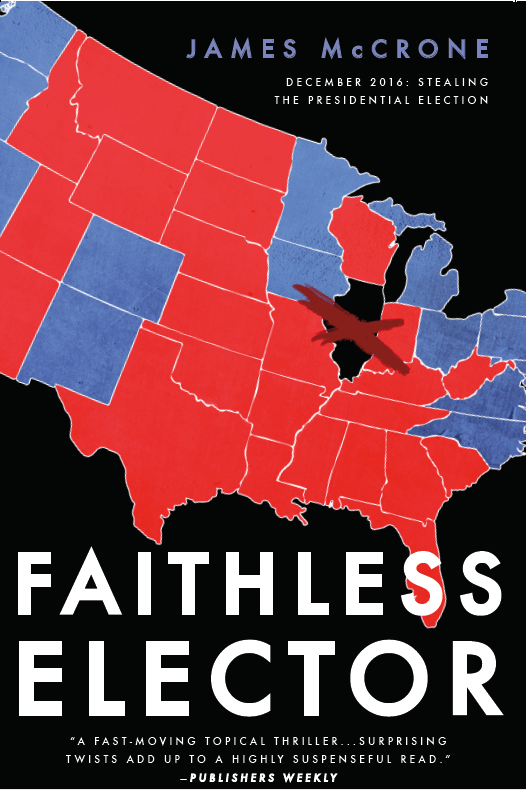
James McCrone is the author of the Imogen Trager political suspense-thrillers Faithless ElectorDark Network and Emergency Powers–noir tales about a stolen presidency, a conspiracy, and a nation on edge. Bastard Verdict, his fourth novel, is about a conspiracy surrounding a second Scottish Independence referendum. All books are available on BookShop.org, IndyBound.org, Barnes & Noble, your local bookshop, and Amazon. eBooks are available in multiple formats including Apple, Kobo, Nook and Kindle.

He’s a member of Mystery Writers of America, Int’l Assoc. of Crime Writers, and he’s the current president of the Delaware Valley chapter of Sisters in Crime. He lives in Philadelphia. James has an MFA from the University of Washington in Seattle. His current, work-in-progress is a mystery-thriller set in Oregon’s wine country…A (pinot) Noir, called Witness Tree.

For a full list of appearances and readings, make sure to check out his Events/About page. And follow this blog!
You can also keep up with James and his work on social media:
Mastodon: @JMcCrone
Bluesky: @jmccrone.bsky.social
Facebook: James McCrone author (@FaithlessElector)
and Instagram/Threads “@james.mccrone”

Questions and guessing, when the political is not political

Fiction is not a letter to the editor, not an essay or a position paper, nor even a puff piece reifying one view over another. It’s stories–about character(s) in conflict, and a question–what will happen next? will the character succeed, fail, or live to fight another day?

But that isn’t quite all of it. I’m indebted to Maria Popova’s newsletter The Marginalian for helping me articulate something I felt to be true but couldn’t quite make clear.

Popova’s August 2021 newsletter “How (Not) to Be a Writer” quotes Anton Chekhov: “the task of the writer is not to solve the problem, but to state the problem correctly.” James Baldwin said something similar when he noted that the writer’s task is to “drive to the heart of every answer and expose the question the answer hides.”

Chekhov goes on to say: “Anyone who says that the artist’s sphere leaves no room for questions, but deals exclusively with answers, has never done any writing or done anything with imagery. The artist observes, selects, guesses, and arranges; every one of these operations presupposes a question at its outset. If he has not asked himself a question at the start, he has nothing to guess and nothing to select.”

So, is it that “Happy families are all alike; but every unhappy family is unhappy in its own way,” as Tolstoy asserts at the beginning of Anna Karenina? We may decide for ourselves. George Eliot’s preoccupation and recurring question was, “What to do with one’s life, how to use one’s gifts for the benefit of oneself and the world?” Or, as she asks in one of my favorite novels, Middlemarch, is it true “that things are not so ill with you and me as they might have been…owing to the number who lived faithfully a hidden life, and rest in unvisited tombs”?

I have said that I write political thrillers that aren’t political. By that, I mean that the work has no axe to grind, no point to prove. Sometimes the label “political” is lobbed around by readers or critics who are uncomfortable with a book’s subject matter, or the characters involved, and those inclusions in the story are what such people label (and dismiss) as “political.” Which is decidedly not what I’m talking about. In my work, I’m drawn to what lies behind the official explanations and stories we’re told. What is the flip side of the answer the powerful would like us to accept? What (if anything) is being concealed?

For example, a switched vote by a “faithless elector” has never altered the supposed result of a presidential election. But what if it did, what would it take? Who might orchestrate such a thing? How would they go about it? Those questions animated my first thriller, Faithless Elector, and new questions arose that drove me through the two following novels in the series, Dark Network and Emergency Powers. Early agent- and editor rejections for Faithless would praise the story, the characters (while nevertheless declining to pursue publication), but in two instances an agent wrote back, saying that “No one knows anything or cares about the Electoral College.”

I think they do now.

This isn’t too much of a spoiler, but readers are often surprised to find that neither of the parties is behind the conspiracy. Did I do it because I wanted not to offend anyone? No, when I asked the question, ‘who would do it?’ the story (and verisimilitude) dictated that it be an outside force, albeit one that is parasitic on a particular party. As a beginning, the novels I have written thus far ask, “What if?” and then go deeper:

In Faithless Elector, it was, What if a group of conspirators tried to steal the presidency by manipulating the Electoral College? In Dark Network, it was, How far might such people really go, and what happens when there is no law, only power? And in Emergency Powers, the questions was, Would Imogen have the stamina to sustain the investigation when everyone else wants to move on? (And why are those others so eager to move on?)

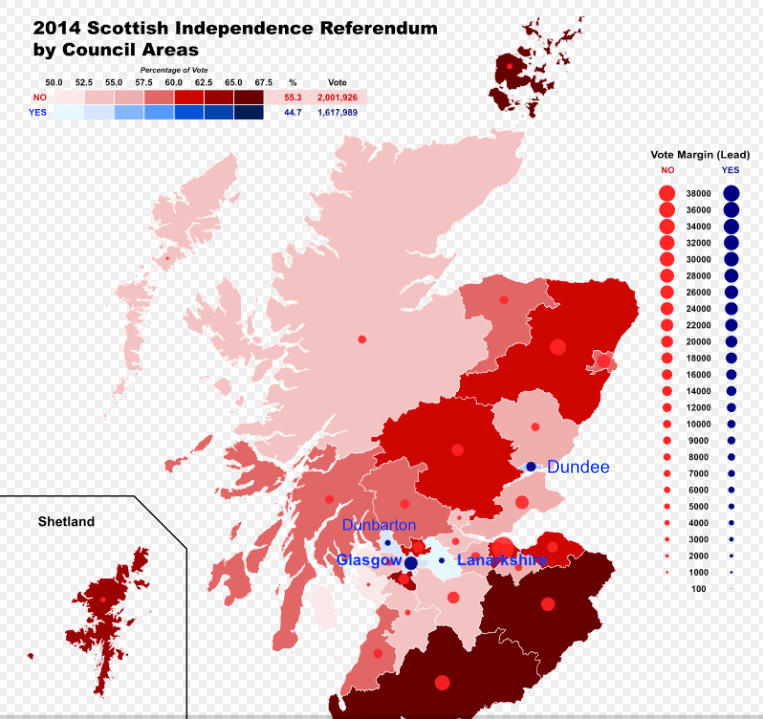
For my latest thriller, Bastard Verdict, I wondered, What if the first Referendum on Scottish Independence had been interfered with? How might it have been achieved? Would the conspirators be anxious to keep the lid on what they had done?

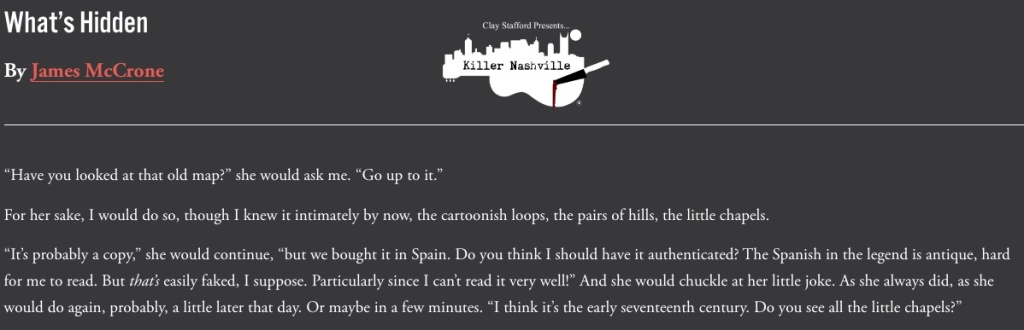
You can also read two of my recent short stories online. In “What’s Hidden,” the question is, “what do we owe to the dying and the dead?” In “Eight O’clock Sharp,” the question is, “is there freedom when the past doesn’t remember you?”

To write about one’s own time is to risk being dismissed as “political,” but to write about the here and now is always political. The beauty and substance comes from the questions we ask.

# # #

James McCrone is the author of the Imogen Trager political suspense-thrillers Faithless ElectorDark Network and Emergency Powers–noir tales about a stolen presidency, a conspiracy, and a nation on edge. All books are available on BookShop.org, IndyBound.org, Barnes & Noble, your local bookshop, and Amazon. eBooks are available in multiple formats including Apple, Kobo, Nook and Kindle.

His latest book Bastard Verdict (18-May-2023), is a noir political thriller set in Scotland. His current, work-in-progress is a mystery-thriller set in Oregon’s wine country…A (pinot) Noir, called Witness Tree.

A Seattle native (mostly), James now lives in South Philadelphia with his wife and three children. He’s a member of the The Mystery Writers of America, Int’l Assoc. of Crime Writers, Int’l Thriller Writers, Philadelphia Dramatists Center and is the current president of the Delaware Valley chapter of the Sisters in Crime network. James has an MFA from the University of Washington in Seattle.

For a full list of appearances and readings, make sure to check out his Events/About page. And follow this blog!

“Novel Tetris” and What’s Hidden

Killer Nashiville Literary magazine recently published my short story, “What’s Hidden,” a mystery about a (possibly) stolen map that a son uncovers while helping his aging mother get her house and affairs in order. The story is organized around a Voltaire quote, and the idea that “To the living we owe respect, but to the dead we owe only the truth.”

It’s my most personal published work, and I’ve been very pleased by the responses it’s getting, not least because it’s something of a departure from much of what I’ve published so far. It has a first-person narrator (all of my novels are in third-person), and while it revolves around a crime, other forces compel the narrator.

You can check out the short story here: https://www.killernashville.com/short-stories/whats-hidden

It took almost two years for ‘What’s Hidden’ to find a home, and its publication came at just the right time for me, during a depressing crisis in faith.

My novel-in-progress, Witness Tree, has been painfully, maddeningly, embarrassingly slow in coming together. I wander the South Philly streets, mumbling about plot and character, crumpled papers full of cryptic (or indecipherable) scribbled notes sticking out of pockets like old, ragged Kleenex.

Finally, early in the week that I learned the short story was coming out, I had begun hacking away at parts of the book, a kind of “novel Tetris,” as my wife calls it, wherein I cut and moved scenes–sometimes whole chapters!–fitting them into different, more apt places in the story. Upon reflection, I might have called it “novel Jenga,” because every part that I moved either backwards or forwards in the story threatened some other part, or to destroy the whole thing.

I was genuinely worried over whether the novel would ever see the light of the day…or print. I also worried that it might not be crime-y enough, even as it starts with an execution-style murder. (That’s not a spoiler, it happens on page 2.) But as well as being about exposing the conspiracy that is the heart of the story, Witness Tree is again very personal–it deals with addiction, sobriety, failure of imagination, and issues of trust. And politics…because, yeah. I can’t help myself.

As I pulled apart and reconstituted the book, I found that certain ideas or passages just didn’t work. In the end, along with all the moving around, I cut 5,000 words and two characters. Now I have to construct a new bridge between some later chapters, but I feel like I’m on the right track, and having a short story “out there,” has helped my mood and confidence immeasurably.

I’m still worried, of course, but less so.

And in my world, “less worried” feels like a win.

# # #

James McCrone is the author of the Imogen Trager political suspense-thrillers Faithless ElectorDark Network and Emergency Powers–noir tales about a stolen presidency, a conspiracy, and a nation on edge. Bastard Verdict, his fourth novel, is about a conspiracy surrounding a second Scottish Independence referendum. All books are available on BookShop.org, IndyBound.org, Barnes & Noble, your local bookshop, and Amazon. eBooks are available in multiple formats including Apple, Kobo, Nook and Kindle.

He’s a member of Mystery Writers of America, Int’l Assoc. of Crime Writers, and he’s the current president of the Delaware Valley chapter of Sisters in Crime. He lives in Philadelphia. James has an MFA from the University of Washington in Seattle. His current, work-in-progress is a mystery-thriller set in Oregon’s wine country…A (pinot) Noir, called Witness Tree.

For a full list of appearances and readings, make sure to check out his Events/About page. And follow this blog!
You can also keep up with James and his work on social media:
Mastodon: @JMcCrone
Bluesky: @jmccrone.bsky.social
Facebook: James McCrone author (@FaithlessElector)
and Instagram/Threads “@james.mccrone”

Alyth and Hiding in Plain Sight

I’ve had a lot of fun revisiting the places where I set scenes in Bastard Verdict, examining the ways in which setting drives narrative; and I have blogged about them here: U of GlasgowKelvingrove Park (Glasgow) – Glasgow and spare groundDundee . I wrote about a lovely (if wet) day and a half I passed in Alyth in Blairgowrie during my most recent trip to Scotland, and I was invited to contribute to the The Alyth Voice. So today, I’ll let the Alyth Voice do the talking!

The NOT spectral clock of Alyth!

<<I set a portion of my new thriller, Bastard Verdict, in Alyth, along David Street. While I’m not keen to admit it, I had not visited Alyth before that wet Sunday afternoon in mid-September. Writing the novel during Covid, I had been forced to rely on Google Streetview for some of my insights. But I had come back to Scotland for the Bloody Scotland crime writers’ conference in Stirling, my third such visit, resolved to see Alyth with my own eyes…>> Link to further reading on the Alyth Voice (p.21).

The best part of the trip there was running into the volunteers at the Alyth Family History Project, and particularly Irene Robertson, who has continued her correspondence with me and been an extravagant, valuable source of information.

One of the occasions for my visit was to look for, or at least references to, the poet James Young Geddes (“lover and lasher of Dundee”), and his poem “The Spectre Clock of Alyth.” It was because I wandered up to the church featured in the poem, that I happily ran into the Family History Project.

The poem is reprinted here, below, in its entirety, though not in the Voice piece. Apparently, starlings nested within its workings and fouled (fowled?) the mechanism…

THE SPECTRE CLOCK OF ALYTH
by James Young Geddes, 1885

Surveying fair and fertile lands,
‘Neath the shadowing hills the Old Church stands –
Calmly, holily, looking down
On the quiet streets of the country town –
With a far away look which seems to say,
“I belong to the things of yesterday.”

Founded and built on a broader base
Than the structures of our degenerate days,
It hath with its walls of old red stone,
And its tower, with the steeple raised thereon
Far into the blue of the bending sky,
A quaint sacerdotal dignity.

And the legend runs (whether false or true
I cannot vouch) that they once could view,
Just where the tower and steeple meet,
A clock, with dials and hands complete,
Which its pious builders with kindly thought
Into the edifice interwrought.

But the unregarding fowls of air
Came in their legions and roosted there;
The rains of heaven upon it beat,
It was cracked by frost and scorched by heat,
And time itself at its doom connived,
Though for time alone it worked and lived.

Till in the conflict bleached and worn,
Aged, bird-defiled, and tempest-worn,
With drooping hands and fading powers,
And the memory only of golden hours –
The clock, reduced to such a pass,
Became but the ghost of what it was.

But they say at times you may still descry,
Should you upward turn an inquiring eye,
On the tower and steeple obelisk,
Presenting four-square a gilded disk –
A spectre clock in spectral ways
Fulfilling the functions of former days;

When the vanished hours come trooping back
And station themselves by the beaten track,
Where the labourers twain unequally yoked,
From the mists of the shadowy past revoked,
Re-plod their path o’er the phantom face,
And strive in a “hare and tortoise” race;

When a subtle influence sets astir
The rust-worn wheels with a ghostly whir,
And a sound is heard which attracts, repels,
Like the tremulous tinkling of fairy bells,
Echoed back from the hollows of the hills
In faint and far mysterious trills;

And the lowly dwellers on the ground
Listen in awe to the gruesome sound,
For they feel in a measure that adverse fate,
By means and methods intricate,
Hath placed them beneath the influence
Of the symbols and shades of the things of sense.

For the power which retribution brings
To wait in the wake of neglected things,
And of murderous deeds, hath it ordered so
That it casts a blight on all below;
And they who listen this changeling’s chimes
Are for ever and aye behind the times.

Their eyes are dulled, their ears are clogged,
They know not they how time hath jogged,
And though in them there may seem to be
The symptoms and signs of vitality,
‘Tis but a delusion and a snare –
They, too, belong to the things that were.

For the power that the phantom hath is this –
To benumb with the clock paralysis;
And the minds which its spell hath barred complete
Are a-simmer with ideas obsolete;
They move in a phantasmagoric way
The gibbering ghosts of yesterday.

And the curse shall be lifted? Only when
There shall rise from among the sons of men –
He, the gifted One, who shall fully know
The cause of the blight on the folks below,
Who shall read the riddle and then unlock
The secret and strength of the spectre clock;

Who shall sweep and scatter the dirt and dust,
And rid the wheels of their blood-red rust;
Who shall smooth the wrinkles from Time’s old face,
And his withered hands in strength replace,
To set them agog with motion brisk
Anew on each renovated disk.

Then only then shall the stagnant blood
Pulsate and flow in a fuller flood
Through flaccid veins; and men shall wake,
Yawn, start, and off their stupor shake,
To look around and astonished cry –
“’Tis the end of the nineteenth century.”

Ah me! But the wheels have never whirred,
And the life in the village lies yet unstirred.
Alas and alack! He cometh not –
The Conqueror we long have sought;
The magic spell is yet unbroken;
It reigns supreme – the Spectre Clock.

# # #

James McCrone is the author of the Imogen Trager political suspense-thrillers Faithless ElectorDark Network and Emergency Powers–noir tales about a stolen presidency, a conspiracy, and a nation on edge. Bastard Verdict, his fourth novel, is about a conspiracy surrounding a second Scottish Independence referendum. To get the details right for the new thriller, he drew on his boyhood in Scotland and scouted locations for scenes in the book while attending the Bloody Scotland crime writers conference in Stirling.

All books are available on BookShop.org, IndyBound.org, Barnes & Noble, your local bookshop, and Amazon. eBooks are available in multiple formats including Apple, Kobo, Nook and Kindle.

He’s a member of Mystery Writers of America, Int’l Assoc. of Crime Writers, and he’s the new president of the Delaware Valley chapter of Sisters in Crime. He lives in Philadelphia. James has an MFA from the University of Washington in Seattle. His current, work-in-progress is a mystery-thriller set in Oregon’s wine country…A (pinot) Noir, called Witness Tree.

For a full list of appearances and readings, make sure to check out his Events/About page. And follow this blog!

You can also keep up with James and his work on social media:
Mastodon: @JMcCrone
Bluesky: @jmccrone.bsky.social
Facebook: James McCrone author (@FaithlessElector)
and Instagram/Threads “@james.mccrone”