Fluidity of Memory and Guilt by Association

We are the sum total of the memories and experiences we have forgotten. Or, as William Faulkner put it, in Light in August, “Memory believes before knowing remembers. Believes longer than recollects, longer than knowing even wonders…” Memory is also associative, grouped with other memories, sometimes seemingly at random.
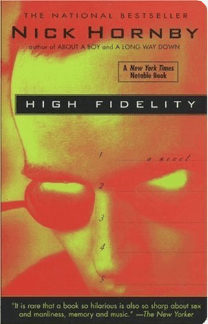
Memory and story-telling are a bit like Rob’s “autobiographical” filing method for his record collection in High Fidelity: “If I want to play, say, Blue by Joni Mitchell, I have to remember that I bought it for someone in the autumn of 1983, and thought better of giving it to her, for reasons I don’t really want to go into…”

As I whittle away and reorganize the undying manuscript called Witness Tree (hope to have a final-final draft by the end of this week!), I’ve also begun working on my sixth novel, tentatively called Hours, about a pilot flying South American routes in the late 1940’s. And I’ve been thinking and writing a lot about memory.

Hours is loosely based on my grandfather’s experiences as an airline pilot based in Lima, Peru. I say loosely, because though it draws on his experiences and impressions, it is not his story. Though I hope I’m able to preserve some of the essence of him. He was a fantastic storyteller, and I’m equally hopeful that his spirit of fun, adventure and not letting facts get in the way of a good story will continue to guide and inspire me.
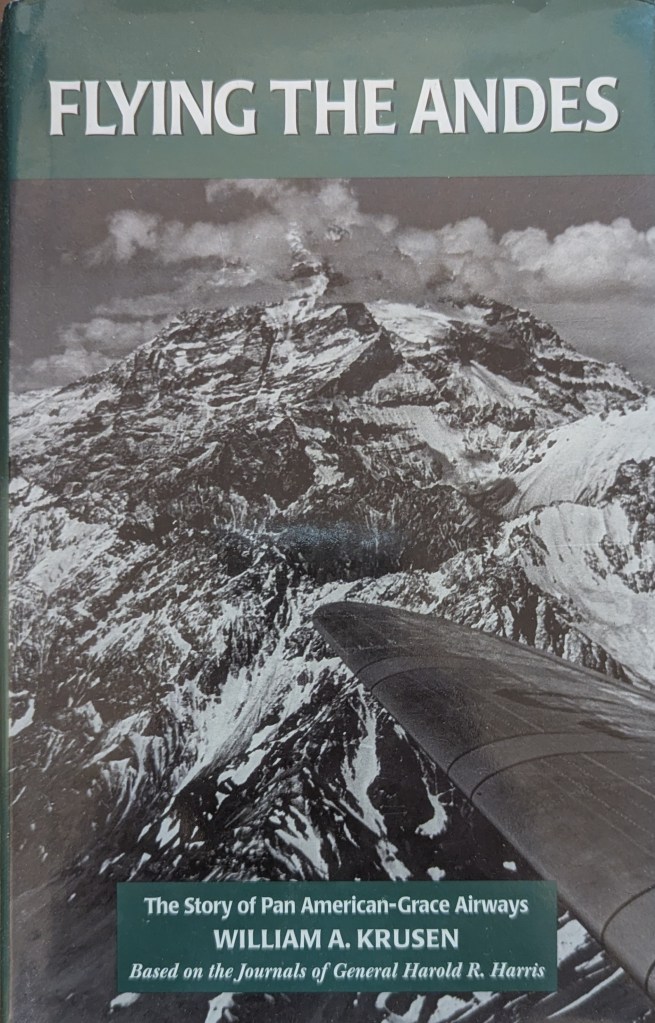
The opening of Hours, begins with the observation that “Memory is fluid, roiled by currents that carve deep paths, much as flowing water forges a riverbed but is thereafter constrained by it.”

The narrator, a pilot flying South American routes in the late 1940’s, is thinking back to the pinnacle moment of his career. He sees himself as though standing outside himself, a young captain, on the tarmac in Santiago, Chile, peering toward Los Andes, waiting for some sign that the “Paso de la Cumbre,” 65 miles away and still obscured, will clear. And as he conjures that earlier, younger self there on the tarmac, he finds that he’s thinking of his earliest memory of flight, when he was seven years old in West Virginia:

“If I’m to think of the pilot, I must also think of the boy, must follow the course. Because as the pilot peers toward the Andean mists, playing his game of chicken with the weather, he thinks of the boy he was. The boy’s dreams were wild, he remembers. But not this wild.”

Hours is not very far along. But I see it being told in two inter-layered parts, from two perspectives, the protagonist is the pilot in the late 1940’s, and his grandson in the present day–also a pilot–who goes through his grandfather’s log books and notes, after his own Icarus-like fall from grace. And the skies.

It will be about flying, class (rags-to-riches), and the struggle between outward success and inward peace. Like the spotty, primitive radio signals they are meant to use for navigation, the novel asks, what are you to do when the thing that’s meant to guide you may be deadly wrong? It will be through memory, and its associations, that at least one of them will find a kind of redemption.

# # #

James McCrone is the author of the Imogen Trager political suspense-thrillers Faithless ElectorDark Network and Emergency Powers–noir tales about a stolen presidency, a conspiracy, and a nation on edge. Bastard Verdict, his fourth novel, is about a conspiracy surrounding a second Scottish Independence referendum. His novel-in-progress is called Witness Tree, a (pinot) noir tale of murder and corruption set in Oregon’s wine country.

All books are available on BookShop.org, IndyBound.org, Barnes & Noble, your local bookshop, and Amazon. eBooks are available in multiple formats including Apple, Kobo, Nook and Kindle.

James is a member of Mystery Writers of America, Int’l Assoc. of Crime Writers, and he’s the current president of the Delaware Valley chapter of Sisters in Crime. He lives in Philadelphia. James has an MFA from the University of Washington in Seattle.

For a full list of appearances and readings, make sure to check out his Events/About page. And follow this blog!

You can also keep up with James and his work on social media:

Mastodon: @JMcCrone
Bluesky: @jmccrone.bsky.social
Facebook: James McCrone author (@FaithlessElector)
and Instagram/Threads “@james.mccrone”
Editing and the Vaudeville Hook (pt. 2)

Recently, I related a story about my penchant for (and the dangers of) going on too long, and the vaudeville hook. So, I’ll try to keep this brief!

In early drafts, I tend to over-write. Brevity for its own sake is not the goal of good prose, but over-writing, as I do, projects a lack of confidence, the inability to let the work stand on its own. When I edit my drafts, the first thing I go after are the superfluous words and the sentences and scenes that may go on too long. The goal is to keep the reader engaged, after all.

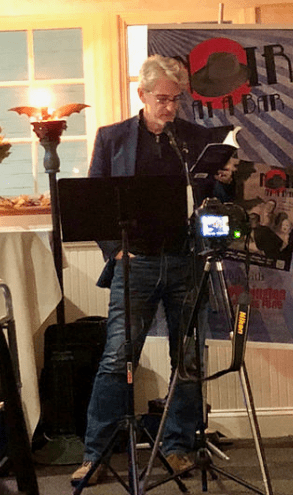
I will be reading at Oxford Bar in Oxford, PA, on November 7th. Readings are delightful for many reasons–meeting readers, other writers, and testing out material. They are very useful for new material.

I have found that doing a public reading of a work-in-progress that has been through a few self-edits can be an excellent means of identifying things I was blind to. Keeping an eye on the audience while reading, you can get a sense of what’s working, or that something goes on too long. The audience starts to shift, or–stab to the heart!–someone glances at their watch. You feel the long hook begin to encircle you.

To the vaudeville hook, I’d like to add the “Chuck-bin.” Charles R. Johnson (author of Oxherding Tale and Middle Passage–for which he won the National Book Award in 1990), was chair of the creative writing department at the University of Washington where I got my MFA, and I took every class he offered. One of the things he told us that has stuck with me, when talking about the need for the story to hold attention, was that we should imagine that the reader is standing over a garbage can while reading our work, and we mustn’t give them any reason to drop it in the trash.

I’ve taken this image so much to heart that as I do my readings, when I sense that the audience might be losing interest, I can hear the pages falling with a clunk into the wastebasket. It’s a high wire act 🙂 After the reading, I often sit with the passage I worked on and begin cutting.

Come see me and twelve other authors on Thurs., November 7th in Oxford, PA for Noir at a Bar. The festivities begin at 6:30. Proceeds benefit the Oxford Public Library Tickets are $25, includes a buffet dinner!

More info on presenting authors here: http://www.noiratabar.com/

# # #

James McCrone is the author of the Imogen Trager political suspense-thrillers Faithless ElectorDark Network and Emergency Powers–noir tales about a stolen presidency, a conspiracy, and a nation on edge. Bastard Verdict, his fourth novel, is about a conspiracy surrounding a second Scottish Independence referendum. His novel-in-progress is called Witness Tree, about a conspiracy set in Oregon’s wine country, a (pinot) noir tale of murder and corruption.

All books are available on BookShop.org, IndyBound.org, Barnes & Noble, your local bookshop, and Amazon. eBooks are available in multiple formats including Apple, Kobo, Nook and Kindle.

He’s a member of Mystery Writers of America, Int’l Assoc. of Crime Writers, and he’s the current president of the Delaware Valley chapter of Sisters in Crime. He lives in Philadelphia. James has an MFA from the University of Washington in Seattle.

For a full list of appearances and readings, make sure to check out his Events/About page. And follow this blog!

You can also keep up with James and his work on social media:
Mastodon: @JMcCrone
Bluesky: @jmccrone.bsky.social
Facebook: James McCrone author (@FaithlessElector)
and Instagram/Threads “@james.mccrone”
“Scotland is a country, not a county” – 10th Anniversary of IndyRef vote

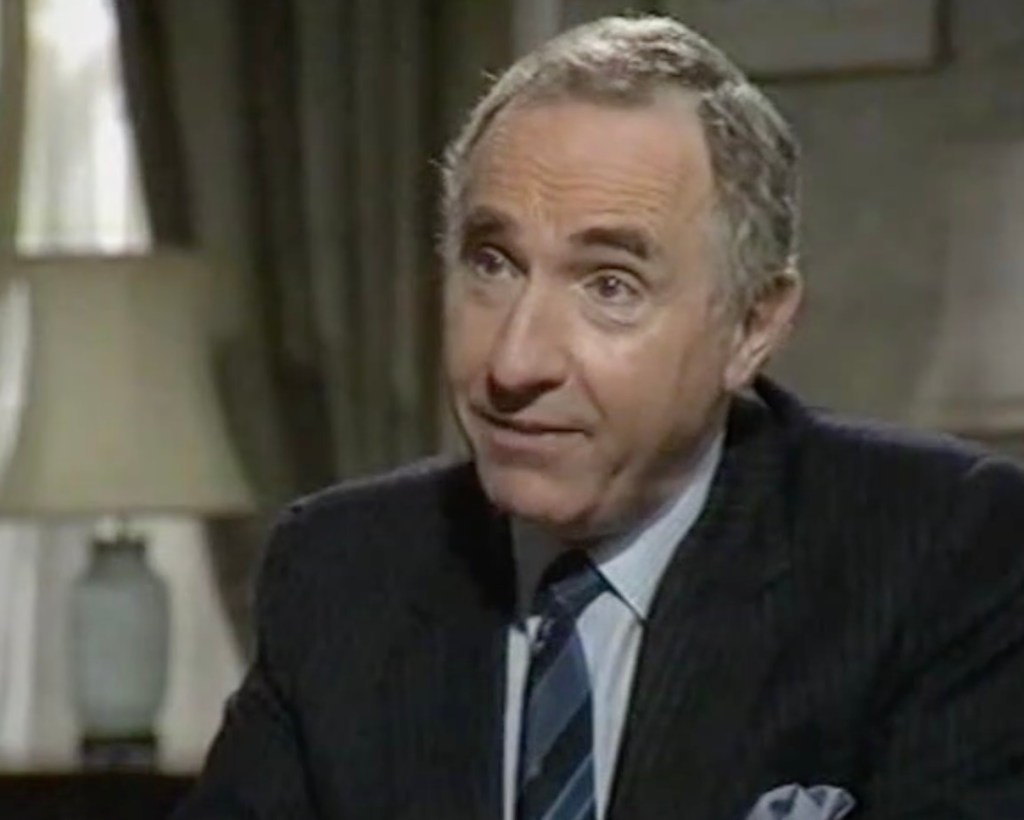
“Plays criticising the government make the second most boring evenings ever invented,” says Sir Humphrey Appleby to his minister in the delicious (and still, all-too-relevant) Yes, Minister series – “The Patron of the Arts” – (sea.2/ep.6).

The minister pauses, then asks him: “What are the most boring?”
Sir Humphrey responds: “Those praising the government.”

To write political thrillers as I do is delicate. Readers seeking partisan, anger-porn that affirms their view one way or the other have ample fodder elsewhere, and I want my stories to be something else. As I’ve written before, stories are about questions, not answers.

In my work, I’m drawn to what lies behind the official explanations and stories we’re told. What is the flip side of the answer the powerful would like us to accept? What (if anything) is being concealed? Who would be involved? What is their story, what are the consequences of their choices?

I write stories because it’s how I understand the world and the questions I have about it. My work, as much as it’s about characters in action, is animated by politics, by threats to the sovereignty of people to determine their own future and, through the ballot, to hold those in power accountable. But it isn’t meant to be partisan. Unless you regard democracy itself as partisan.

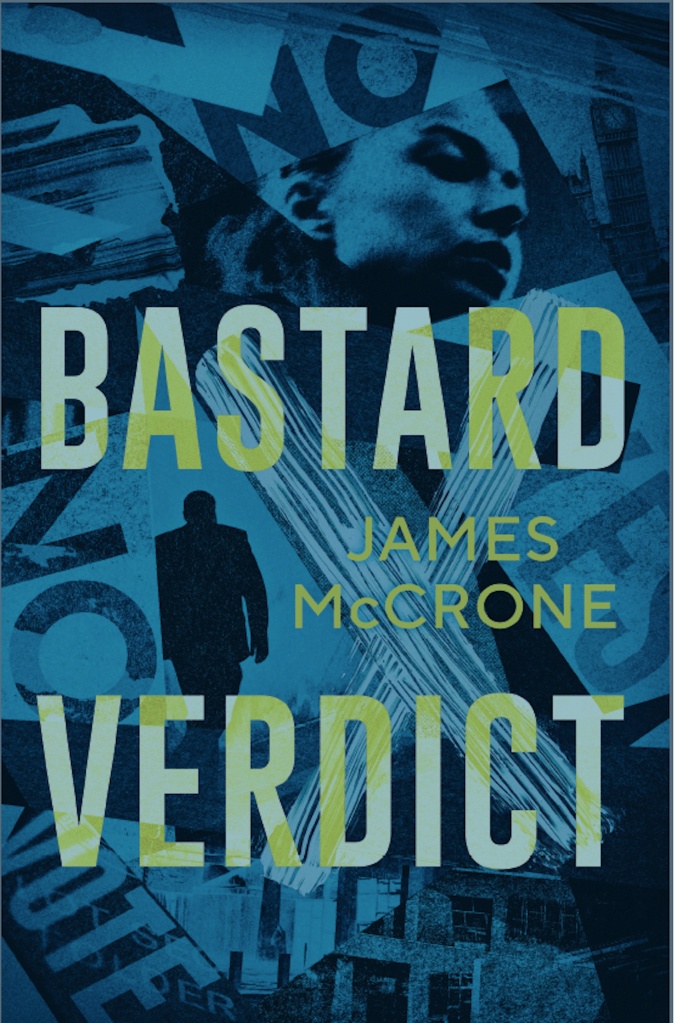
Bastard Verdict.
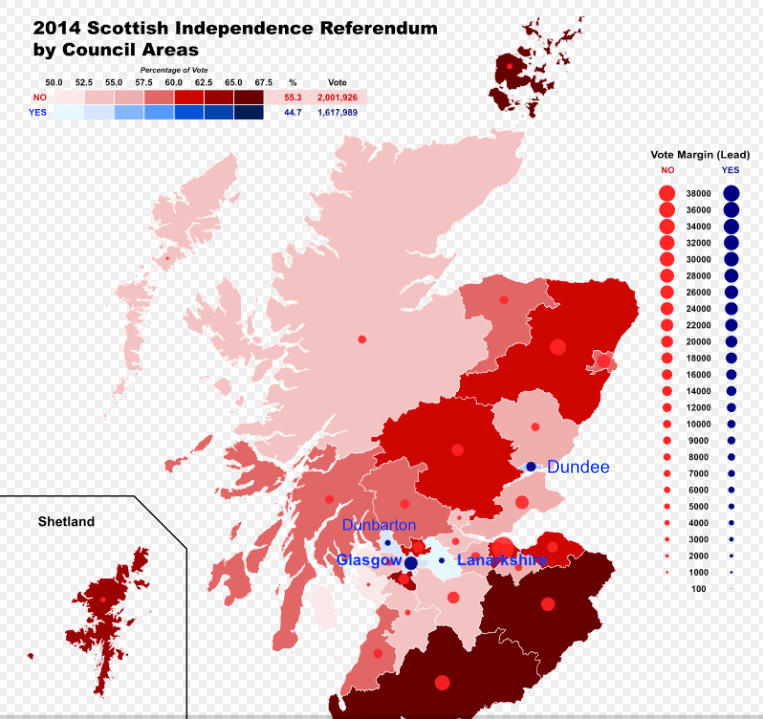
September 18 marked the 10 year anniversary of the 2014 Referendum on Scottish Independence, in which voters were asked, “Should Scotland be an independent country?” It failed. 55% voted ‘No,’ to independence, while 45% voted ‘Yes.’ The dismay over this sad anniversary grew starker earlier this month, when, on October 12 we learned of the death of Alex Salmon, former First Minister of Scotland, and the most visible architect of that referendum. The quote that titles this post comes from him.

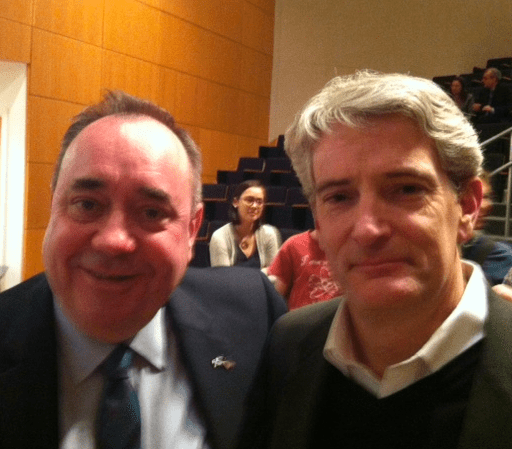
With Alex Salmond in Princeton, 2013

I got to meet Salmond when he gave a talk at Princeton in 2013. He was a fantastic speaker. The focus of his talk was Adam Smith’s Theory of Moral Sentiments, which forced me to reread Smith, and it gave me the epigram for my second novel, Dark Network – “Virtue is to be feared more than vice, because its excesses are not subject to the regulation of conscience.”

I lived in Scotland as a boy, but I had to watch the referendum from the sidelines here in the US. Nevertheless, I felt the failure of the vote keenly, and I wanted to understand it. My knowledge of the Scottish National Party (SNP)–and hopes for its success–began in 1974, when we lived in Edinburgh. My father, a US political scientist, had come to study the politics of independence during a sabbatical year at Strathclyde University.

As I began gathering notes for a new thriller about the referendum, the process led me to a different story and question: What if there had been irregularities in the referendum? What if, as a second (fictional) referendum was gathering strength, those who had interfered in 2014 felt that they needed to make sure their involvement stayed hidden? What would the conspirators do? Further, what if those who perpetrated the election interference weren’t in government at the time but had gained their places at the table through their plot?

I had not initially envisioned it as a story involving my character, the FBI Agent, Imogen Trager, but she insisted on being a part of it. (After all that has happened to her in the first books, she takes a year off to do some research at the University of Glasgow, to keep her head down and consider her next steps–only, like Michael Corleone, to get pulled back in!)

Ten years ago, hope for the future shined brightly amidst the fear-mongering and mendacity (and that hope endures, albeit somewhat dulled). At the time, retirees were told that their pensions would be at risk in a Scotland independent from the UK. The predictable media suspects treated the run-up to the referendum with derision and condescension. The queen weighed in four days before the vote, saying that Scotland should “think very carefully about the future,” an unsubtle hint. Pro-European Union voters were told that leaving the UK would mean Scotland couldn’t participate in the EU. Neither the pension scare nor the EU ouster was true of course (except later, in 2016, when the UK voted in favor of Brexit–even though voters in Scotland voted 62% in favor of remaining in the EU) It wasn’t enough of a counterweight, and England dragged its “partners” out of the EU).

Three of the four highest returns for Yes were in Strathclyde – Glasgow City, West Dunbartonshire and North Lanarkshire. The fourth was Dundee City Council. While the map looks very red, 20 per cent of the population lives within those four blue districts. Roughly 2 million voted No, and 1.6 million voted Yes.

As aghast as I am about the above political maneuvering, it’s of a type that’s depressingly common during an election cycle. But as I watched the ham-fisted way the Tory party managed Brexit (if managed is the word for it), I began to wonder how Westminster would have reacted to a successful referendum, and what kind of legal and extra-judicial mischief they might get up to. At stake are markets, airfields, a nuclear submarine base, and the energy wealth of the North Sea. And of course Britain’s standing in the world.

As I wrote the story, traveling back and forth to Scotland on two occasions and corresponding with academics about certain aspects of the book, I struggled with my partisan feelings over the referendum, and I think that tension helped the book. Two of the principle characters did not favor independence, but they are both aghast that there may have been irregularities. Oddly, a petty criminal character becomes something like the moral center of the story.

For the story, I focused on Glasgow and Dundee, and I brought back Imogen Trager (an FBI elections specialist) into service. I felt that a novel told from the perspective of an American in Scotland–my own point of view–would be more authentic. That novel became Bastard Verdict, named for the “not proven” verdict in Scottish Law. The tension I wrestled with, between telling a good story on the one hand and venting my anger and disappointment on the other, gave the novel an energy and clarity I doubt I would have managed if I given in to the disappointment.

# # #

James McCrone is the author of the Imogen Trager political suspense-thrillers Faithless ElectorDark Network and Emergency Powers–noir tales about a stolen presidency, a conspiracy, and a nation on edge. Bastard Verdict, his fourth novel, is about a conspiracy surrounding a second Scottish Independence referendum. His novel-in-progress is called Witness Tree, about a conspiracy set in Oregon’s wine coutry, a (pinot) noir tale of murder and corruption.

All books are available on BookShop.org, IndyBound.org, Barnes & Noble, your local bookshop, and Amazon. eBooks are available in multiple formats including Apple, Kobo, Nook and Kindle.

He’s a member of Mystery Writers of America, Int’l Assoc. of Crime Writers, and he’s the current president of the Delaware Valley chapter of Sisters in Crime. He lives in Philadelphia. James has an MFA from the University of Washington in Seattle.

For a full list of appearances and readings, make sure to check out his Events/About page. And follow this blog!