Scenes from Bastard Verdict, part two, Kelvingrove Park

I needed to create a whole life for Imogen in Bastard Verdict, and it’s interesting how choices about a character can lead you to other revelations. And there’s no substitute for traveling the paths your characters will walk.

Imogen’s walk to work

I took two writing courses from the Sci-Fi writer Joanna Russ. She would drill through short story drafts, asking students, “What did the sky look like?” “Where is the sun?” “What are the smells in the air?” She didn’t mean that you had to give a moment-to-moment disquisition on the weather, but that you, the writer, had to know–and SEE–it in order to render a successful scene, regardless of which details you chose to use.

While scouting locations for Bastard Verdict, I was staying in Glasgow’s West End, which was fantastic. And I could see Imogen wanting to be there. I certainly did! And I hoped some of that enthusiasm came through on the page.

Bentinck St., near the park

She was a visiting scholar at University of Glasgow, and I decided that she should take a one-year lease on a flat on Bentinck Street in Glasgow’s West End. And that she could walk to work at the university (Adam Smith bldg) through beautiful and inspiring Kelvingrove Park–a fifteen to twenty minute walk. It seemed perfect.

A Glaswegian friend said that sounded nice, “but she doesn’t walk through there at night, right?” (I hadn’t thought about that, frankly.)

So, I started out one morning from Bentinck Street and I walked the route in early morning, and again in that night, coming down from campus.

Park entrance from Kelvingrove Street

That morning, I entered the park from Kelvingrove Street and ambled through, navigating by keeping the university’s high tower in view. I stopped twice to write down impressions, to make quick, written sketches of what I was seeing, what the air was like, who was about. Coming back through at night, I did not tarry anywhere. I didn’t feel threatened in any way, but I did see that maybe walking through the park late at night would be a mistake. Still, early morning and early evening was lovely.

Looking at the university’s skyline through the trees, I was reminded of Oxford’s “dreaming spires,” which I grew to love when we lived there on two separate occasions.

But there was a difference in the Glasgow University skyline.

So, as Imogen walks through the park with Ian Ross in fading daylight, I wrote:

<<Imogen stopped and turned round to face the main building’s neo-Gothic tower, looming over the park’s trees.

“It’s almost too dark now,” she said to him, “but I love seeing the university from here. I’ve only seen pictures of Oxford University’s ‘dreaming spires,’ but I think I like these better. There’s no dreaming here, but slow-burn energy, dark jets of coal fire poking out over the trees.”

“But not after dark,” said Ross. “Here, I mean.”>>

I liked the image of “jets of coal fire,” because that’s what I saw myself, and it reminded me of my boyhood in Edinburgh. Our tenement didn’t have central heating, only coal fireplaces in the main rooms. As a boy of ten years old, I was endlessly fascinated with the small bursts of coal fire poking through the embers.

As much as I liked it, though, I vacillated over whether to keep the passage in. Though the book’s written in third-person, it’s Imogen’s consciousness, we’re “looking over her shoulder,” and I wondered where (or whether) she’d seen a coal fire. She’s originally from the small town of Ripley, Ohio, right across the Ohio River from Kentucky. (She and Ewan, from Alyth, bond over their small-town experiences.)

Ripley, OH, is a bit west of “coal country.” The bituminous coal seams hew closer to the border with West Virginia. But it’s pretty close.

So I took a leap. I hope it works for readers.

Kelvingrove Park will end up playing yet another role later in the story…

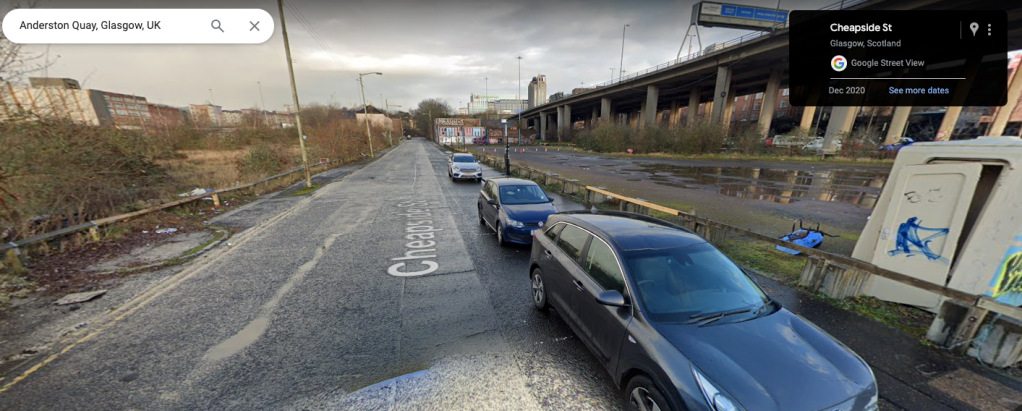
Up next, spare ground and settings for murder.

# # #

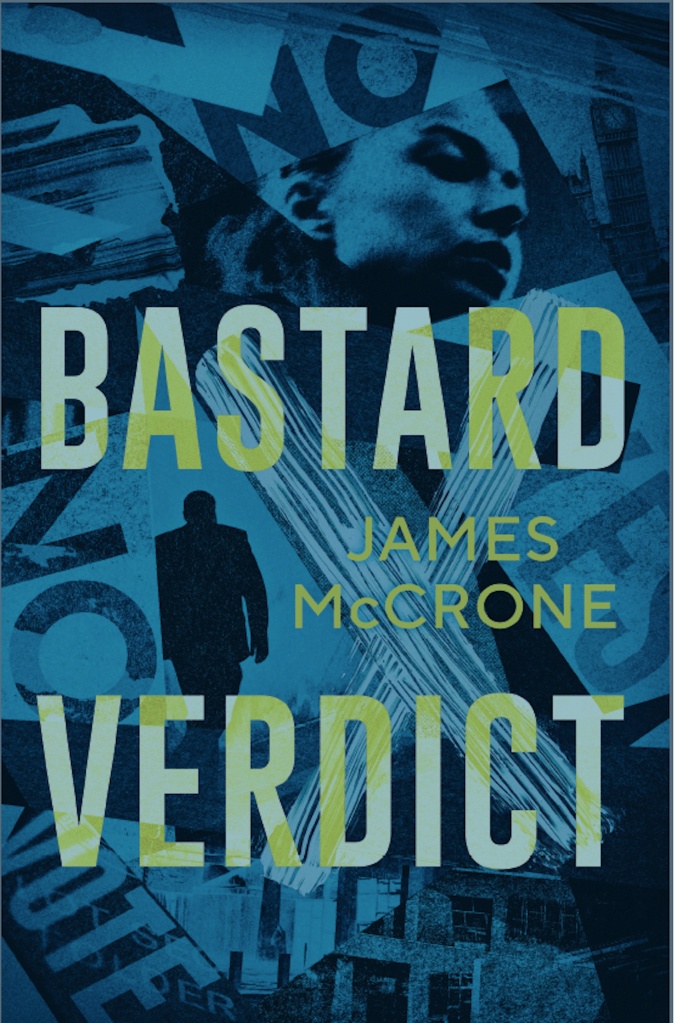
Bastard Verdict is available now in paperback, and eReader!

YOU DON’T NEED TO WIN, JUST DON’T LOSE
In politics, people cheat to win, or because they’re afraid to lose. The difference can be deadly.

Imogen will risk what’s left of her standing, her career–and maybe her life–to get at the truth.

James McCrone is the author of the Imogen Trager political suspense-thrillers Faithless ElectorDark Network and Emergency Powers–noir tales about a stolen presidency, a conspiracy, and a nation on edge. Bastard Verdict, his fourth novel, is about a conspiracy surrounding a second Scottish Independence referendum. To get the details right for the new thriller, he drew on his boyhood in Scotland and scouted locations for scenes in the book while attending Bloody Scotland.

All books are available on BookShop.org, IndyBound.org, Barnes & Noble, your local bookshop, and Amazon. eBooks are available in multiple formats including Apple, Kobo, Nook and Kindle.

He’s a member of MWA, Int’l Assoc. of Crime Writers, and he’s the new president of the Delaware Valley Sisters in Crime chapter. He lives in Philadelphia. James has an MFA from the University of Washington in Seattle. His current, work-in-progress is a mystery-thriller set in Oregon’s wine country…A (pinot) Noir, called Witness Tree.

For a full list of appearances and readings, make sure to check out his Events/About page. And follow this blog!

His most recent short fiction is below. The first is available for online reading.
Eight O’Clock Sharp” in Retreats from Oblivion: the Journal of NoirCon. (free online)
Set in Philadelphia’s 9th Street Market, Thomas is a man outside of time, forgotten, but trying to do the right thing while contending with avaricious forces.

“Ultimatum Games” in Rock and Hard Place magazine issue #7
A rare book heist, bad decisions. The narrator and his partner-in-crime clash over evolving bourgeois norms.

“Nostalgia” in Low Down Dirty Vote, vol. 3
An armed group tries to resurrect a past that never was as they struggle with change.

Scene settings from #BastardVerdict, part one

I’ve had some lovely notes from readers about the new thriller Bastard Verdict, and one of the things that’s often called out is that they know well the locations I use. During my recent trip to Scotland for Bloody Scotland, I took the opportunity to revisit many of the settings–in Glasgow, Edinburgh and Alyth. I didn’t make it to Dundee on this trip, but I have photos from my original visit in 2019.

In the novel, Imogen Trager, an FBI agent with a PhD in political science, is taking leave from the Bureau as a visiting fellow at University of Glasgow. She’s nervous about this new role, and committed to keeping her nose clean while away. Her inability to do so in the past is one of the reasons her bosses at the Bureau are happy she’s taking this sabbatical.

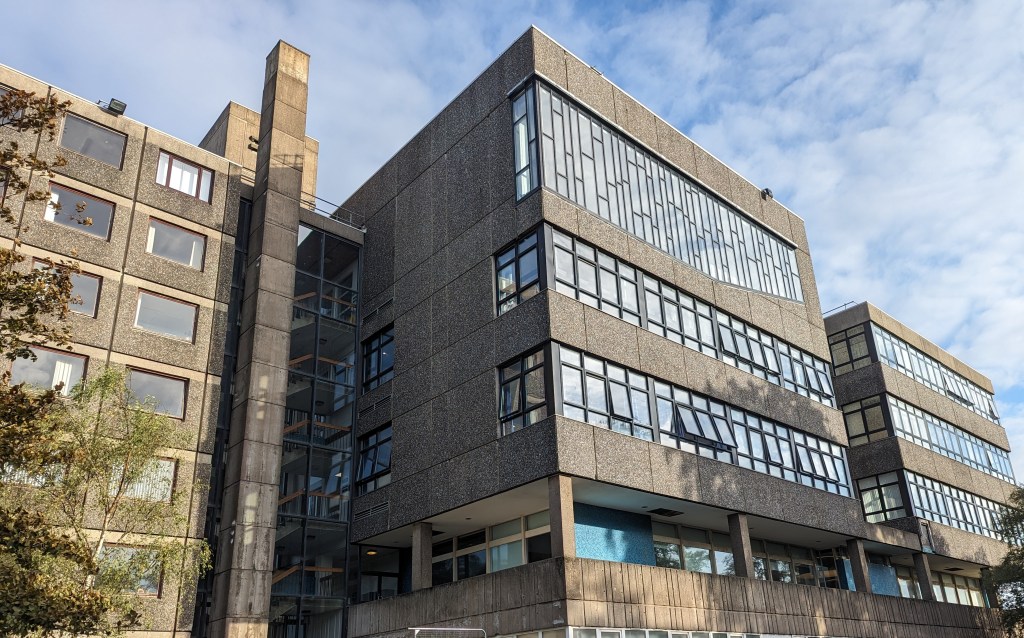
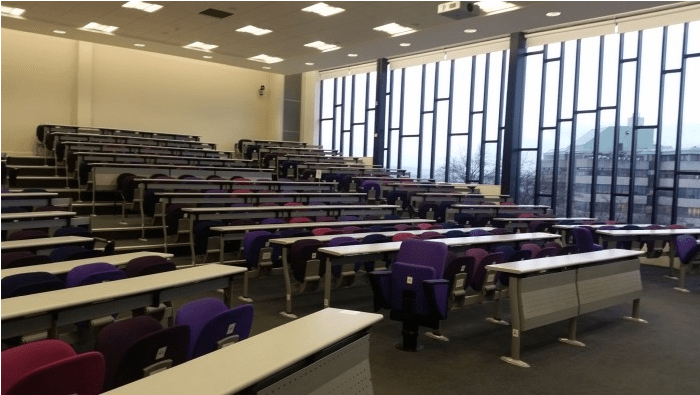
The Adam Smith Building figures largely in the book. Imogen’s office is broken into there, and her ally Wee Frankie has his office just down the hall. And the story opens there as Imogen gives her inaugural lecture:

<<Anyone with the temerity to look upward into the rain that night on campus would have witnessed a kind of negotiated settlement between light and dark, as the wet Glasgow night held the pale glow from the Adam Smith building’s top floor close in a murky halo.

One man did look up, before sullenly returning to the meager shelter of a young birch tree outside the west entrance to the building. He mopped his face and dabbed his bald head with a handkerchief as he settled back against the tree trunk.

Inside those high windows, brightness reigned, the lecture theatre dazzlingly arid and contemporary. Though it was chilly for all that. Not that Imogen noticed. Within her slow-burn, imposter syndrome panic, she felt flushed, anxious as she began taking questions…>>

Imogen’s barely been in Scotland for a week, when one of her new colleagues, together with a Scottish government official, ask her to look into irregularities in the first Independence referendum.

<<“Maybe you might look at it?” he says. “Unofficially, of course. Because irrespective of what’s been said publicly, a number of us are pretty convinced it was stolen last time. And if this second referendum does go forward, we want to make sure it isn’t stolen again.”

She walks to the department dinner with the official, Ian Ross. Surely, Imogen counters, there must be any number of people qualified to investigate. “Why me?” she asks again.

“It’s delicate,” he said, looking behind them for a moment. “Anyone we might use officially would be embedded in or seconded from the Electoral Commission or the Met. Or both. And they would have to make reports. Once that starts, we couldn’t be certain whom they were telling or where their directives were coming from—a clusterfuck, if I might borrow a vivid American term—of epic proportions.”

Christ, she thought, it sounded a lot like the situation she was running from at the FBI, even if it was delivered in a dulcet Scottish accent…>>

Meanwhile, the bald man who stood vigil outside the Adam Smith building is following them.

That same night, in Dundee, Buff Lindsey, “shop steward” for a local crime syndicate, interrogates and murders a man who had been following him for three days. He learns nothing.

Next up, “dark jets of coalfire.”

# # #

Bastard Verdict is available now in paperback, and eReader!

YOU DON’T NEED TO WIN, JUST DON’T LOSE
In politics, people cheat to win, or because they’re afraid to lose. The difference can be deadly.

Imogen will risk what’s left of her standing, her career–and maybe her life–to get at the truth.

James McCrone is the author of the Imogen Trager political suspense-thrillers Faithless ElectorDark Network and Emergency Powers–noir tales about a stolen presidency, a conspiracy, and a nation on edge. Bastard Verdict, his fourth novel, is about a conspiracy surrounding a second Scottish Independence referendum. To get the details right for the new thriller, he drew on his boyhood in Scotland and scouted locations for scenes in the book while attending Bloody Scotland.

All books are available on BookShop.org, IndyBound.org, Barnes & Noble, your local bookshop, and Amazon. eBooks are available in multiple formats including Apple, Kobo, Nook and Kindle.

He’s a member of MWA, Int’l Assoc. of Crime Writers, and he’s the new president of the Delaware Valley Sisters in Crime chapter. He lives in Philadelphia. James has an MFA from the University of Washington in Seattle. His current, work-in-progress is a mystery-thriller set in Oregon’s wine country…A (pinot) Noir, called Witness Tree.

For a full list of appearances and readings, make sure to check out his Events/About page. And follow this blog!

His most recent short fiction is below. The first is available for online reading.

Eight O’Clock Sharp” in Retreats from Oblivion: the Journal of NoirCon. (free online)
Set in Philadelphia’s 9th Street Market, Thomas is a man outside of time, forgotten, but trying to do the right thing while contending with avaricious forces.

“Ultimatum Games” in Rock and Hard Place magazine issue #7
A rare book heist, bad decisions. The narrator and his partner-in-crime clash over evolving bourgeois norms.


“Nostalgia” in Low Down Dirty Vote, vol. 3
An armed group tries to resurrect a past that never was as they struggle with change.

Koi, Frogs and the Question Not Asked

I’ve written elsewhere about how even as a child I’d see something happen and wonder whether I was seeing the beginning, the middle or the end of a story. I’d see two people arguing, or someone crying on the bus; or I’d see a toddler rapturously chase pigeons across the pavement, and I’d wonder what happened before, what would happen next. And I’d wonder what the story was. Who are the people involved? Somewhere around the age of 10 or 11 I was shocked to find out that not everyone does this.

I want to know these things because my brain is wired that way, and because I’m nosy (I admit that freely); and irrespective of where in the story we are, I want to pay attention, to make use of real details in my writing because those moments, what the people do and say, the emotion, the real quirks, verbal ticks or turns of phrase can show so much more than simple telling or hit-you-over-the-head backstory. It makes for a more satisfying story, certainly.

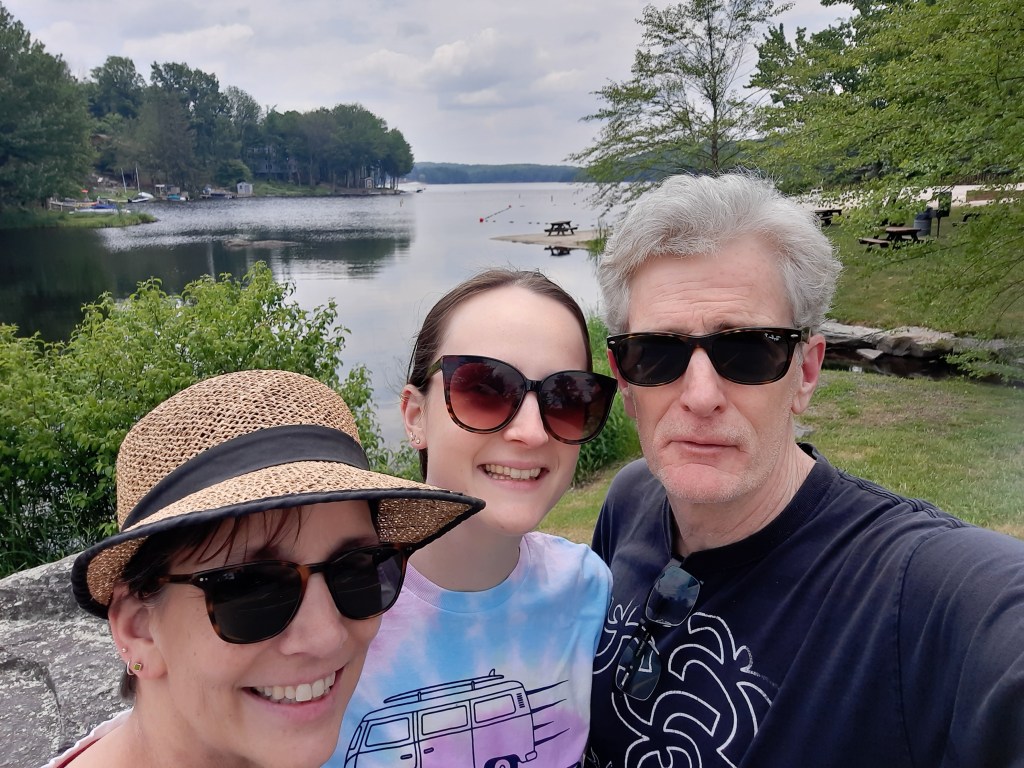
This past weekend we spent a lovely time by Lake Ariel, in the Poconos. On Saturday morning I took a walk around the lake with my wife and one of our daughters. It was a lovely morning as we walked in and out of dappled shade. The people we encountered seemed cheerful and friendly. As we passed one house, a man asked us if we were interested in wildlife and whether we’d like to see his pond. We said, yes.

He was retirement aged, and he lounged sideways at the rocky edge of a shallow, 10 foot by 12 foot oval-ish body of water, gazing into the water, like paintings of Narcissus. He pointed out the carp (they were mottled and colorful, like small Koi fish) and then directed our attention to the side of the pond where a good-sized frog perched. Its body was about the size of my hand, but it took a few moments of staring where the man pointed for me to see the frog because it was so still and well camouflaged.

From him, I learned about the trials and tribulations of recreating a pond that had been previously destroyed; the difficulty of moving rocks into place, in keeping frogs once they fledged, or whatever it is they do when they’re not tadpoles anymore; that the fish in his pond were carp rather than true koi because a single koi could cost as much as $65 (he had eight or ten of them). All of which was interesting and diverting, and it felt like precisely the kind of thing we ought to be doing on a lovely day in the countryside.

Then he said: “Now, the question you didn’t ask…”

My brain arced as I realized there was more for me to be paying attention to! I hadn’t asked him a single question other than “how are you this morning?” nor had my wife or our daughter. He’d supplied the whole narrative unbidden. There were a hundred questions I hadn’t asked because as diverting as his monologue had been, after about ten minutes I wasn’t sure how much longer I wanted to stand there. Which question could he mean?

“You’ll want to know how I keep the carp over the winter,” he said.

Did I?

Stupidly, I hadn’t carried my notebook with me. I hadn’t thought I might stumble upon gold. I hope I’m not seeming to disparage this man. He seemed decent and thoughtful, and I’m pleased to have met him. But the words “Now the question you haven’t asked…” utterly exploded in my writer’s head.

Will I use it in a future story or novel? I have no idea. But as a verbal tick to reveal character it seems wonderful. Or, more likely, it could do double duty and also serve as a larger motif. Indeed, it kind of encapsulates the act of writing. Probably no one who has read this far conceived of the question I was answering, and certainly no one who has read my novels told me to write them. The books hang out on the shelf, beckoning for attention, answering a question you may never have asked.

# # #

James McCrone is the author of the Imogen Trager political suspense-thrillers Faithless ElectorDark Network and Emergency Powers–noir tales about a stolen presidency, a conspiracy, and a nation on edge. All books are available on BookShop.org, IndyBound.org, Barnes & Noble, your local bookshop, and Amazon. eBooks are available in multiple formats including Apple, Kobo, Nook and Kindle.

His current book, Bastard Verdict, debuted on May 18th, a noir political thriller set in Scotland. It’s available through the link above, or wherever you buy your books. His current, work-in-progress is a mystery-thriller set in Oregon’s wine country…A (pinot) Noir, called Witness Tree.

A Seattle native (mostly), James now lives in South Philadelphia with his wife and three children. He’s a member of the The Mystery Writers of America, Int’l Assoc. of Crime Writers, Int’l Thriller Writers, Philadelphia Dramatists Center and is the vice-president of the Delaware Valley chapter of the Sisters in Crime network. James has an MFA from the University of Washington in Seattle.

For a full list of appearances and readings, make sure to check out his Events/About page. And follow this blog!

His most recent short fiction is below. The first is available for online reading.

Eight O’Clock Sharp” in Retreats from Oblivion: the Journal of NoirCon. (free online)
Set in Philadelphia’s 9th Street Market, Thomas is a man outside of time, forgotten, but trying to do the right thing while contending with avaricious forces.

“Ultimatum Games” in Rock and Hard Place magazine issue #7
A rare book heist, bad decisions. The narrator and his partner-in-crime clash over evolving bourgeois norms.


“Nostalgia” in Low Down Dirty Vote, vol. 3
An armed group tries to resurrect a past that never was as they struggle with change.

Home is where…?

1967 Passport Photo
L to R – me, my mother, brother John

It may be that passport photos are the true record of my existence. I’ve moved around a lot in my life, and I realized recently that later this year, I will have lived away from Seattle for longer than I lived there. How can I say, as I am wont to do, that I’m “mostly from Seattle?”

I’ve been blogging about place, and setting as character recently, about how where you are or where you come from expresses itself through the individual—either broadening horizons or constricting opportunities; about how it informs and effects a person’s outlook, influences or dictates perspectives. It’s been much on my mind. My latest thriller is Bastard Verdict, set in present-day Scotland against a backdrop of a potential second referendum on independence. (It debuts on May 18, 2023.)

Ferdinand de Saussure

Structural linguists will say that language “writes you;” that is, it’s a pre-existing construct which influences you more than you can change it.

Is place like language, then? And where am I from? Does one spot on the map have the greater claim on forging who I am? I’ve fetched up on the banks of the Delaware, with no marked accent, an inability to spell properly (“colour” looks wrong, but then so does “color”) and a manifest infatuation with proper football.

But can I write about Scotland? In Bastard Verdict, which takes place primarily in Glasgow and Dundee, I’ve brought to the page a compelling story that weaves high stakes and low politics, and realized a vivid ensemble cast. My alter-ego and recurring protagonist, FBI Agent and elections specialist Imogen Trager, is a visiting scholar at University of Glasgow. As the story opens, she’s looking for a little peace and to do some research, while she sorts out what to do next and where she might go.

I lived in Scotland as a boy–twice. In the UK taken together, I’ve spent a little over four years, plus countless visits. I’ve lived a great many other places too. I approached the story with a little more humility than I might otherwise have done. I worked with the editor Alan McMunnigall of Thi Wurd, to help with my tortured prose as much as to make sure descriptions and characterizations rang true.

Here’s why:

I lived in Seattle for 21 years, until recently, the longest I’d ever been in one place. But I was born in Chapel Hill, NC (my parents were in graduate school at UNC). When I was two, we moved to Madison, WI, and my father’s first faculty position. He was hired “ABD” and the family moved to Montevideo, Uruguay, for six months to finish his dissertation work.

Colchester school picture, Primary 1

Three years later we decamped from Madison for Edinburgh, Scotland, and then Colchester in Essex. A year after returning to Madison, we moved to Iowa City. Four years after that I returned with my family to the UK, this time to Edinburgh (Morningside) for the full school year.

Training, Football Club Villeneuvois, 1981

We moved to Seattle when I was 15, staying there for 21 years (though I had one blissful semester abroad in the southwest of France in the small town of Villeneuve-sur-Lot the first semester of my senior year).

I graduated high school in Seattle, got my Bachelors and an MFA there. Got married—twice!—and all three children were born there. And then we moved, just 8 weeks after our son, the youngest, was born.

My wife will say that despite my time in the Pacific Northwest, I’m a Midwesterner, that it offends me to the marrow when people don’t properly shovel their sidewalks after a snowfall. But I haven’t lived there since 1979 (though through the magic of Facebook, I still keep up with friends from those days; and funnily, Alan and I bonded a bit over IC, as he had spent a semester there at the University of Iowa.).

We left Seattle in the summer of 2000, and since then we’ve lived in State College, PA; Highland Park, NJ; and now Philadelphia. In that time, we also spent two separate school years in Oxford (2011-12, and ’15-’16). My younger daughter’s high school Spanish teacher was convinced that our family was in the witness protection program.

So how do I answer the question, ‘Where are you from?’ Because the question also seems to ask: what part of that place have you carried here? Our eldest child still lives in Seattle, but the other two don’t remember it all. So, saying they were born there means as little as my claim to Chapel Hill. And the subtext curl to the question reminds me of publisher’s need for “lived experience as [fill in the blank].”

One constant, I suppose, is academia, which is Imogen’s perch in the novel. My father was a political scientist, now retired, and it was for his work during the first 18 years of my life that we moved so often. I have an MFA, and I taught English at community college for three and a half years. I married an academic, also a political scientist (I’m sure Freud would have much to say about that!) But my three-year stint teaching English comp notwithstanding, I’ve always been at the periphery of university life.

In Edinburgh, we lived on Cluny Avenue, and my brother and I attended South Morningside Primary School on Comiston Road (the same school I had attended 5 years earlier). My brother and I both picked up Scottish accents, and we refer to the summer we returned to the US as “the summer of ‘what’?” No one, it seemed, could understand us. It was strange to be “back home” in Iowa, among our old friends, but still neither fish nor fowl–our Scottish friends had heard only our American accents, and our Iowa friends couldn’t penetrate our Scottish accent. But on the great plains, our cadence gradually (re)flattened and words like “skint” and phrases like “didja aye?” faded. But not my memories of how the place felt, the smells, the weather, the people.

# # #

James McCrone is the author of the Imogen Trager political suspense-thrillers Faithless ElectorDark Network and Emergency Powers–noir tales about a stolen presidency, a conspiracy, and a nation on edge. All books are available on BookShop.org, IndyBound.org, Barnes & Noble, your local bookshop, and Amazon. eBooks are available in multiple formats including Apple, Kobo, Nook and Kindle.

His next book, Bastard Verdict (out 18-May-2023), is a noir political thriller set in Scotland. His current, work-in-progress is a mystery-thriller set in Oregon’s wine country…A (pinot) Noir, called Witness Tree. Bastard Verdict is available to reviewers through NetGalley

A Seattle native (mostly), James now lives in South Philadelphia with his wife and three children. He’s a member of the The Mystery Writers of America, Int’l Assoc. of Crime Writers, Int’l Thriller Writers, Philadelphia Dramatists Center and is the vice-president of the Delaware Valley chapter of the Sisters in Crime network. James has an MFA from the University of Washington in Seattle.

For a full list of appearances and readings, make sure to check out his Events/About page. And follow this blog!

His most recent short fiction is below. The first is available for online reading.

Eight O’Clock Sharp” in Retreats from Oblivion: the Journal of NoirCon. (free online)
Set in Philadelphia’s 9th Street Market, Thomas is a man outside of time, forgotten, but trying to do the right thing while contending with avaricious forces.

“Ultimatum Games” in Rock and Hard Place magazine issue #7
A rare book heist, bad decisions. The narrator and his partner-in-crime clash over evolving bourgeois norms.


“Nostalgia” in Low Down Dirty Vote, vol. 3
An armed group tries to resurrect a past that never was as they struggle with change.