
The New York Times published an article in their Sidebar section yesterday, “Faithless Electors Could Tip the 2020 Election: Will the Supreme Court Stop Them?” and it references the petition, a Writ of Certiorari to the Supreme Court, requesting a speedy review regarding the question of whether so-called Faithless Electors are independent actors or are bound to vote as pledged.
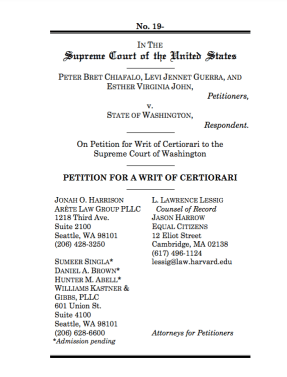 The petition points out that in the 2016 Presidential Election, there were seven (7!) such defections. Thus far in our history, no Faithless Elector(s) has ever changed what might be regarded as the result of a presidential election. But as the petition points out:
“A swing by that same number of electors [7] would have changed the results in five of fifty-eight prior presidential elections” [emphasis mine].
It goes on to note:
“And as the demographics of the United States indicate that contests will become even closer, there is a significant probability that such swings could force this Court to resolve the question of electoral freedom within the context of an ongoing contest.”
Meaning that it would be best to decide the matter now ahead of the contest rather than in the heat of a presidential election, when it is bound to look partisan and thus illegitimate (Bush v. Gore anyone?).
I did not include the fact about Electors potentially overturning 5 elections in my thriller Faithless Elector (pub. March 2016) because it was published before the 2016 election and these 10 defections. Indeed, neither Trump nor Clinton appear in its pages. I wanted the novel to be free of partisanship. It’s a taut thriller with engaging, determined characters set a against a background that exposes the latent weaknesses and potential for mischief in the Electoral College system. The revelation that someone is trying to manipulate the Electoral vote and steal the presidency sets the characters on a dangerous path and pits them against deadly opposition. Based on the good reviews, as well as readers’ generous responses at book fairs and over social media, it seems I have achieved that goal.
Because while its setting is the 2016 election, the latent weaknesses remain in place, as the Writ of Certiorari/Petition makes clear. The petition, in fact, candidly states what I proposed (albeit fictionally) when I wrote Faithless: that in a close election, where only a few votes separate the two candidates, politics of a kind we would not regard as legitimate could determine the outcome.
James McCrone is the author of the Imogen Trager political suspense-thrillers Faithless Elector and Dark Network. The third book, Emergency Powers, is coming soon, and he is at work on a fourth book called Bastard Verdict (w/t) .

Find them through Indybound.org. They are also available at Amazon, Barnes & Noble, and Powell’s Books.
Link to REVIEWS
 What would an accidental president need to do to solidify his grip on power? That’s the question I set myself for the new thriller, Emergency Powers, with chillingly real implications. I find my stories
 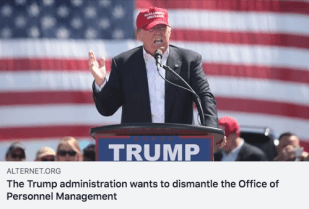 I had all this in the first draft of Emergency Powers, which I finished in October of 2018. That same month (unbeknownst to me at the time), Jeff Tien Han Pon was asked to resign as Director of OPM. As of this writing, there is still only an acting Director, Margaret Weichart, who is also the Deputy Director of OMB. Pon’s resignation came as the Trump administration began work to dismantle the Office of Personnel Management and to bring it under the ambit of White House administration, which folds the daily business of the Federal government into one run by political appointees: patronage politics, or a return to the “spoils system.”
 I don’t write about current events. If anything, my thrillers anticipate them.
 Recently (May 2, 2019), CrimeReads did a fine piece on
  I’m drawn to their subtly (and not-so subtly) expressed exasperation with how cities are changing. Since people started gathering in them, they’ve been a place of excitement, diversity and exchange, teeming with stories, with filth, and above all, a mixing of people. The writers listed above struggle with where we’re heading, and their protagonists and stories reflect that uneasiness.
 Chosen Words - James McCrone