The Girl in the Loch by Andrew James Greig is a delicious, compelling, and harrowing tale of secrets, lies, and the presence of the past. Like the loch around which this story revolves, The Girl in the Loch is deep, inscrutable, a seemingly calm surface roiled with eddies and dangerous undercurrents.
The Girl in the Loch, by Andrew James Greig ISBN 978-1805084785 – 346 pages – Pub. date 26-January-2024
Three years after the disappearance of a three-year-old girl from her isolated Highland home, her grief-stricken parents hire Private Investigator Teàrlach Paterson – an expert in finding missing children – to bring their precious Lily home. Paterson’s investigation will bring together–and clash with–secrets, superstition and folklore. The loch and its environs seethe with a chilly evil, born of the mists, of folklore and superstition, but reflecting very real, present day sins, lies and corruption. Add to this mixture Travellers, Lotharios, and that the grieving father is a vindictive gangster, and the reader is desperate to know what’s going to happen next.
I have also read Grieg’s very fine novel, Whirligig, a lyrical, macabre mystery set in the Highlands, so I came to Girl in the Loch with great expectation. It doesn’t disappoint! The surprising twists and revelations turn on small community kinship, crimes, and superstition. The stakes are high for everyone involved in this tale. Like the loch itself, what lies beneath will be revealed only at great cost, or by some measure of violence.
Greig’s characters are clearly drawn, believable, and sympathetic (even the awful ones). The prose is confident and rewarding, evocative and lyrical. His use of local folklore and superstition lends an intriguing ghost-story stillness, as well as a deeper invocation of the wages of sin, of forces greater than ourselves.
Highly recommended!
I received an advance copy of the title from the publisher in exchange for an honest review.
# # #
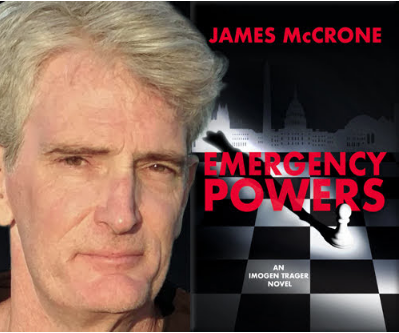
James McCrone is the author of the Imogen Trager political suspense-thrillers Faithless Elector, Dark Network , and Emergency Powers–noir tales about a stolen presidency, a conspiracy, and a nation on edge. Bastard Verdict, his fourth novel, is about a conspiracy surrounding a second Scottish Independence referendum. To get the details right for the new thriller, he drew on his boyhood in Scotland and scouted locations for scenes in the book while attending the Bloody Scotland crime writers conference in Stirling.
Allbooks are available on BookShop.org, IndyBound.org, Barnes & Noble, your local bookshop, and Amazon. eBooks are available in multiple formats including Apple, Kobo, Nook and Kindle.
He’s a member of Mystery Writers of America, Int’l Assoc. of Crime Writers, and he’s the new president of the Delaware Valley chapter of Sisters in Crime. He lives in Philadelphia. James has an MFA from the University of Washington in Seattle. His current, work-in-progress is a mystery-thriller set in Oregon’s wine country…A (pinot) Noir, called Witness Tree.
For a full list of appearances and readings, make sure to check out his Events/About page. And follow this blog!
Thank you to all who have read and followed the Chosen Words blog. I’m looking to post here more regularly this coming year as I wean myself from the various social media platforms.
Here is the final sunrise from South Philadelphia. It’s out there, presumably, behind the frigid cloud cover.
I hope that 2023 was good to you, and that ’24 will bring even better.
Not only did Bastard Verdict debut this year, but it brought new readers to my other books as well. I hope to finish my work-in-progress, Witness Tree in the next couple months, and I am also working on some short stories — “Coffin Corner” about a mortuary debt, “Raccoon Summer,” and “Black eyed Susan.”
YOU DON’T NEED TO WIN, JUST DON’T LOSE In politics, people cheat to win, or because they’re afraid to lose. The difference can be deadly.
Imogen will risk what’s left of her standing, her career–and maybe her life–to get at the truth.
James McCrone is the author of the Imogen Trager political suspense-thrillers Faithless Elector, Dark Network , and Emergency Powers–noir tales about a stolen presidency, a conspiracy, and a nation on edge. Bastard Verdict, his fourth novel, is about a conspiracy surrounding a second Scottish Independence referendum. To get the details right for the new thriller, he drew on his boyhood in Scotland and scouted locations for scenes in the book while attending Bloody Scotland.
All books are available on BookShop.org, IndyBound.org, Barnes & Noble, your local bookshop, and Amazon. eBooks are available in multiple formats including Apple, Kobo, Nook and Kindle.
He’s a member of MWA, Int’l Assoc. of Crime Writers, and he’s the new president of the Delaware Valley Sisters in Crime chapter. He lives in Philadelphia. James has an MFA from the University of Washington in Seattle. His current, work-in-progress is a mystery-thriller set in Oregon’s wine country…A (pinot) Noir, called Witness Tree.
For a full list of appearances and readings, make sure to check out his Events/About page. And follow this blog!
His most recent short fiction is below. The first is available for online reading.
“Ultimatum Games” in Rock and Hard Place magazineissue #7 A rare book heist, bad decisions. The narrator and his partner-in-crime clash over evolving bourgeois norms.
“Nostalgia” in Low Down Dirty Vote, vol. 3 An armed group tries to resurrect a past that never was as they struggle with change.
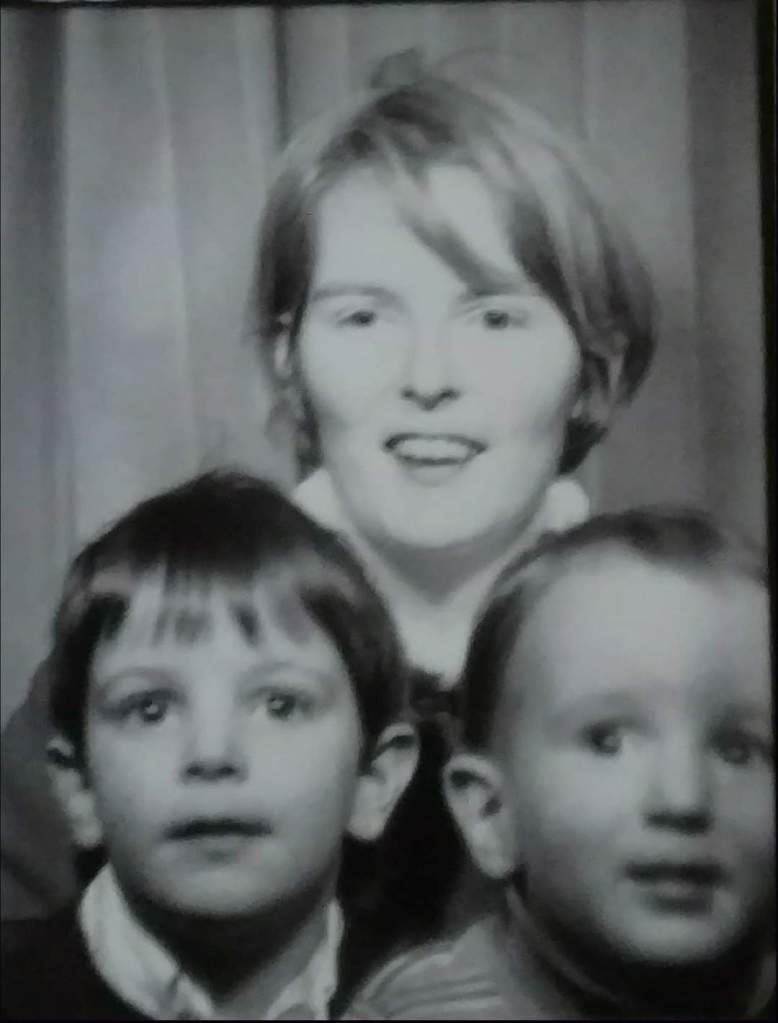
1967 Passport Photo L to R – me, my mother, brother John
It may be that passport photos are the true record of my existence. I’ve moved around a lot in my life, and I realized recently that later this year, I will have lived away from Seattle for longer than I lived there. How can I say, as I am wont to do, that I’m “mostly from Seattle?”
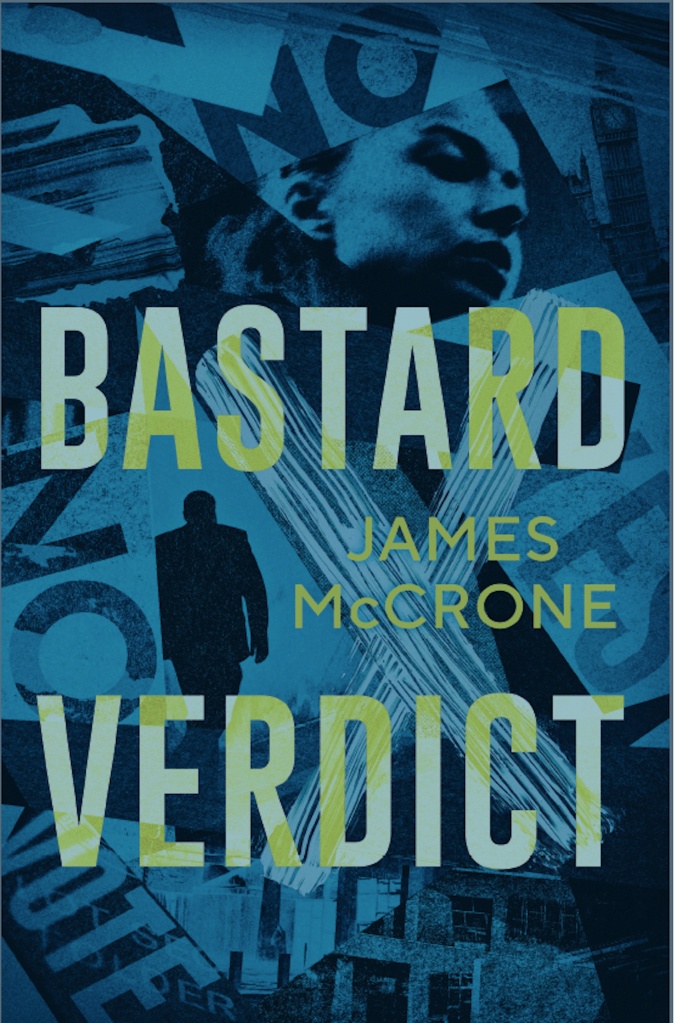
I’ve been blogging about place, and setting as character recently, about how where you are or where you come from expresses itself through the individual—either broadening horizons or constricting opportunities; about how it informs and effects a person’s outlook, influences or dictates perspectives. It’s been much on my mind. My latest thriller is Bastard Verdict, set in present-day Scotland against a backdrop of a potential second referendum on independence. (It debuts on May 18, 2023.)
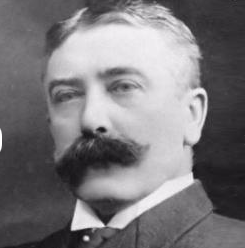
Ferdinand de Saussure
Structural linguists will say that language “writes you;” that is, it’s a pre-existing construct which influences you more than you can change it.
Is place like language, then? And where am I from? Does one spot on the map have the greater claim on forging who I am? I’ve fetched up on the banks of the Delaware, with no marked accent, an inability to spell properly (“colour” looks wrong, but then so does “color”) and a manifest infatuation with proper football.
But can I write about Scotland? In Bastard Verdict, which takes place primarily in Glasgow and Dundee, I’ve brought to the page a compelling story that weaves high stakes and low politics, and realized a vivid ensemble cast. My alter-ego and recurring protagonist, FBI Agent and elections specialist Imogen Trager, is a visiting scholar at University of Glasgow. As the story opens, she’s looking for a little peace and to do some research, while she sorts out what to do next and where she might go.
I lived in Scotland as a boy–twice. In the UK taken together, I’ve spent a little over four years, plus countless visits. I’ve lived a great many other places too. I approached the story with a little more humility than I might otherwise have done. I worked with the editor Alan McMunnigall of Thi Wurd, to help with my tortured prose as much as to make sure descriptions and characterizations rang true.
Here’s why:
I lived in Seattle for 21 years, until recently, the longest I’d ever been in one place. But I was born in Chapel Hill, NC (my parents were in graduate school at UNC). When I was two, we moved to Madison, WI, and my father’s first faculty position. He was hired “ABD” and the family moved to Montevideo, Uruguay, for six months to finish his dissertation work.
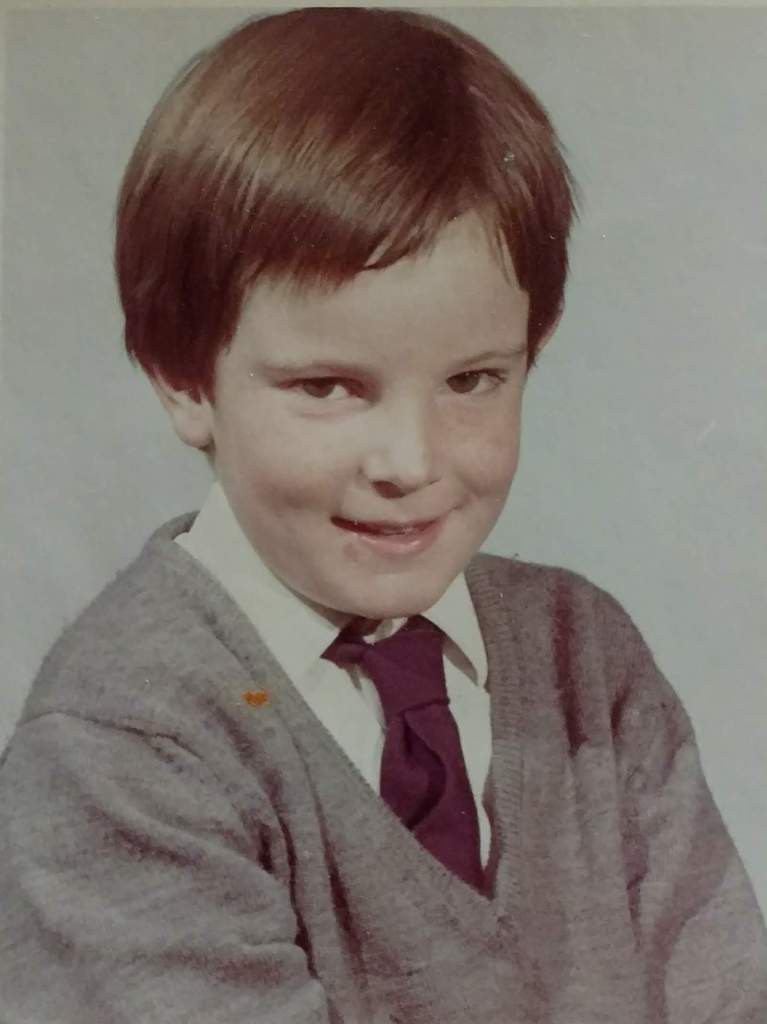
Colchester school picture, Primary 1
Three years later we decamped from Madison for Edinburgh, Scotland, and then Colchester in Essex. A year after returning to Madison, we moved to Iowa City. Four years after that I returned with my family to the UK, this time to Edinburgh (Morningside) for the full school year.
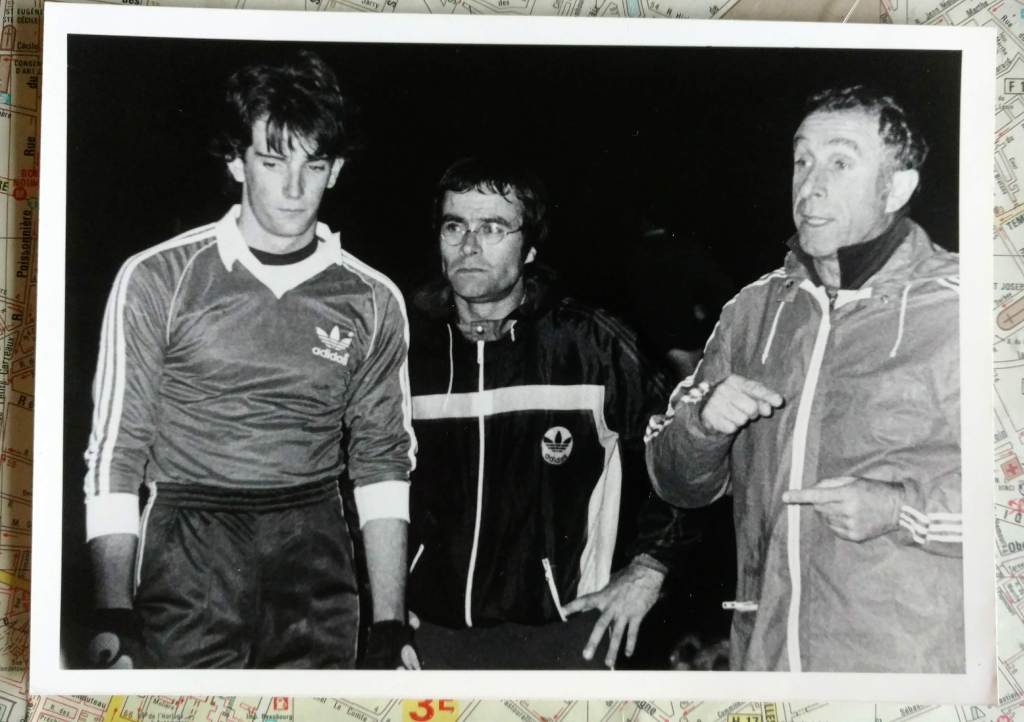
Training, Football Club Villeneuvois, 1981
We moved to Seattle when I was 15, staying there for 21 years (though I had one blissful semester abroad in the southwest of France in the small town of Villeneuve-sur-Lot the first semester of my senior year).
I graduated high school in Seattle, got my Bachelors and an MFA there. Got married—twice!—and all three children were born there. And then we moved, just 8 weeks after our son, the youngest, was born.
My wife will say that despite my time in the Pacific Northwest, I’m a Midwesterner, that it offends me to the marrow when people don’t properly shovel their sidewalks after a snowfall. But I haven’t lived there since 1979 (though through the magic of Facebook, I still keep up with friends from those days; and funnily, Alan and I bonded a bit over IC, as he had spent a semester there at the University of Iowa.).
We left Seattle in the summer of 2000, and since then we’ve lived in State College, PA; Highland Park, NJ; and now Philadelphia. In that time, we also spent two separate school years in Oxford (2011-12, and ’15-’16). My younger daughter’s high school Spanish teacher was convinced that our family was in the witness protection program.
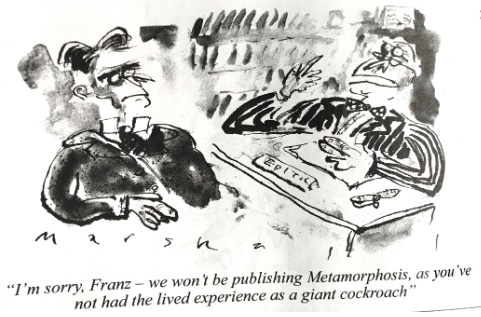
So how do I answer the question, ‘Where are you from?’ Because the question also seems to ask: what part of that place have you carried here? Our eldest child still lives in Seattle, but the other two don’t remember it all. So, saying they were born there means as little as my claim to Chapel Hill. And the subtext curl to the question reminds me of publisher’s need for “lived experience as [fill in the blank].”
One constant, I suppose, is academia, which is Imogen’s perch in the novel. My father was a political scientist, now retired, and it was for his work during the first 18 years of my life that we moved so often. I have an MFA, and I taught English at community college for three and a half years. I married an academic, also a political scientist (I’m sure Freud would have much to say about that!) But my three-year stint teaching English comp notwithstanding, I’ve always been at the periphery of university life.
In Edinburgh, we lived on Cluny Avenue, and my brother and I attended South Morningside Primary School on Comiston Road (the same school I had attended 5 years earlier). My brother and I both picked up Scottish accents, and we refer to the summer we returned to the US as “the summer of ‘what’?” No one, it seemed, could understand us. It was strange to be “back home” in Iowa, among our old friends, but still neither fish nor fowl–our Scottish friends had heard only our American accents, and our Iowa friends couldn’t penetrate our Scottish accent. But on the great plains, our cadence gradually (re)flattened and words like “skint” and phrases like “didja aye?” faded. But not my memories of how the place felt, the smells, the weather, the people.
# # #
James McCrone is the author of the Imogen Trager political suspense-thrillers Faithless Elector, Dark Network , and Emergency Powers–noir tales about a stolen presidency, a conspiracy, and a nation on edge. All books are available on BookShop.org, IndyBound.org, Barnes & Noble, your local bookshop, and Amazon. eBooks are available in multiple formats including Apple, Kobo, Nook and Kindle.
His next book, Bastard Verdict(out 18-May-2023), is a noir political thriller set in Scotland. His current, work-in-progress is a mystery-thriller set in Oregon’s wine country…A (pinot) Noir, called Witness Tree. Bastard Verdict is available to reviewers through NetGalley
A Seattle native (mostly), James now lives in South Philadelphia with his wife and three children. He’s a member of the The Mystery Writers of America, Int’l Assoc. of Crime Writers, Int’l Thriller Writers, Philadelphia Dramatists Center and is the vice-president of the Delaware Valley chapter of the Sisters in Crime network. James has an MFA from the University of Washington in Seattle.
For a full list of appearances and readings, make sure to check out his Events/About page. And follow this blog!
His most recent short fiction is below. The first is available for online reading.
“Ultimatum Games” in Rock and Hard Place magazineissue #7 A rare book heist, bad decisions. The narrator and his partner-in-crime clash over evolving bourgeois norms.
“Nostalgia” in Low Down Dirty Vote, vol. 3 An armed group tries to resurrect a past that never was as they struggle with change.
Recently, I’ve seen Facebook posts and a Tweets (each with a dozen attending comments) regarding fellow writers’ concerns about in-person readings and book signings; and I’ve heard privately from others about their discomfort over large gatherings. I absolutely get those concerns, and I would never disparage or second-guess another person’s reasons for wanting to remain safe and healthy.
What I would like to do is talk about the importance and value of these get-togethers, and my hope that they will return in full force sooner rather than later. The Zoom readings do have value in a number of ways, but they are no substitute for a live gathering.
Annamaria Alfieri and Gary Cahill
Last night (Tues., April 12, 2022) I was the first reader in the latest installment of the MWA-NY Reading Series at KGB Bar, along with Gary Cahill, Tom Avitabile, Bill Chambers, A. J. Sidransky and Albert Tucher–and it was wonderful! It felt great to be out and about, to (re)connect with old friends, meet new people, and to hear first-hand what others are doing and working on. The place filled up nicely, too. A good mix of people (say, 20+) came out on a Tuesday night to hear crime stories. There was an energy and vitality in the room that you can’t get over a screen.
At KGB, as is true at Shade Bar, in Wilmington, West Chester and other venues, the audiences are generous, knowledgeable, and attentive. As I’ve written elsewhere there’s no substitute for a live audience, and these readings series and Noirs at the Bar give us one filled with writers and readers who are both avid fans.
Like many writers, I use these short readings as a way to try out new work or work-in-progress. It’s similar to stand-up comedy, I think, in that there’s no buffer. You wrote the words, and you’re speaking and representing them. You’re putting it out there. And there’s no mistaking a moment when you’ve lost the audience. These writers and readers know what grabs them, too, and you can see it in their faces when something you’re reading doesn’t sound right…or drags on too long.
Which, when/if it happens is a horrible moment (not that I would know, personally! :). But it’s a necessary moment, and it’s far better to be forced to grapple with why and how something isn’t working early(ish) in the process before you start pitching and querying. Even when you’re reading something that’s already out in the world, audience reactions can inform and inspire a current work.
As a reader/performer, I think, you have at least two reciprocal roles for the evening–performer and audience member. As writers in a community, we do more than just cheerleading. It reminds me of moments when you hear professional athletes speak about a fellow athlete, sometimes even a competitor. They’re fans, too! They understand and respond to another athlete’s playing on an informed level.
There’s also the serendipity of being in a room full of people who care about writing and story. One of the readers last night, Tom Avitabile was answering a question from someone who was clearly very taken with Tom’s reading. In his response, a single word leapt out at me that fused a lot of things I had been thinking about my own work, an image grew in my mind for how I should think about the structure of the rest of the book. I’m not sure when or if that spark would have come without his comment–one about something else entirely, and not even directed to me. (And bonus, his new thriller hits the ground running, and sounds fabulous.)
Finally, it’s just fun to be out and hearing stuff!
The nextMWA-NY/KGB Reading Seriesis June 14 (I think). I’m planning to go, and I hope to see all of you there.
# # #
The selection I read Tuesday night, from Witness Tree is months away from being finished. But you can check out my latest short stories and novels below:
“Ultimatum Games” in Rock and Hard Place magazineissue #7 A rare book heist, bad decisions. The narrator and his partner-in-crime clash over evolving bourgeois norms.
“Nostalgia” coming May 15 in Low Down Dirty Vote, vol. 3 An armed group tries to resurrect a past that never was as they struggle with change.
James McCrone is the author of the Imogen Trager political suspense-thrillers Faithless Elector, Dark Network , and Emergency Powers–noir tales about a stolen presidency, a conspiracy, and a nation on edge. All books are available on BookShop.org, IndyBound.org, Barnes & Noble, your local bookshop, and Amazon. eBooks are available in multiple formats including Apple, Kobo, Nook and Kindle.
His next book, w/t Bastard Verdict, is a noir political thriller set in Scotland. He’s currently writing a mystery-thriller set in Oregon’s wine country…A (pinot) Noir, w/t Witness Tree.
A Seattle native (mostly), James now lives in South Philadelphia with his wife and three children. He’s a member of the The Mystery Writers of America, Int’l Assoc. of Crime Writers, Int’l Thriller Writers, Philadelphia Dramatists Center and is the vice-president of the Delaware Valley chapter of the Sisters in Crime network. James has an MFA from the University of Washington in Seattle.
For a full list of appearances and readings, make sure to check out his Events/About page. And follow this blog!






 Chosen Words - James McCrone